Deity · Japanese · c. 712 CE
Susanoo
Also called Susanoo no Mikoto (per Wikidata)
Expelled from heaven for wrecking his sister's rice fields, and then immediately kills the eight-headed serpent and becomes a hero.
Narrow source base
He commits offences serious enough to darken the sun and get him thrown out of heaven, and in the very next episode he saves a family by killing Yamata-no-Orochi and recovers from its tail the sword that becomes an imperial regalia. He is not redeemed, and he is not condemned; the tradition holds *ara-mitama*, the violent aspect of a kami, and *nigi-mitama*, the gentle one, as facets of the same being rather than a struggle between them.
Identity
Where does the name come from?
Where it was actually worshipped
Izumo, whose Taisha is among the oldest shrines in Japan; and Yasaka in Kyoto, from which the Gion Matsuri goes out.
A figure with temples and a figure that only ever existed on a page are different kinds of thing, and the difference is easy to lose once both are entries in a list.
At a glance
Vitals
Vitals
Also known as
- First attested
- Kojiki (Records of Ancient Matters) · 712 CE
- Named there as
- Susanoo-no-Mikoto
- Rank
- Storm Kami
- Pantheon
- Japanese
- Order
- Japanese pantheon
- Base of operations
- Izumo, whose Taisha is among the oldest shrines in Japan; and Yasaka in Kyoto, from which the Gion Matsuri goes out.
- Era
- c. 712 CE
- Traditions
- Shinto & Japanese
Traits
- Domain
- Storm, the sea, exile, the slaying of the serpent
- Traditional form
- A wild-bearded man with a sword
Stats
Known connections
2 sites
Where was it worshipped?
Attested cult sites, located against the Pleiades gazetteer of the ancient world where it reaches and against Wikidata everywhere else. An absence here is not evidence that no cult existed: a good number of figures never had one, and the entry above says so where that is the case.
Possibly the oldest shrine in Japan, in the province Susanoo is banished to and then rules.
35.402, 132.685 · Wikidata Q696362
now Kyoto
Where the Gion Matsuri goes out from. Not the Yasaka Shrine in Kitakyushu.
35.004, 135.779 · Wikidata Q692714
4 attributed
What is it said to do?
Where these powers cluster
The 4 offices attributed to Susanoo, grouped by kind. Segment width is the share of powers falling in each category.
A bar dominated by one colour means a specialist; an even spread means a figure the sources credit with almost anything.
- social1
- martial1
- malefic1
- material1
1 mark
Which marks is it attached to?
A mark a figure carries and a mark used against a figure are opposite claims, so each link says which it is.
2 texts
Which texts say so, and where do they disagree?
When these texts were written
Each dot is one of the 2 texts that names Susanoo, placed at that text's approximate date.
A wide spread means the figure was carried across many centuries and traditions; a tight cluster means a single period produced the whole record.
2 texts, all inside a single century
Where the texts differ
- Name: given as Susanoo-no-Mikoto, Susanoo no Mikoto
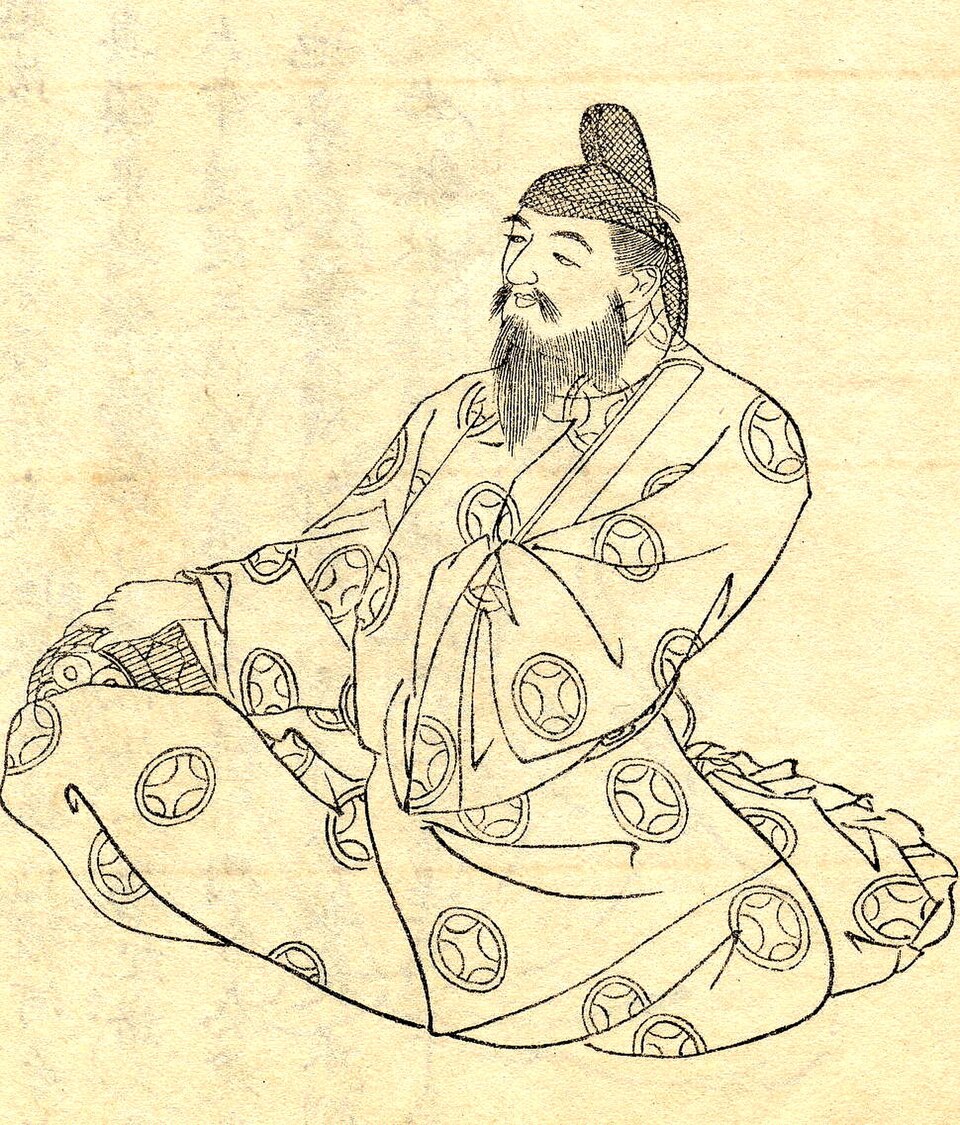
Breaks the rice paddies and defiles the weaving hall; is exiled, then kills the eight-forked serpent of Koshi and finds in its tail the blade Chamberlain renders as the Herb-Quelling Great Sword, later called Kusanagi.
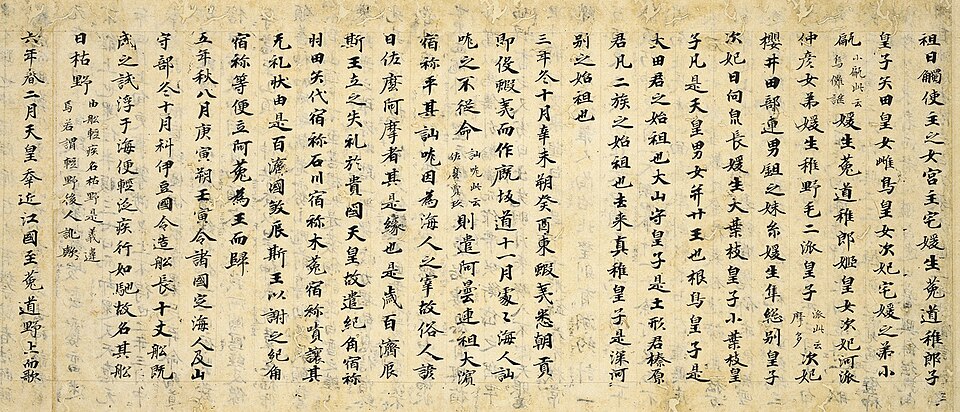
Expelled for his offences against his sister and going on to kill the serpent — the god the court chronicle cannot decide about, alternately a criminal and a hero within a few pages. He is the corpus's clearest case of a figure whose demonisation was begun and then abandoned by his own tradition.
Connections
What is it connected to?
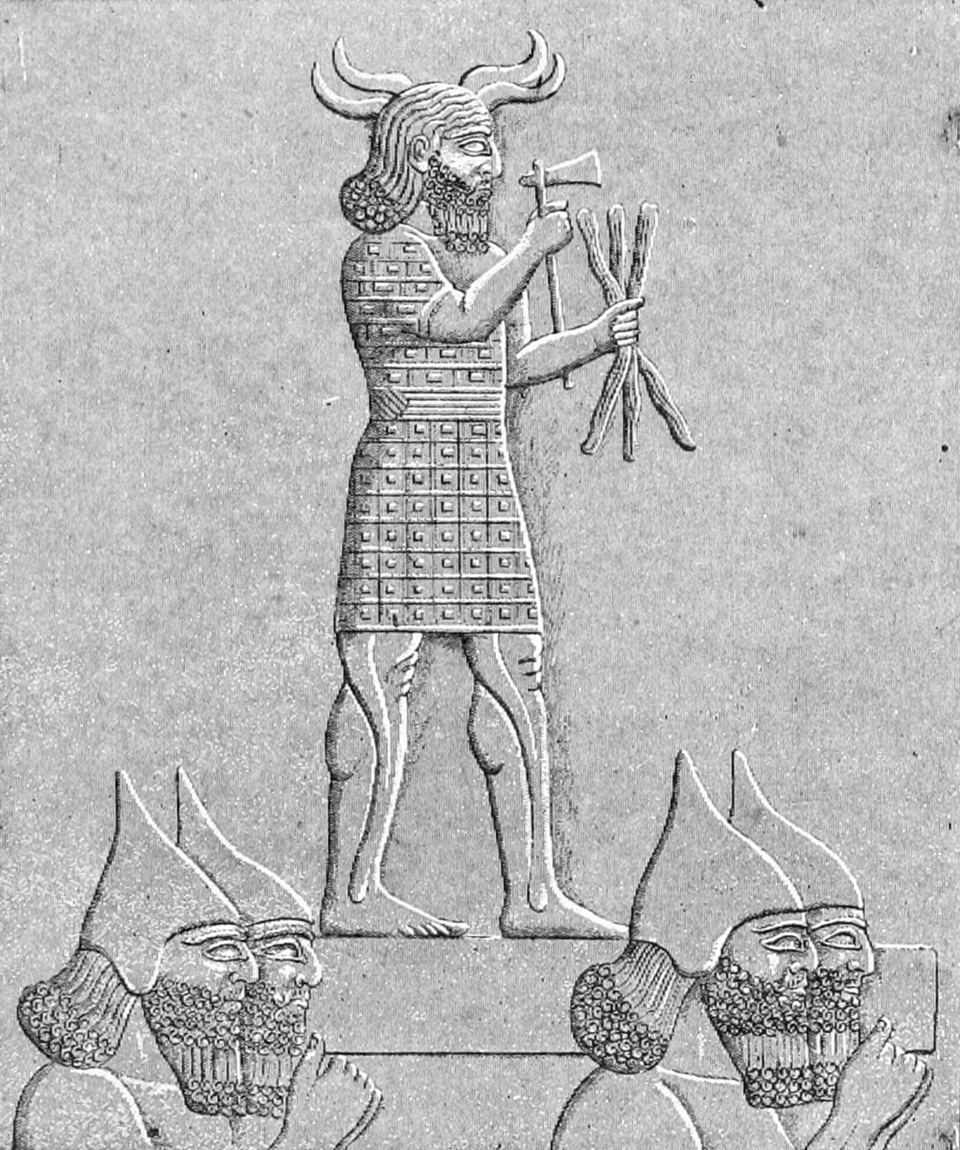
Identified with Baal Hadad
Storm gods who kill a many-headed serpent; the Japanese case is independent of the Near Eastern one.
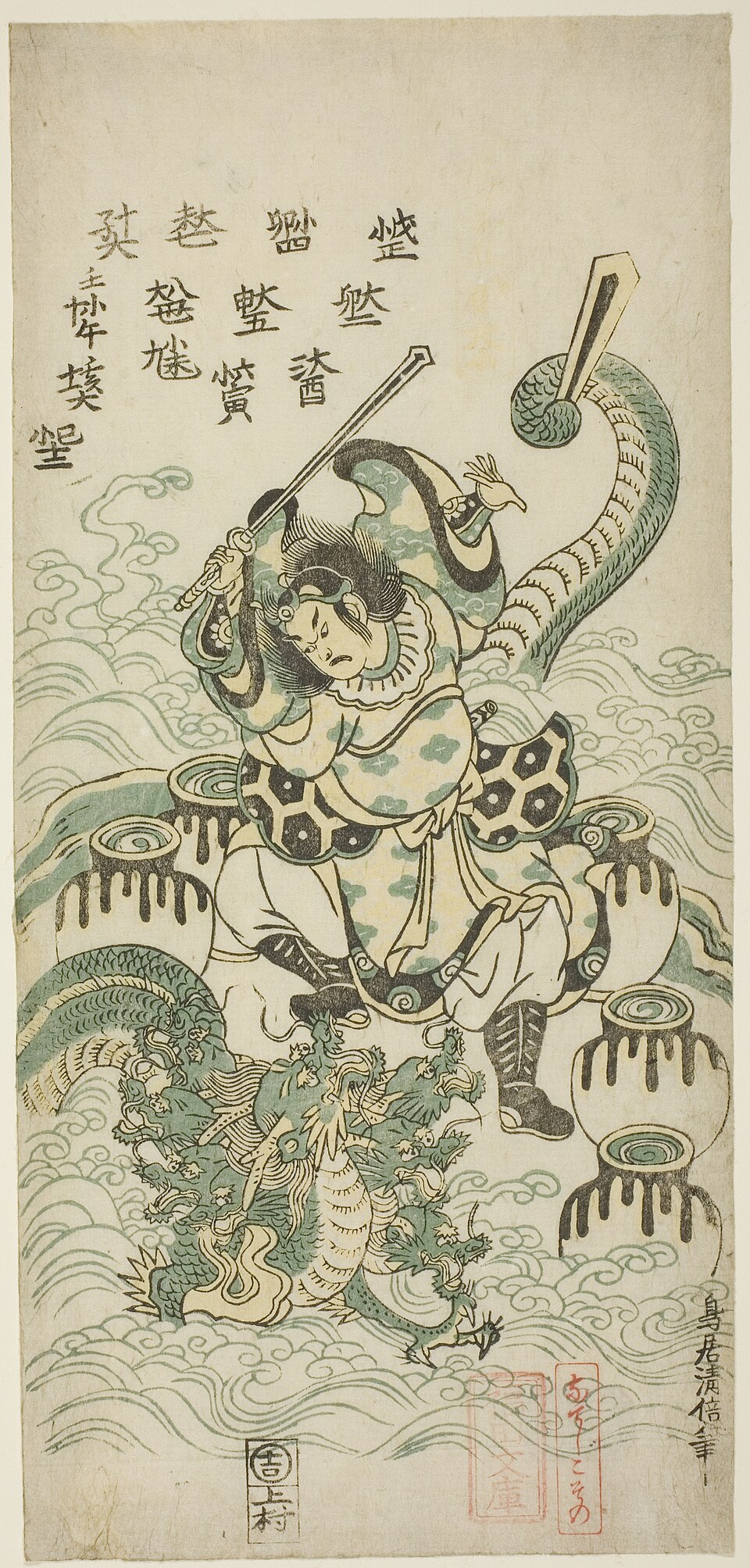
Opposes Yamata-no-Orochi
Killed with eight vats of sake.
Serves Izanagi
Born in the same purification and assigned the sea, which he refuses in order to go to his mother in Yomi.
Answered from the sources
Common questions
Which texts mention Susanoo?
Is Susanoo the same as Baal Hadad?
What rank is Susanoo?
How else is Susanoo spelled?
What is Susanoo said to do?
How old is Susanoo?
Nearest in the corpus
If Susanoo is what you came for, these are next
Chosen by proximity rather than by popularity: the same pantheon first, then the same rank, then the same kind of figure.
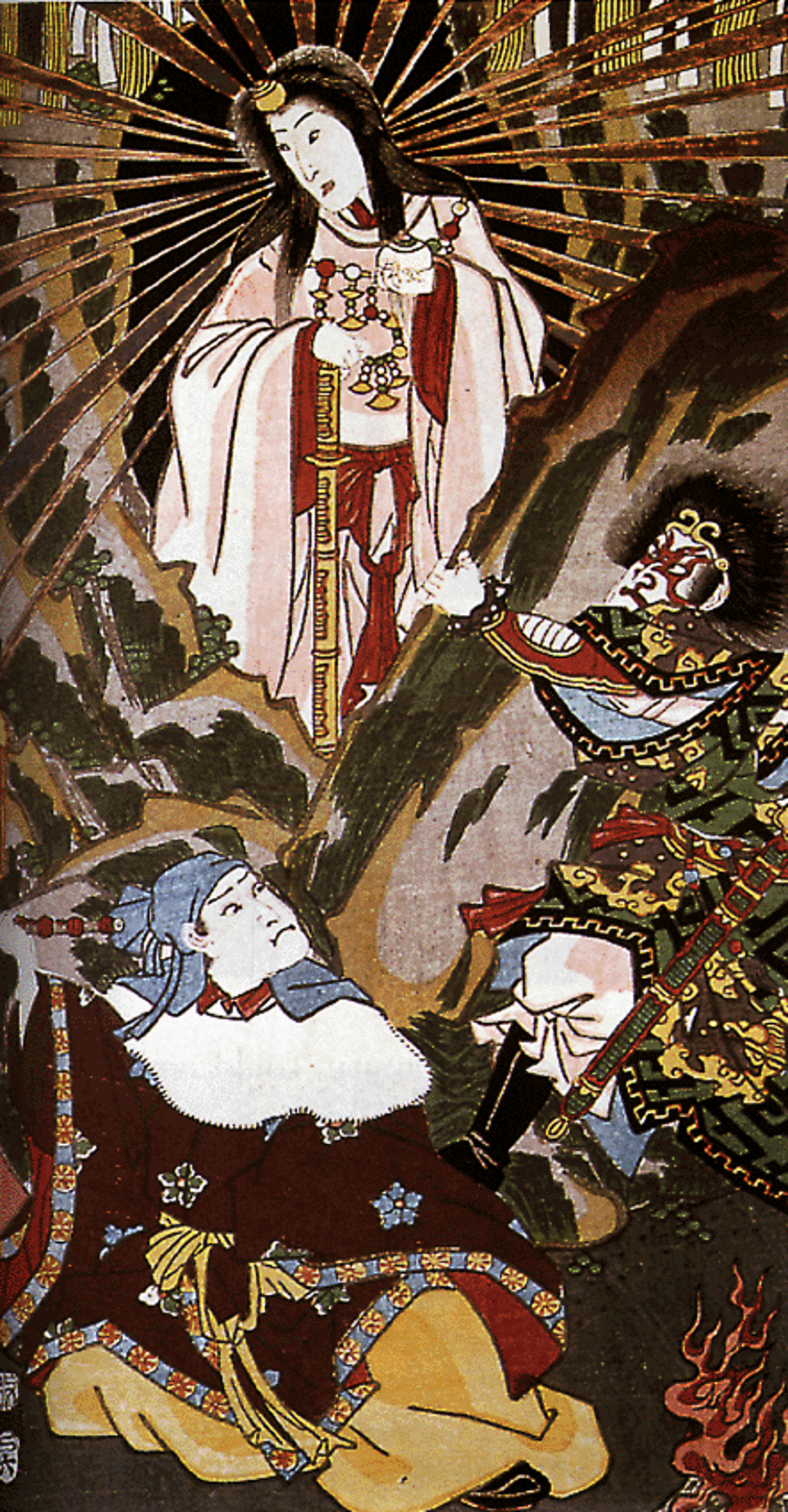
Amaterasu
Sun Goddess · Japanese
Sun goddess who hides in a cave and must be lured out — and from whom the Japanese imperial house claimed descent until 1946.
Izanagi
He Who Invites · Japanese
The Japanese god who stirs the sea into land with a spear, goes into Yomi after his wife and looks at her against her word, and washes afterwards — producing Amaterasu and Susanoo from the washing.
Izanami
She Who Invites · Japanese
The Japanese goddess who makes the islands with her husband, dies giving birth to fire, and becomes the ruler of Yomi — where she promises to kill a thousand people a day for the insult of being seen.
Tsukuyomi
The Moon Reckoner · Japanese
The Japanese moon god, born from Izanagi's washing beside Amaterasu — and the reason the sun and moon are never in the sky together, having killed the food goddess at dinner and been refused his sister's company ever since.
Yamata-no-Orochi
Eight-Forked Serpent · Japanese
The eight-headed serpent given a daughter to eat each year, until Susanoo made it drunk and cut it apart. Japan's branch of the serpent-slaying pattern.
Artemis
Mistress of Animals · Greek
Huntress and protector of the young, whose Ephesian cult statue looks nothing like her and whose temple gave the ancient world one of its most durable protective formulas.
The books behind Susanoo
Every claim on this profile is attributed to one of these. They are public domain, listed oldest first, and each links to a full text where one is freely available.
Kojiki (Records of Ancient Matters)
Ō no Yasumaro · 712 CE · Old Japanese
Read Kojiki (Records of Ancient Matters) in full ↗Cover: Public domain · Wikimedia file page
Nihongi (Nihon Shoki)
Prince Toneri and others; tr. W. G. Aston · 720 CE · Classical Japanese
Read Nihongi (Nihon Shoki) in full ↗Cover: Public domain · Unknown author · Wikimedia file page
Corpus last revised 29 August 2026. A reference site’s credibility rests on being maintained, so this is the date the sourced records last changed — not the date the page was rebuilt.