protective · in the chronicles by 712 CE
The Shimenawa
A twisted rice-straw rope with folded paper streamers, tied around a tree, a rock, a wrestler or a doorway to mark it as not ordinary.
What the sources claim for it
Demarcation. What is inside the rope is not available for ordinary use.
History
Where does the Shimenawa come from?
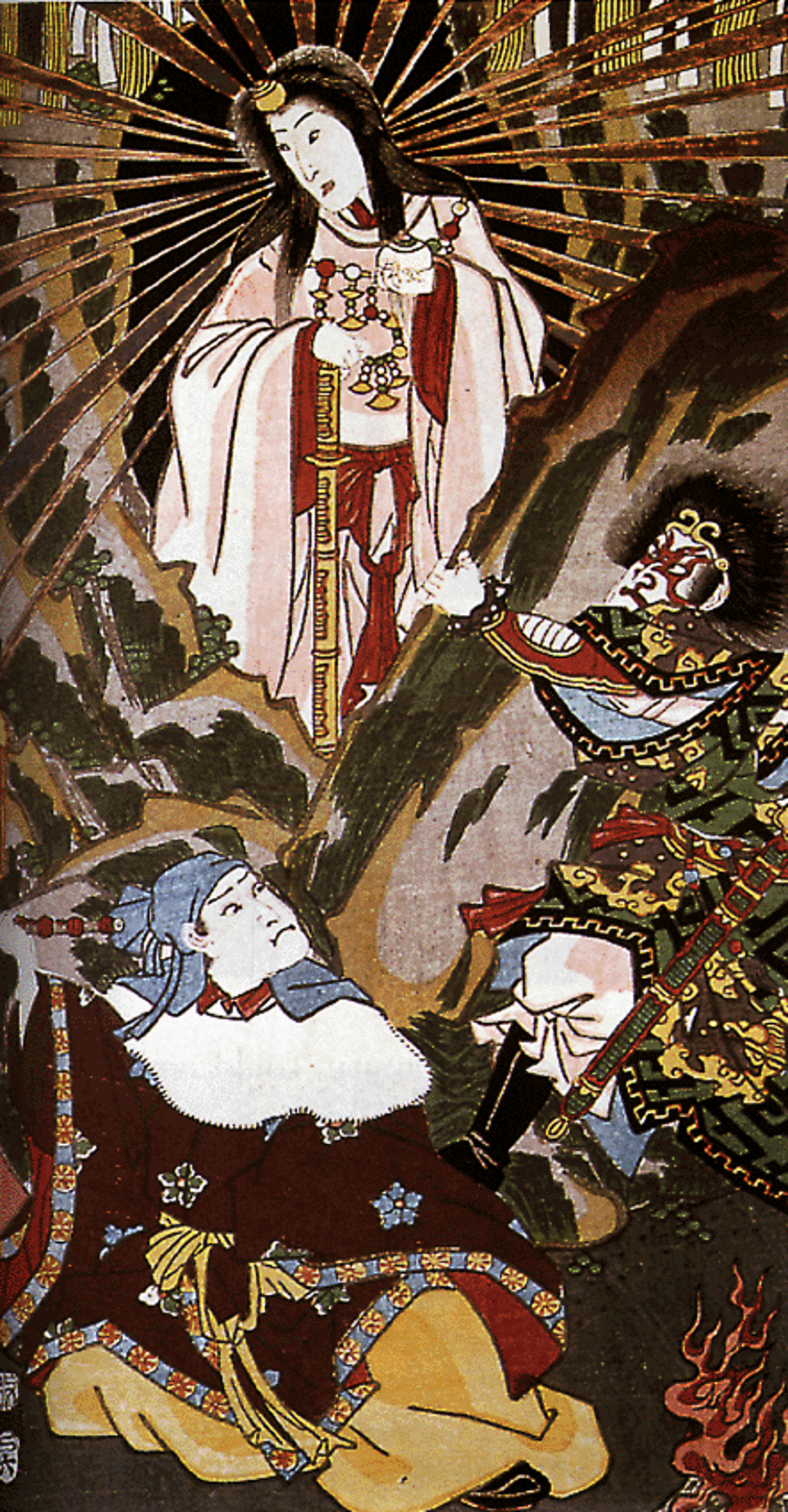
The shimenawa marks off sacred ground or a sacred object, and the Kojiki gives it an origin: once Amaterasu has been drawn out of the cave, a rope is stretched across the entrance behind her so that she cannot go back in. The rope's first recorded job is to keep a deity out of a place.
In use it is put around whatever is being declared inhabited or set apart — a shrine gateway, an old tree, a paired rock formation, a sumo grand champion's waist. The paper streamers, cut and folded in a zigzag, are the visual signal that the rope is doing that job rather than holding something together.
1 figure
Who is it attached to?
Figures it is used against
The mark is aimed at them. A ward names its target, which makes these the sharpest attributions on the page.
Afterwards
What did it turn into?
Widely photographed at Meoto Iwa and at shrine gates, and often described in English as a 'sacred rope' without the exclusionary sense the Kojiki gives it.
Which texts describe it?
Oldest first, with what each one does with the mark. A mark described in a Bronze Age incantation and a mark first drawn in a seventeenth-century manuscript are different kinds of claim, whatever the shape has in common.
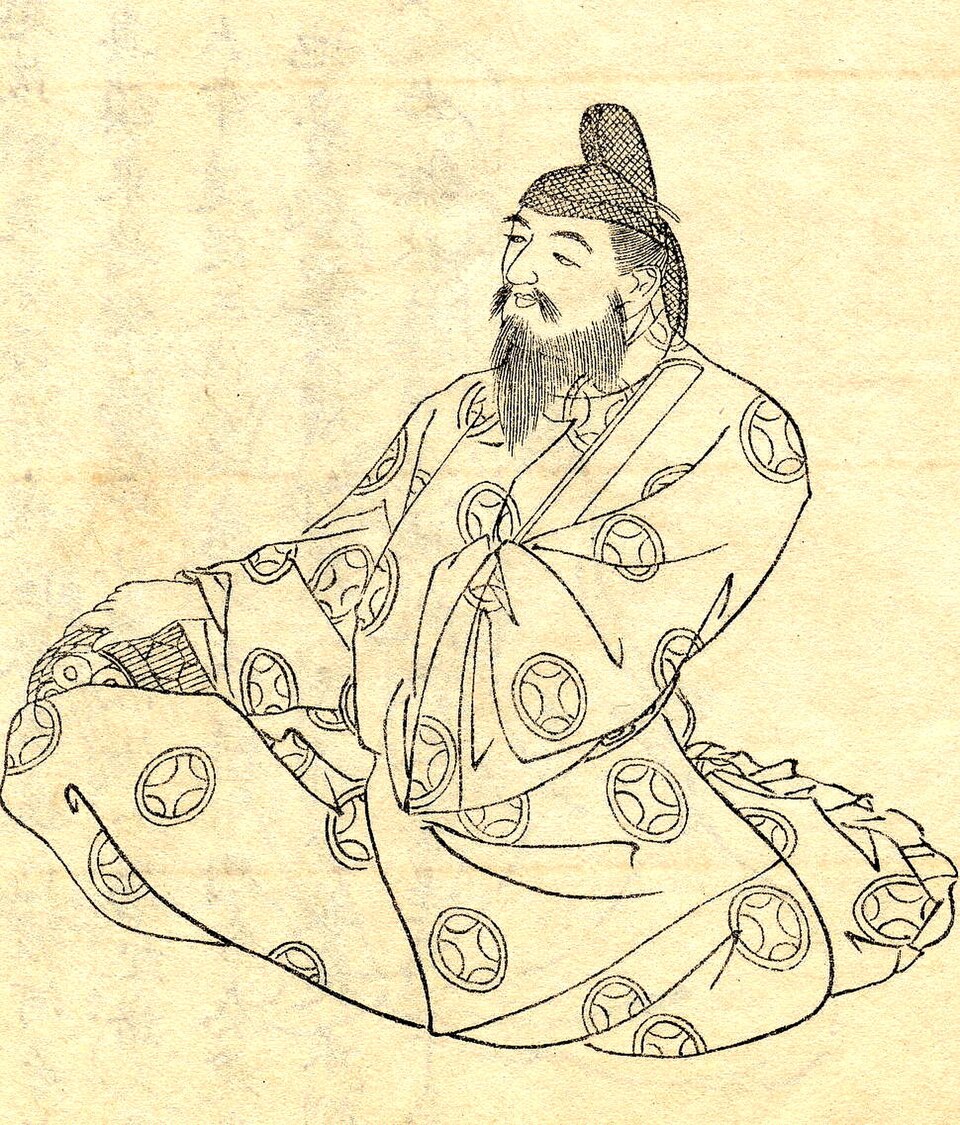
Kojiki (Records of Ancient Matters)
Ō no Yasumaro · 712 CE · Old Japanese
Stretched across the cave mouth behind Amaterasu so she cannot return into it.
Read Kojiki (Records of Ancient Matters) in full ↗Cover: Public domain · Wikimedia file page
Nearby
Related marks
The Three Sacred Treasures
A mirror, a curved jewel and a sword — each one a prop from a specific myth, and together the objects that make an emperor.
The Torii
Two uprights and two crossbars marking where ordinary ground stops — a gate with no door, no wall and nothing to keep out.
The Ankh
The sign for 'life', held to the nose of a king by a god. Not an amulet first — a hieroglyph that got carried into three dimensions.
The Djed Pillar
A four-tiered column meaning stability, later read as the backbone of Osiris and raised upright at festival as a resurrection.
The Star of Ishtar
Eight points for the planet Venus, and the standard way of writing a goddess into a scene without drawing her.
The Uraeus
A cobra rearing at the front of a crown, understood as the eye of the sun placed where it can spit at whatever approaches the wearer's face.