What the sources claim for it
In its own book, an address: the mark by which one named spirit among many is called and constrained.
History
Where does the Sigil of Lucifer come from?
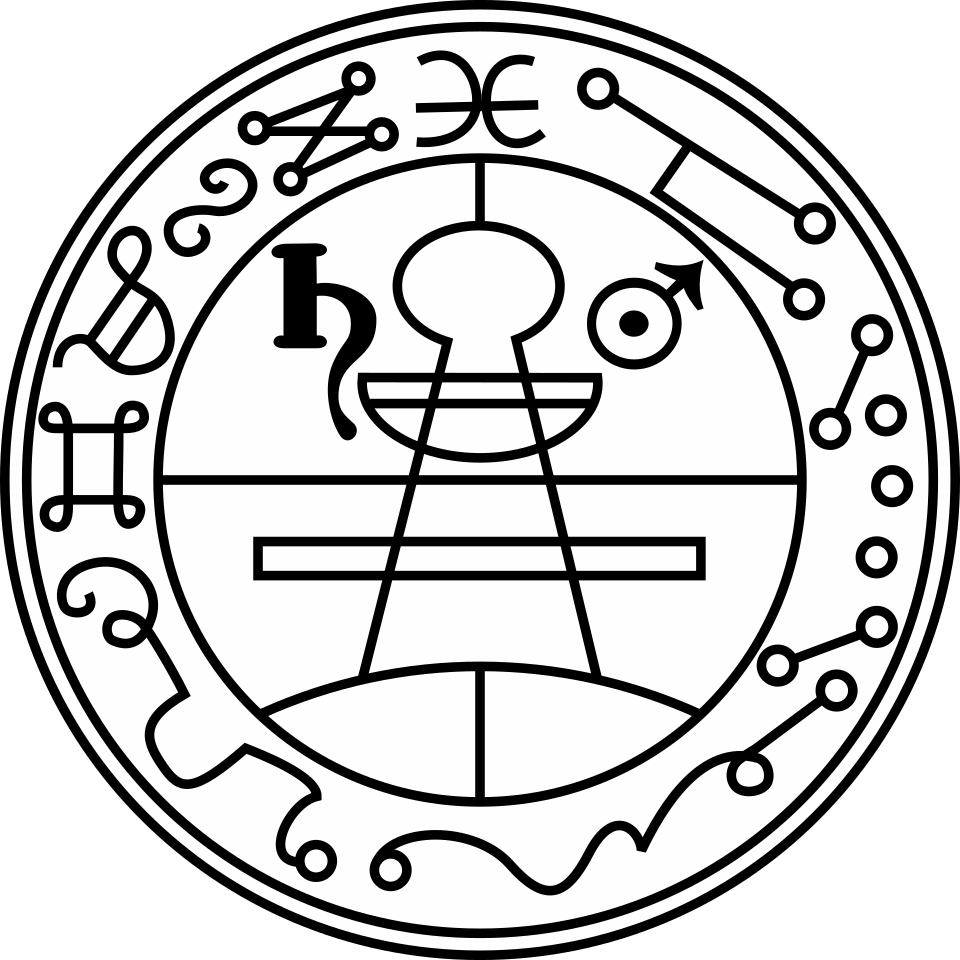
The figure comes from the Grimorium Verum, an eighteenth-century Italian grimoire that claims a 1517 Memphis printing it certainly does not have. In its own pages it is unremarkable: the book lists Lucifer, Beelzebuth and Astaroth as its three chief spirits with a seal apiece, in exactly the manner of the Ars Goetia, and the seal for Lucifer is one line-figure among many.
What singles it out is entirely modern. Of all the hundreds of spirit seals printed in the grimoire corpus, this is the one that spread — onto record sleeves, tattoos, jewellery and merchandise — because it is graphically clean and because it carries the one name in the corpus that needs no explanation. Its ubiquity is a fact about design and about the name, and not about the text.
1 figure
Who is it attached to?
Figures whose own seal this is
The mark belongs to the spirit: it is drawn, worn or engraved as that spirit's own token.
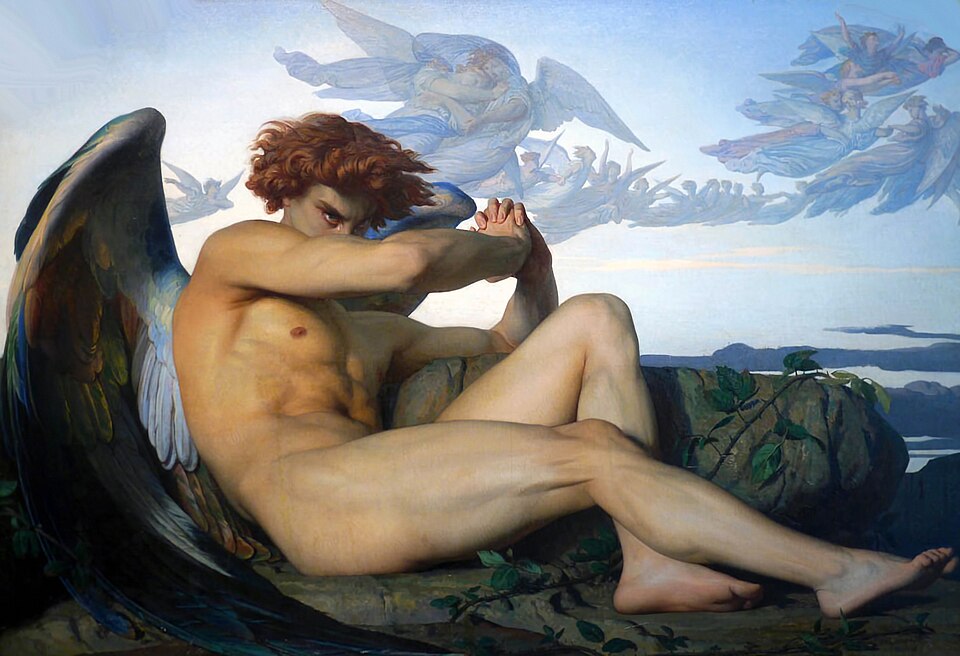
Afterwards
What did it turn into?
Now the default 'satanic symbol' in popular culture alongside the inverted pentagram. Most reproductions carry no idea that it comes from a specific printed book, still less which one.
Which texts describe it?
Oldest first, with what each one does with the mark. A mark described in a Bronze Age incantation and a mark first drawn in a seventeenth-century manuscript are different kinds of claim, whatever the shape has in common.
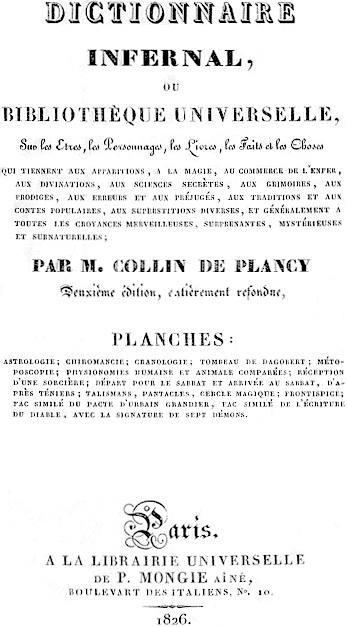
Dictionnaire Infernal
Jacques Collin de Plancy · 1818; illustrated ed. 1863 · French
The nineteenth-century compilation that put the grimoire spirits and their seals into general circulation.
Read Dictionnaire Infernal in full ↗Cover: Public domain · Collin de Plancy · Wikimedia file page
The Lesser Key of Solomon, Book I: Ars Goetia
Anonymous; ed. S. L. MacGregor Mathers & A. E. Waite · 17th c.; ed. 1904 · English (from Latin)
The seal-per-spirit convention the Grimorium Verum is copying.
Read The Lesser Key of Solomon, Book I: Ars Goetia in full ↗Cover: Public domain · anonymous design, redrawn by User:Fuzzypeg · Wikimedia file page
Nearby
Related marks
The Pentagram
A five-pointed star drawn in one unbroken line — an accounting mark, a Pythagorean password, a Christian emblem of the five wounds, and only recently a sign of evil.
The Tetragrammaton
Four letters that stopped being pronounced and became, in consequence, the most powerful thing you could write on a piece of equipment.
The Circle
A drawn boundary with names written into it — the oldest continuously used device in the Western operative tradition, and the one that defines everything else on the floor.
The Brass Vessel
The container the legend says Solomon sealed the spirits into, thrown into a lake and opened by Babylonians who expected treasure. It is where the Ars Goetia says its seventy-two came from.
AGLA
An acronym, not a word: Atah Gibor Le-olam Adonai, 'Thou art mighty forever, Lord', compressed to four letters and written on almost everything.
The Lamen
The one piece of Solomonic equipment worn rather than drawn: a disc at the breast carrying the divine names, and the operator's own credential rather than the spirit's.