divine name · 7th century CE
Āyat al-Kursī
One verse, recited at night and inscribed on doorways and pendants, and named in hadith as what keeps a guard over you until morning.
What the sources claim for it
God's sovereignty stated in full, recited over a household or a person as a protective claim.
History
Where does Āyat al-Kursī come from?
The Throne Verse describes God as the living and self-subsisting, whose throne extends over the heavens and the earth, whom neither slumber nor sleep overtakes. Hadith collections record it being recited for protection, with a well-known narration in which a thief caught stealing zakat tells Abu Hurayra that whoever recites it at night will have a guardian from God and no devil will come near until morning.
In material use it is everywhere: on door lintels, on pendants and rings, on car mirrors, in calligraphic panels above beds. Islamic scholarly opinion on written amulets is divided — some permit them where the text is Qur'anic, others reject anything worn as approaching the pre-Islamic charms Islam displaced — but the recitational use is uncontested.
3 figures
Who is it attached to?
Figures it is used against
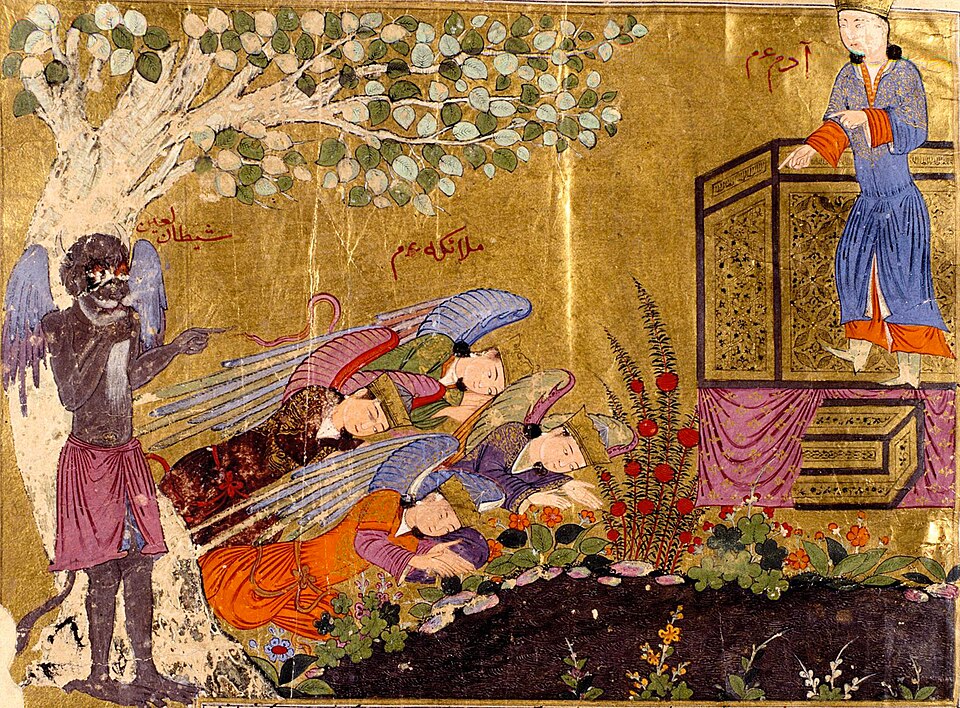
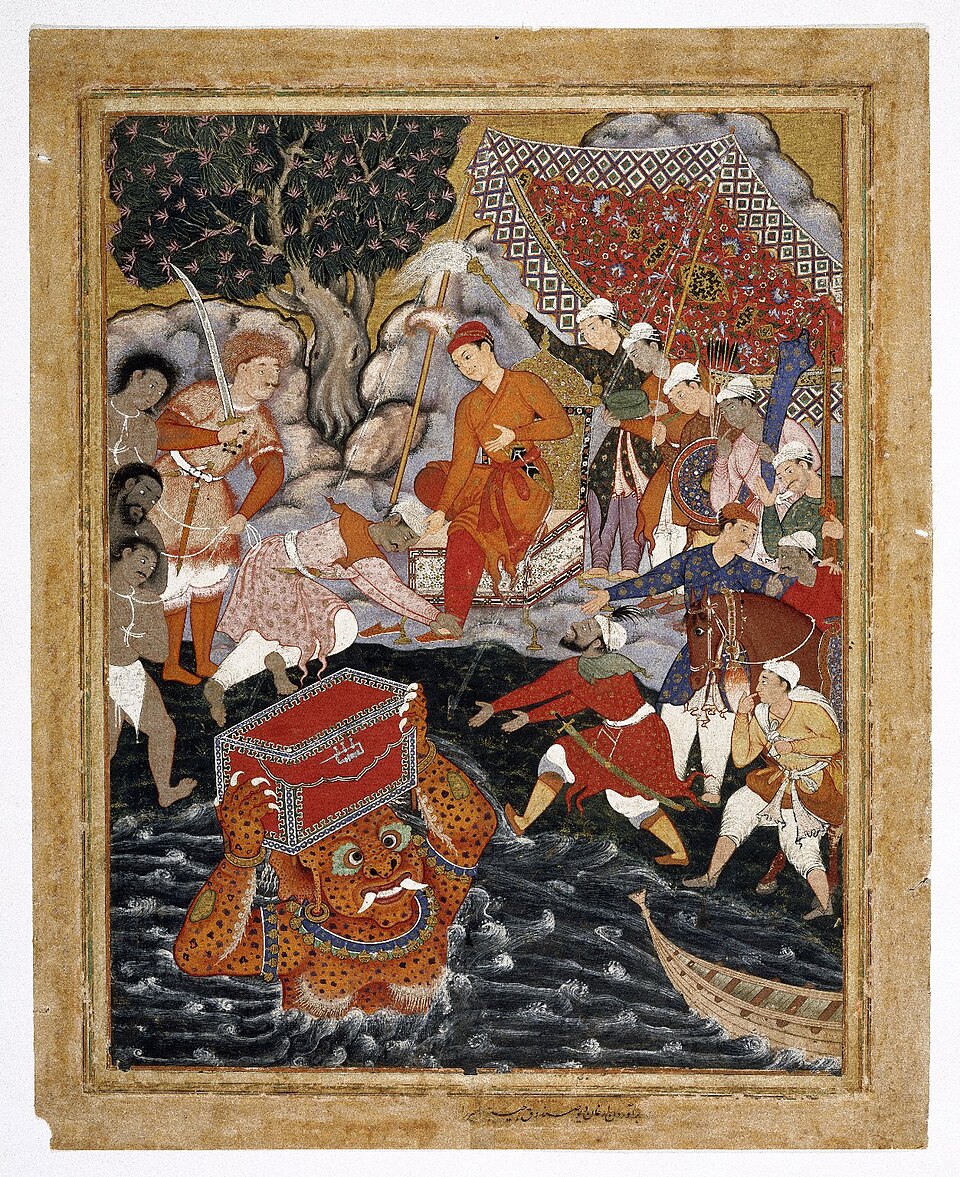
The mark is aimed at them. A ward names its target, which makes these the sharpest attributions on the page.
Afterwards
What did it turn into?
The most reproduced single verse of the Qur'an in decorative and calligraphic form, and a standard element of ruqya, the scriptural practice used in Islamic contexts against jinn and the evil eye.
Which texts describe it?
Oldest first, with what each one does with the mark. A mark described in a Bronze Age incantation and a mark first drawn in a seventeenth-century manuscript are different kinds of claim, whatever the shape has in common.
Qur'an & Hadith
Various · 7th c. CE onward · Arabic
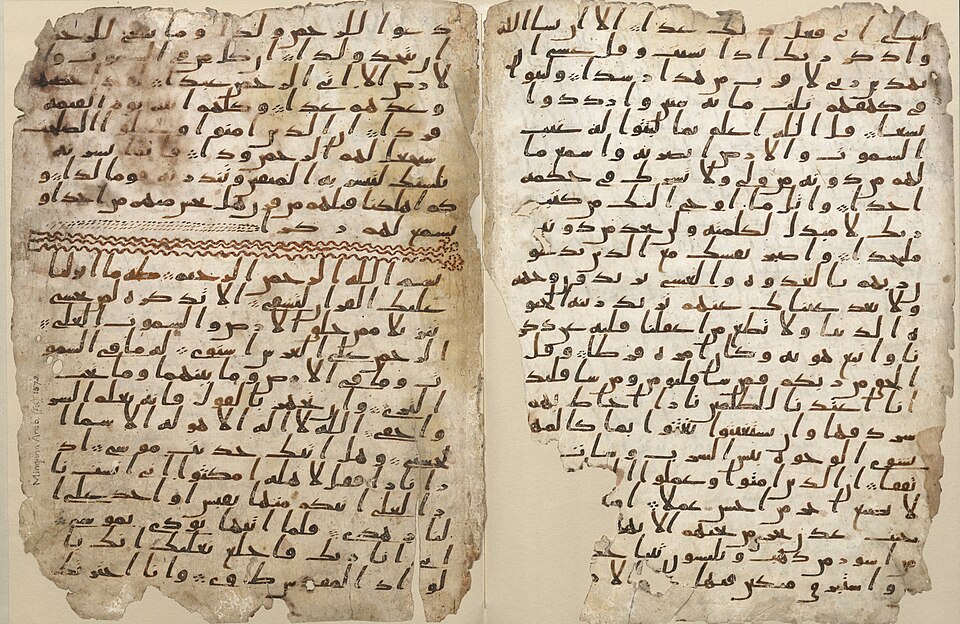
The verse itself and the narrations that attach protection to reciting it at night.
Read Qur'an & Hadith in full ↗Cover: Public domain · AnonymousUnknown author · Wikimedia file page
Nearby
Related marks
The Nazar
Blue glass with a white and black eye at its centre, worn on the theory that a look can be sent back.
The Seal of Solomon
A signet ring, not a shape. The Testament of Solomon makes it the instrument by which every demon in the book is compelled to give its name.
The Brass Vessel
The container the legend says Solomon sealed the spirits into, thrown into a lake and opened by Babylonians who expected treasure. It is where the Ars Goetia says its seventy-two came from.
The Hamsa
An open hand against the evil eye, claimed in nearly identical form by Jewish, Muslim and Christian communities across the same geography.
The Hexagram
Two interlocked triangles that were ornament almost everywhere before they were a Jewish emblem anywhere — and a spirit-binding seal in between.
The Crescent and Star
Nothing to do with the Qur'an and everything to do with Constantinople — a Byzantine city emblem inherited by the empire that took the city.