Deity · Canaanite · c. 1400 BCE
Lotan
Also called Litan, The Twisting Serpent
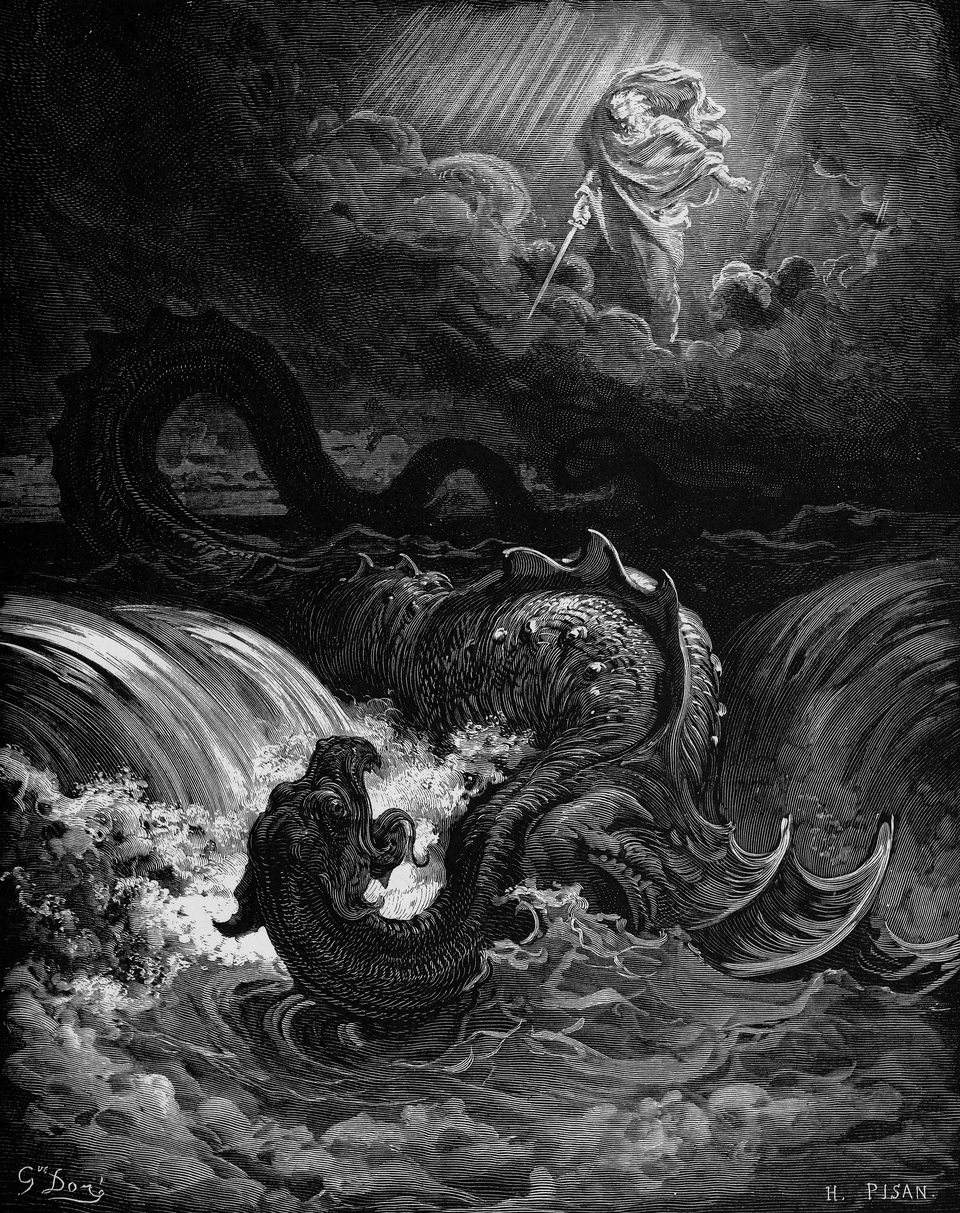
The seven-headed sea-serpent slain in the Baal Cycle, described in language Isaiah reuses almost verbatim for Leviathan.
Well sourced
The Ugaritic text calls Lotan 'the fleeing serpent, the twisting serpent, the mighty one with seven heads'. Isaiah 27:1 announces that the LORD will punish 'leviathan the piercing serpent, even leviathan that crooked serpent'. The phrasing correspondence is close enough that the relationship is not seriously disputed: the same mythological creature, absorbed into a monotheist frame where the sea-dragon is no longer a rival god but a creature awaiting judgment.
Identity
Where does the name come from?
Where it was actually worshipped
None. A creature of the Baal Cycle, killed rather than served.
A figure with temples and a figure that only ever existed on a page are different kinds of thing, and the difference is easy to lose once both are entries in a list.
At a glance
Vitals
Vitals
Also known as
- First attested
- The Baal Cycle (Ugaritic Tablets) · c. 1400-1200 BCE
- Named there as
- Litan
- Rank
- Chaos Serpent
- Pantheon
- Canaanite
- Order
- Ugaritic pantheon
- Base of operations
- None. A creature of the Baal Cycle, killed rather than served.
- Era
- c. 1400 BCE
- Traditions
- Canaanite & Ugaritic
Traits
- Domain
- The sea, chaos
- Traditional form
- A seven-headed twisting serpent
Stats
Known connections
Chain of command
Identified with
1 attributed
What is it said to do?
Where these powers cluster
The 1 offices attributed to Lotan, grouped by kind. Segment width is the share of powers falling in each category.
A bar dominated by one colour means a specialist; an even spread means a figure the sources credit with almost anything.
- malefic1
2 texts
Which texts say so, and where do they disagree?
When these texts were written
Each dot is one of the 2 texts that names Lotan, placed at that text's approximate date.
A wide spread means the figure was carried across many centuries and traditions; a tight cluster means a single period produced the whole record.
2 texts spanning roughly 900 years
Where the texts differ
- Name: given as Litan, Leviathan
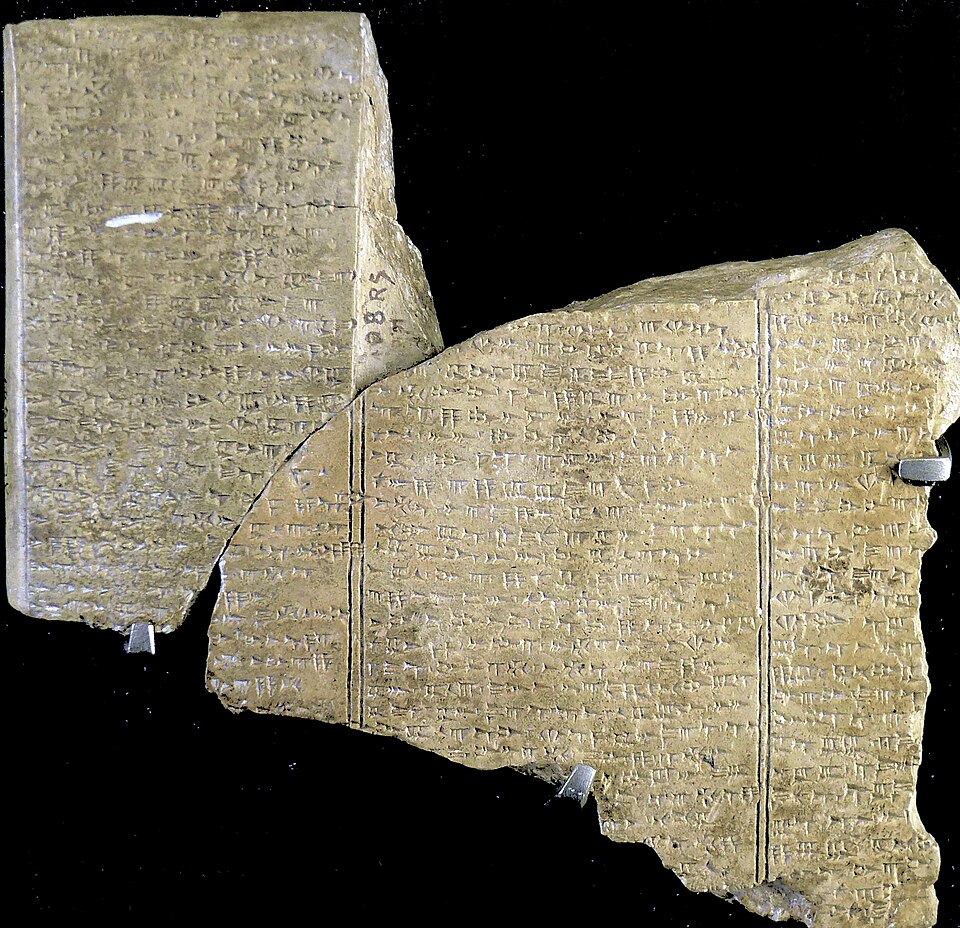
Slain by Baal or by Anat.
“The fleeing serpent, the twisting serpent, the mighty one with seven heads.”
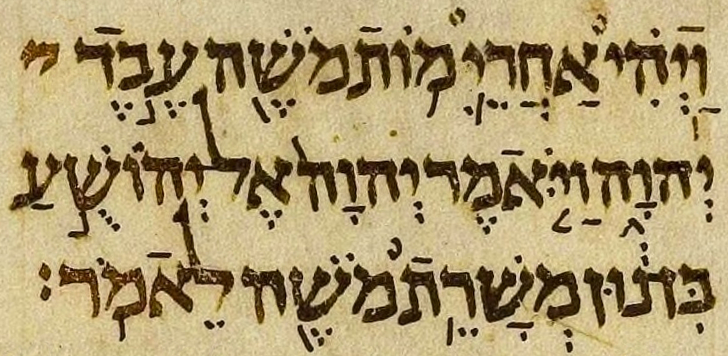
The clearest single case of a Ugaritic figure surviving into scripture. Isaiah 27:1 calls Leviathan the fleeing serpent and the twisting serpent, which renders the pair of epithets the Baal Cycle already attaches to Litan almost word for word; Psalm 74:14 has God crushing its heads, plural, as the tablets do; Job 41 gives it a chapter of its own.
Connections
What is it connected to?
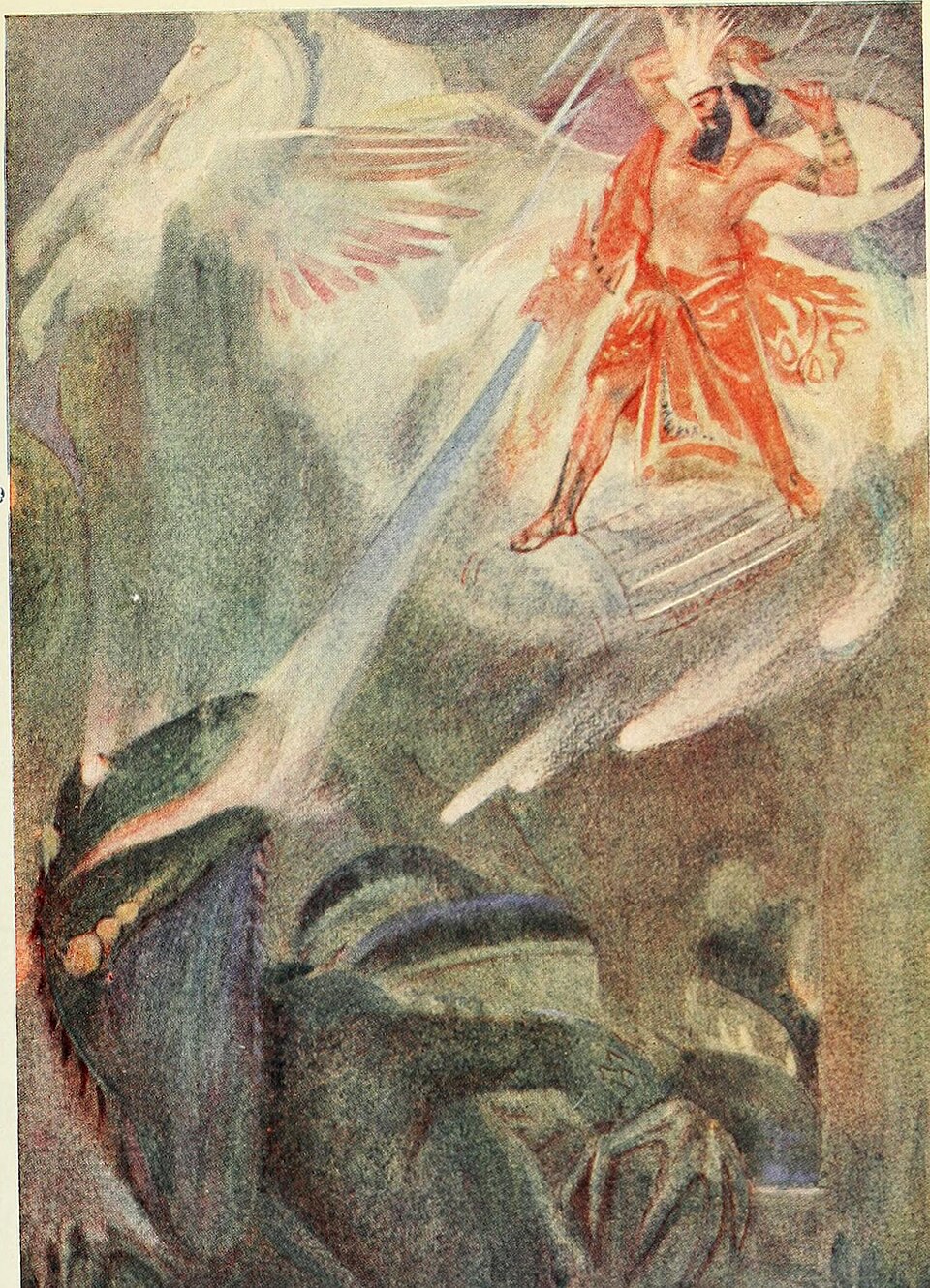
Identified with Tiamat
Parallel West and East Semitic forms of the defeated sea.
Serves Yam
Lotan is the serpent associated with Prince Sea in the Ugaritic texts.
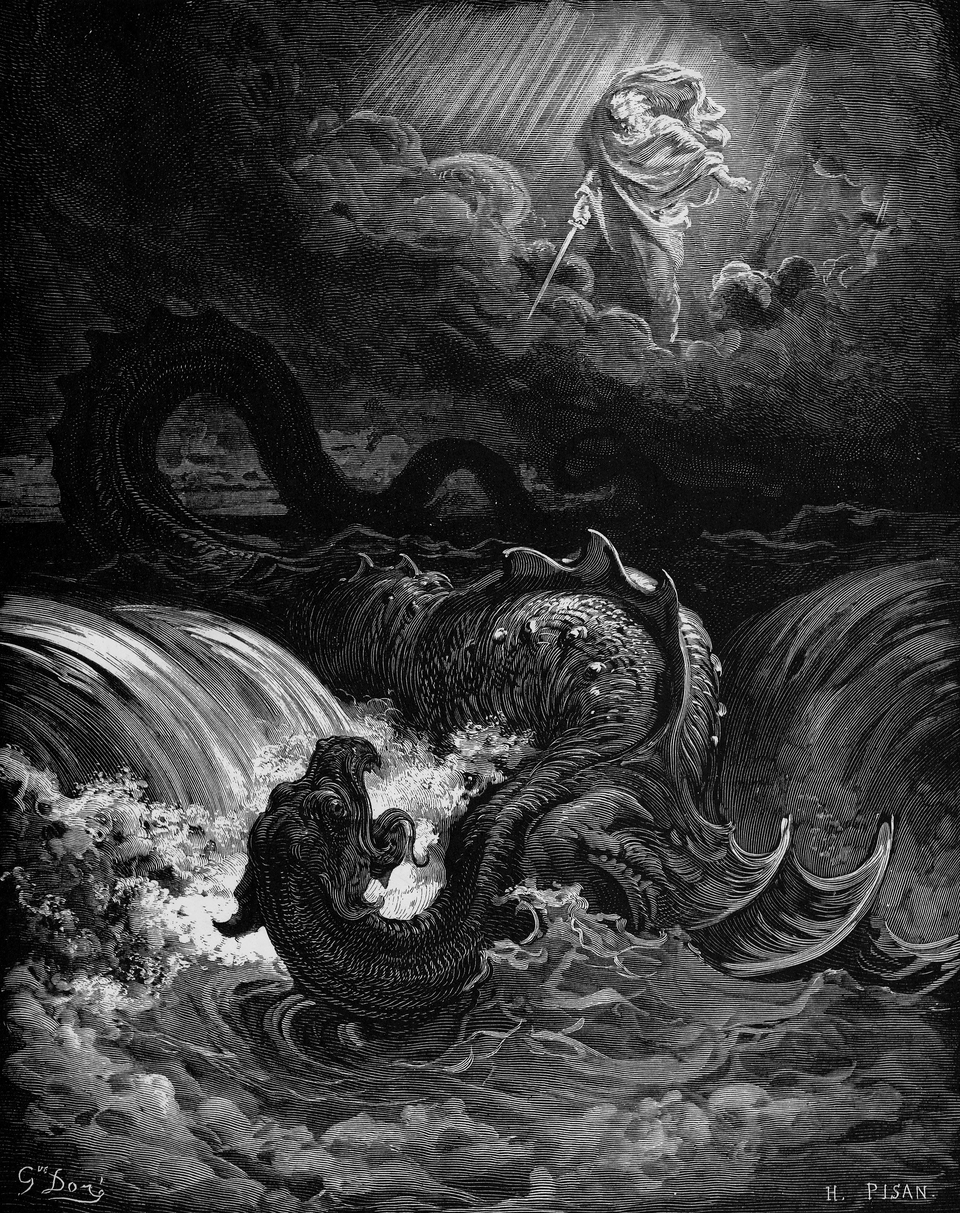
Ancestor of Leviathan
Isaiah 27:1 reuses the Ugaritic epithets for Lotan almost verbatim.
Identified with Vritra
The Indo-European branch of the serpent-slaying myth.
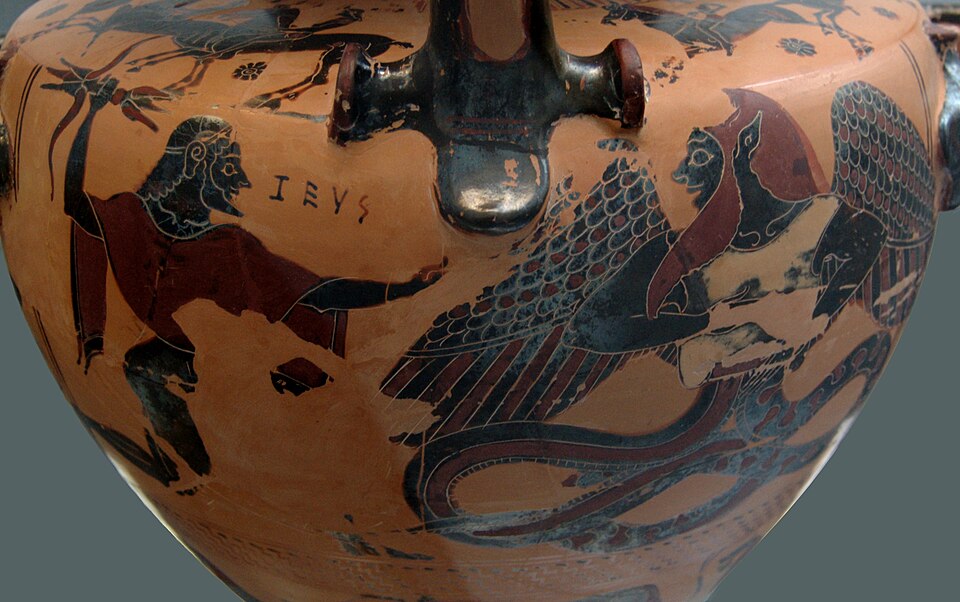
Identified with Typhon
Hesiod's monster shares the storm-god-versus-serpent structure.
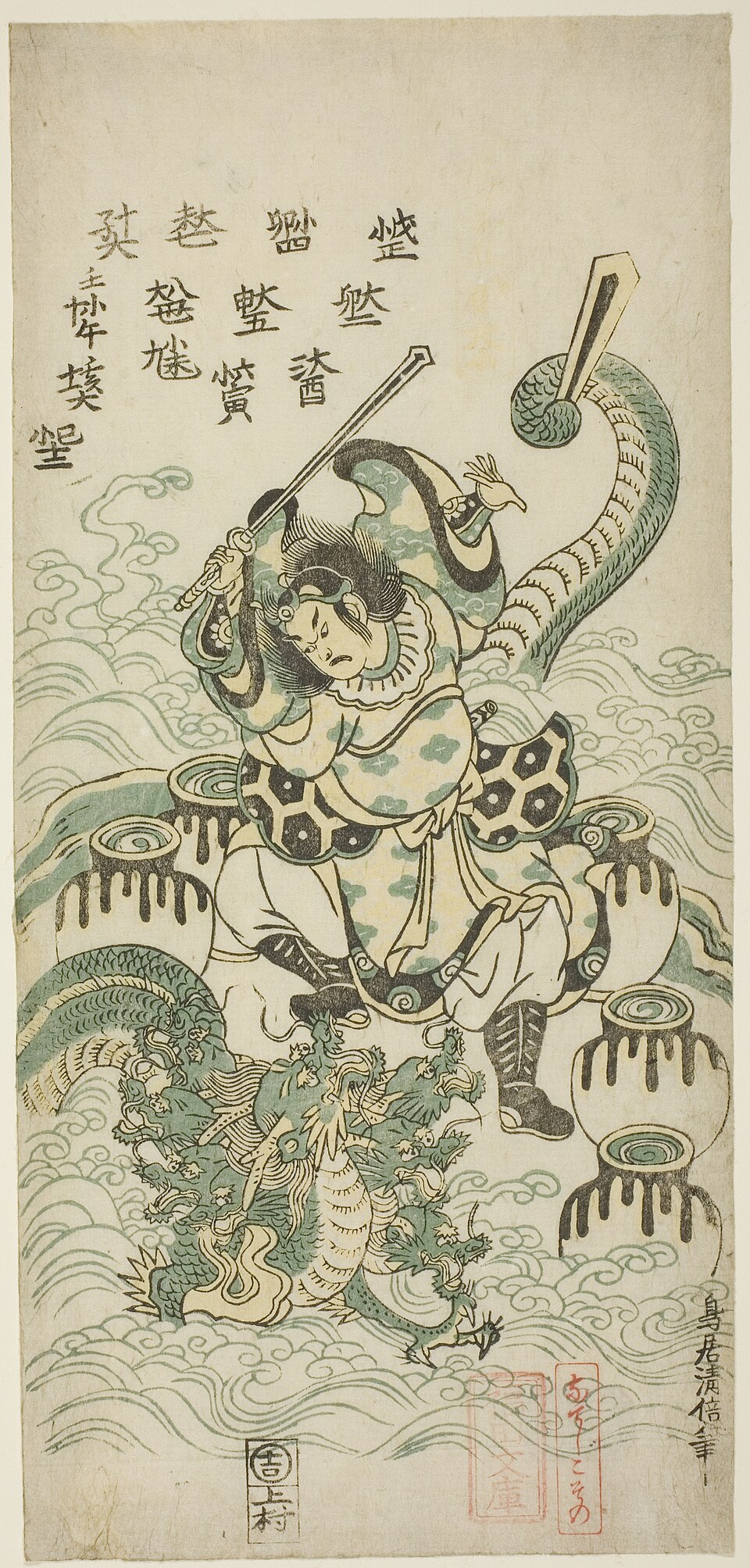
Identified with Yamata-no-Orochi
Many-headed serpents slain by a storm god — an independent parallel, not a borrowing.
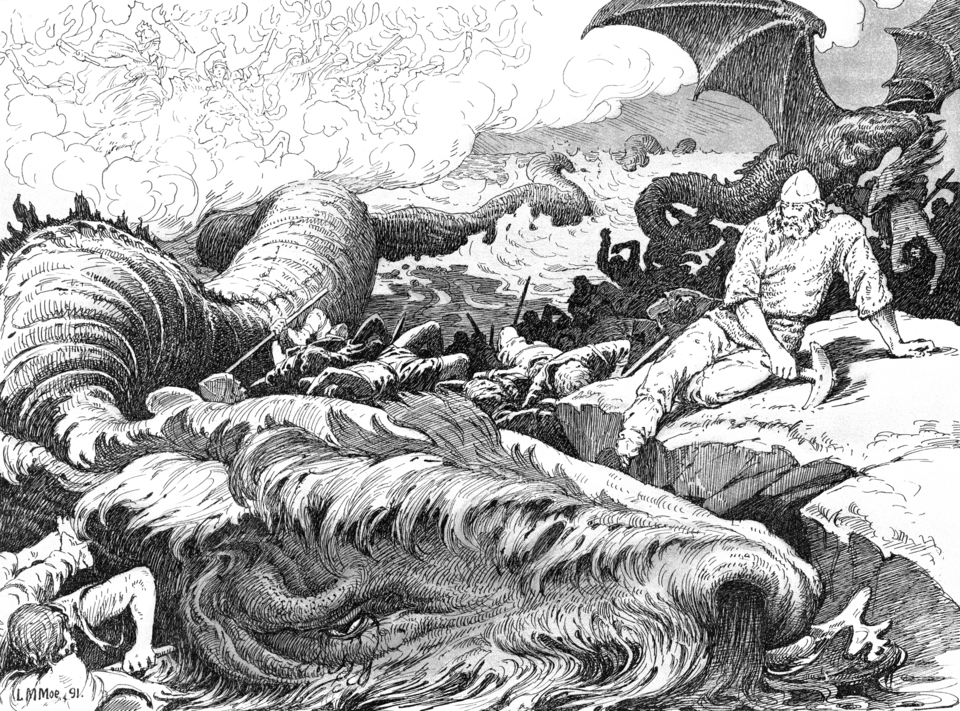
Identified with Jormungandr
The encircling world-serpent, the Norse branch of the pattern.
Identified with Zahhak
Azi Dahaka is a three-headed serpent bound rather than destroyed, like Lotan's Iranian cousins.
Answered from the sources
Common questions
Which texts mention Lotan?
Is Lotan the same as Tiamat?
What rank is Lotan?
How else is Lotan spelled?
What is Lotan said to do?
How old is Lotan?
Nearest in the corpus
If Lotan is what you came for, these are next
Chosen by proximity rather than by popularity: the same pantheon first, then the same rank, then the same kind of figure.
Anat
Warrior Goddess · Canaanite
Baal's sister and avenger. She grinds Death himself to pieces and sows him in a field, which makes her the most violent figure in the Ugaritic corpus.
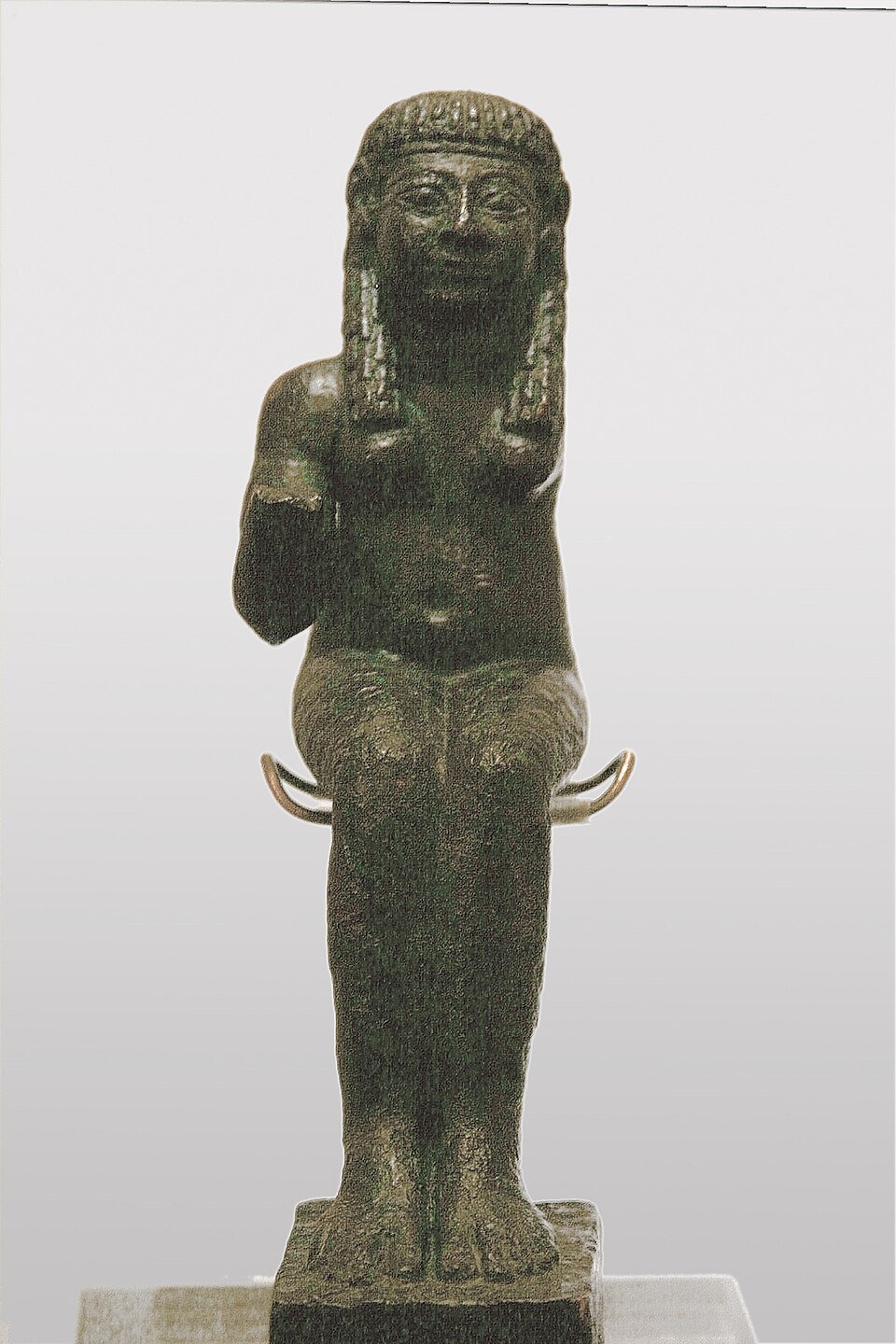
Astarte
Goddess of Love and War · Canaanite
The West Semitic goddess of love and war, cognate with Ishtar — and the direct ancestor of the Goetic duke Astaroth, who kept the name and lost the gender.
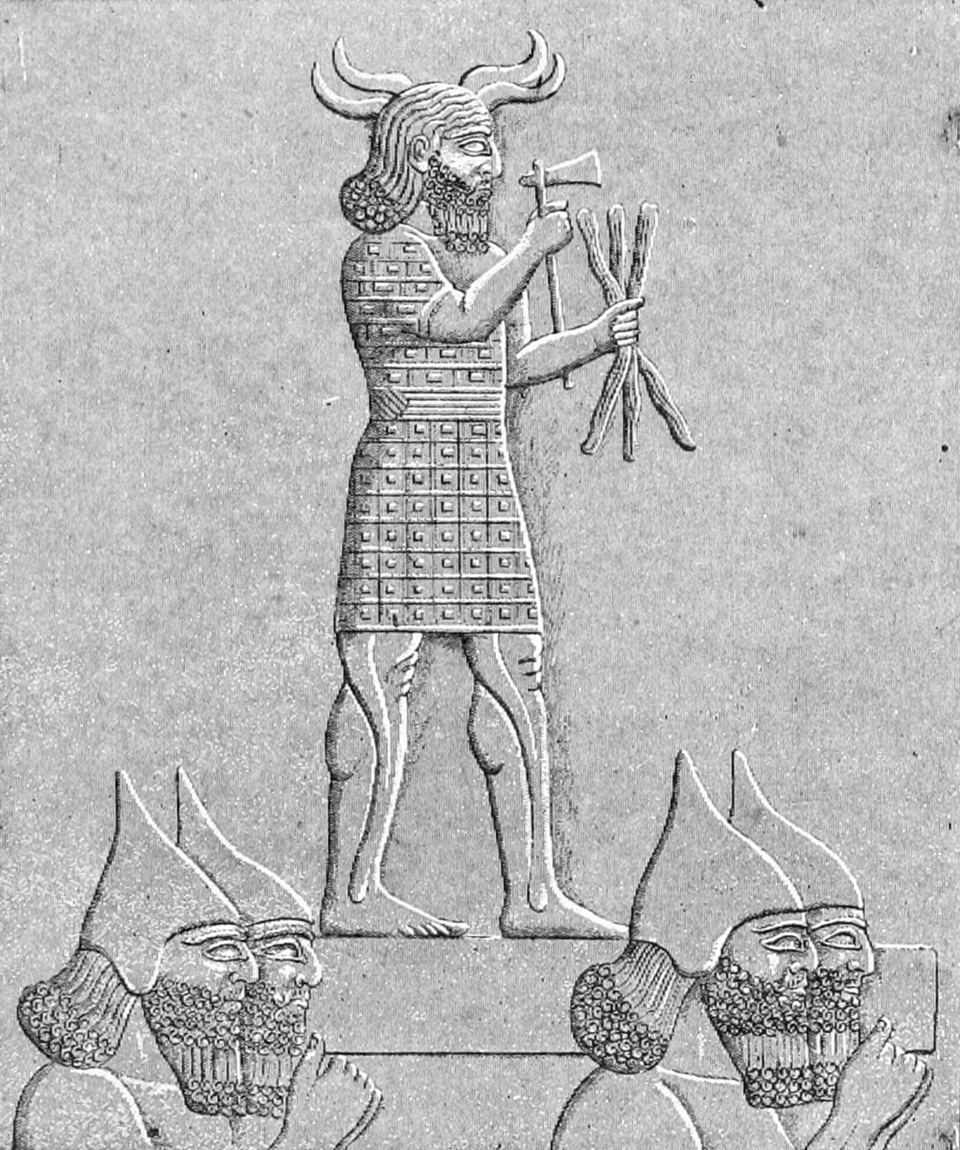
Baal Hadad
Storm God · Canaanite
The Canaanite storm and fertility god who defeats Sea and Death — and whose title, *baal* ('lord'), the Hebrew Bible turns into a generic term for false gods.
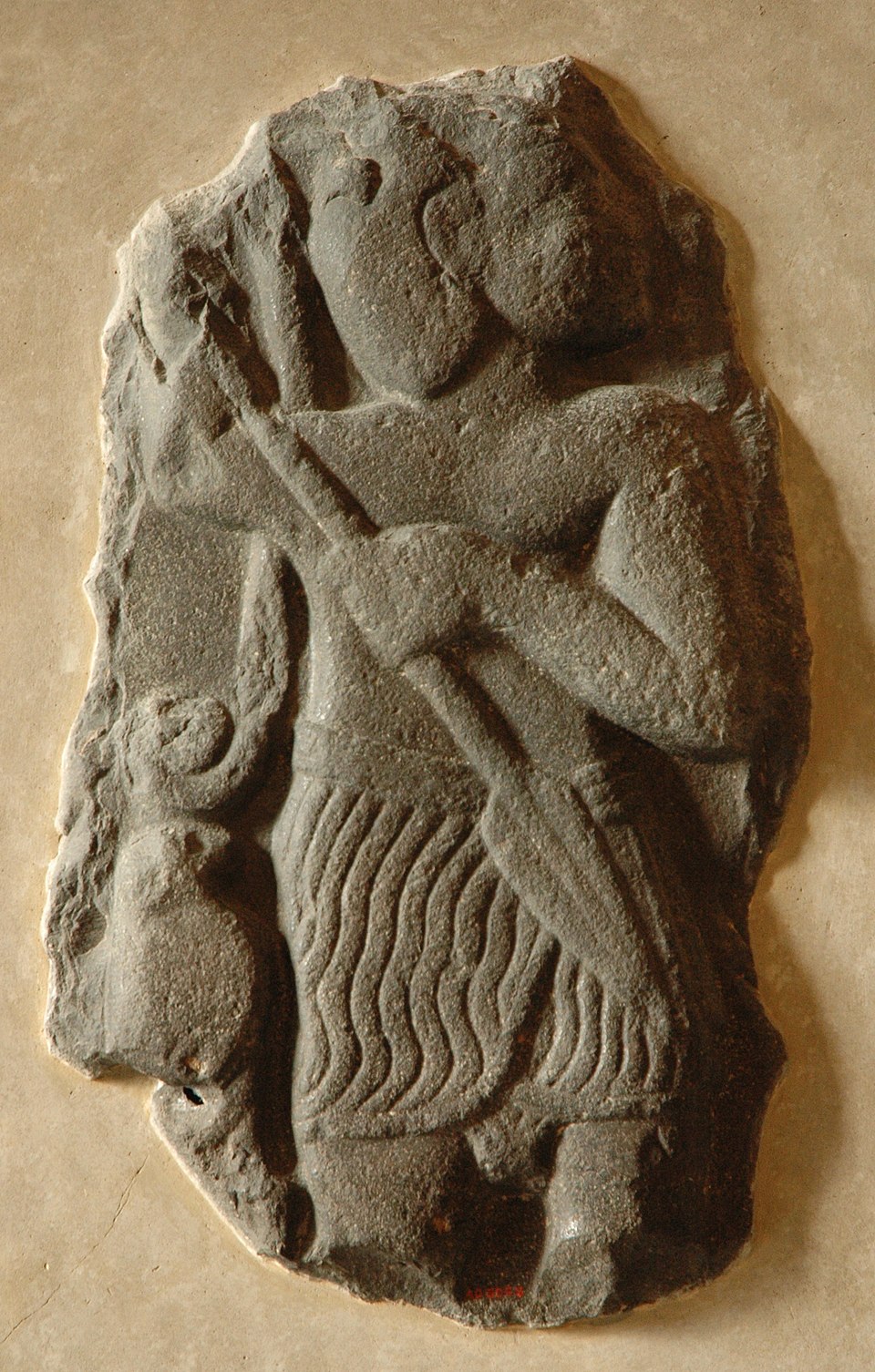
Chemosh
God of Moab · Canaanite
National god of Moab, known from the Bible and from the Mesha Stele — where a Moabite king describes his own history in language almost identical to Israel's.
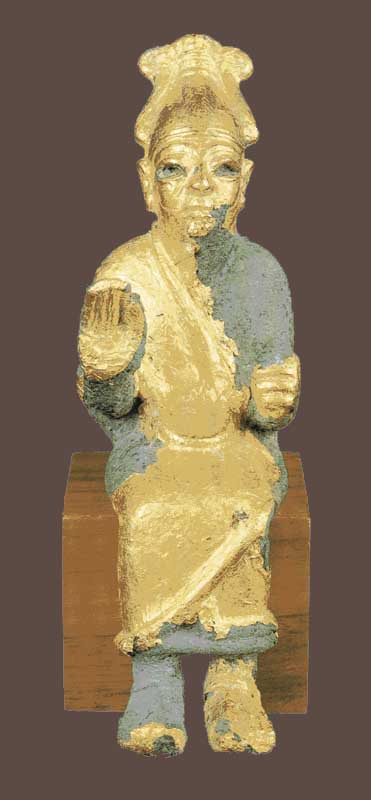
El
Father of the Gods · Canaanite
The aged high god who presides over the assembly at Ugarit — and whose name is one of the Hebrew Bible's own words for God.
Mot
God of Death · Canaanite
Death itself as a god, with a throat wide enough to swallow Baal. The later mouth-of-hell is this image, several cultures downstream.
The books behind Lotan
Every claim on this profile is attributed to one of these. They are public domain, listed oldest first, and each links to a full text where one is freely available.
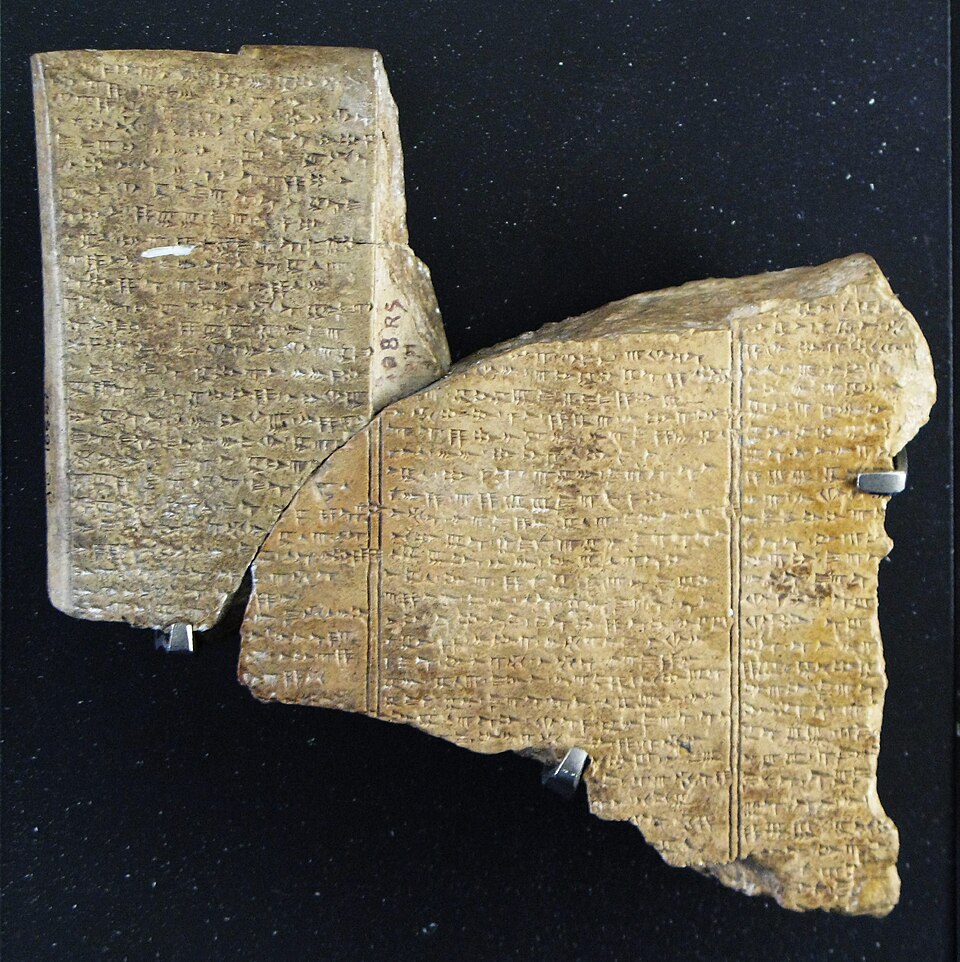
The Baal Cycle (Ugaritic Tablets)
Anonymous; recovered at Ras Shamra · c. 1400-1200 BCE · Ugaritic
Read The Baal Cycle (Ugaritic Tablets) in full ↗Cover: CC BY-SA 3.0 · Unknown artist · Wikimedia file page
Hebrew Bible & Deuterocanon
Various · c. 900–100 BCE · Hebrew, Aramaic, Greek
Read Hebrew Bible & Deuterocanon in full ↗Cover: Public domain · see en:Aleppo Codex; scanned by · Wikimedia file page
Corpus last revised 29 August 2026. A reference site’s credibility rests on being maintained, so this is the date the sourced records last changed — not the date the page was rebuilt.