Demonic · Infernal Court · c. 400 BCE
Leviathan
Also called Livyatan, Lotan, The Crooked Serpent
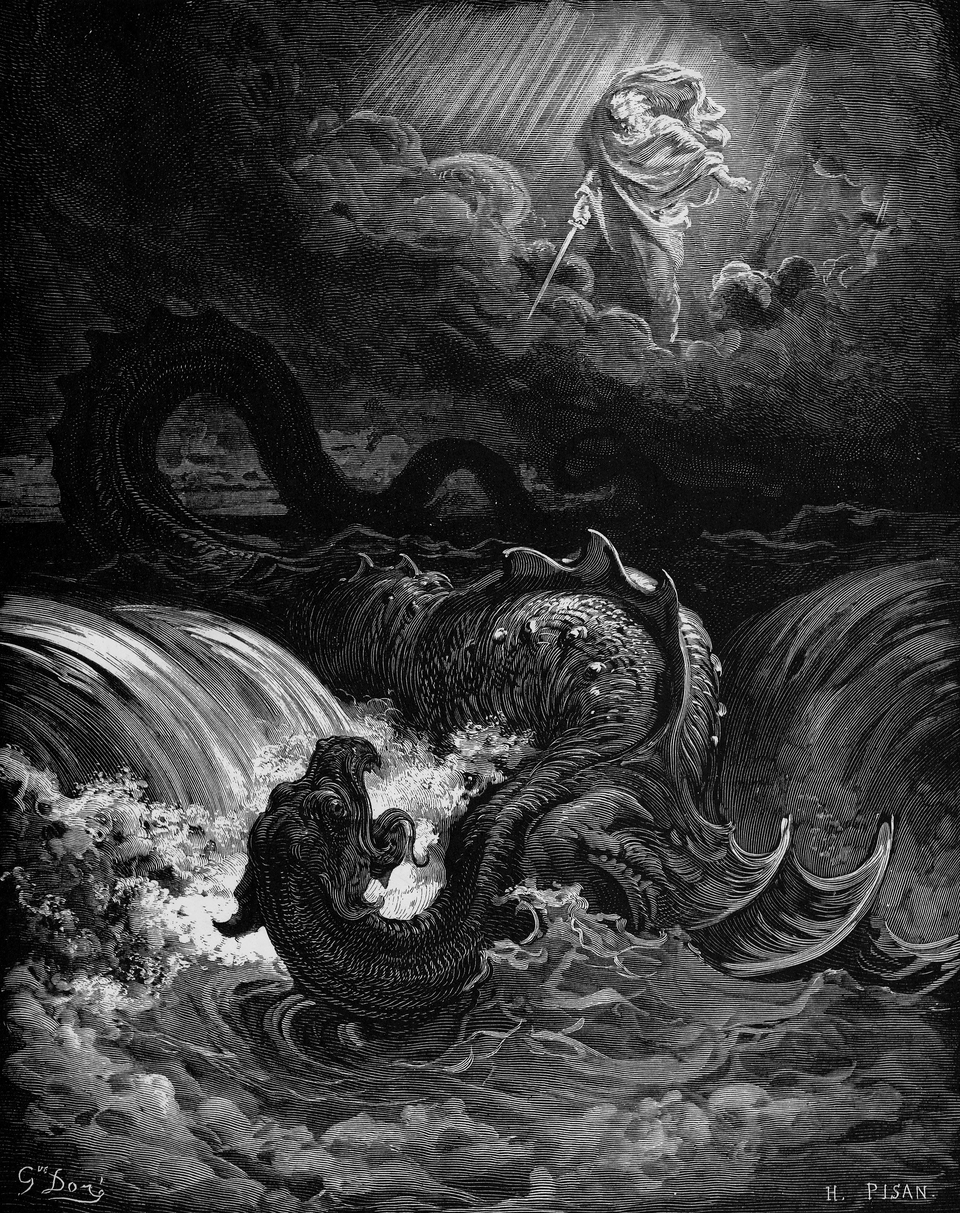
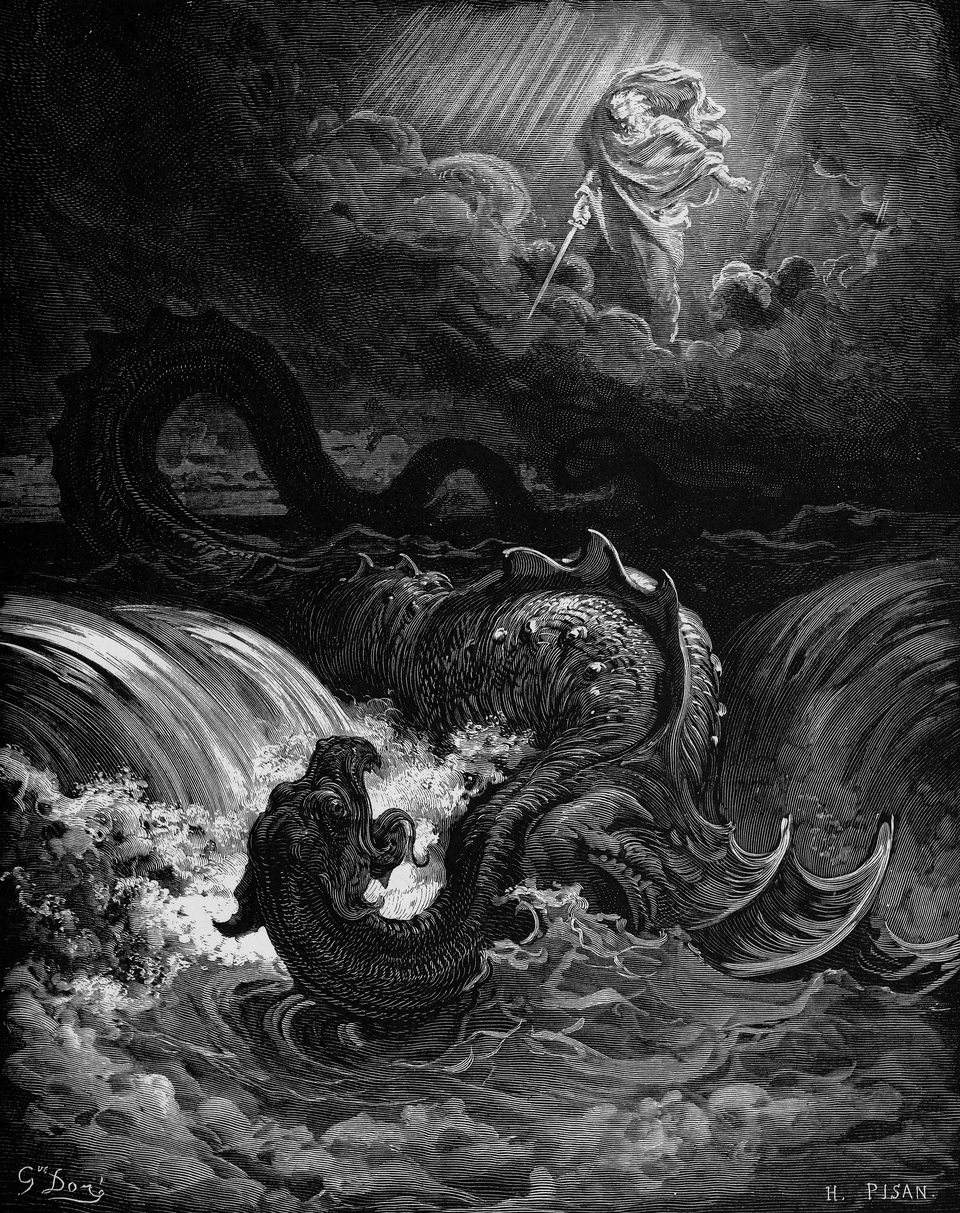
The sea-dragon of Job and Isaiah, drawn from Canaanite chaos myth, and later assigned the sin of envy and the office of admiral of hell.
Well sourced
Job's Leviathan is a creature of overwhelming physical description — smoke from the nostrils, scales as shields, a heart as firm as stone — presented as proof that the world contains powers beyond human management. Isaiah's is mythological: the fleeing serpent that God will punish with his sword, a near-verbatim parallel to the Ugaritic Lotan defeated by Baal. Christian demonology later flattened all of this into a rank, making him admiral of the infernal navy and the demon of envy, and the gaping sea-monster mouth became the standard visual for the entrance to hell.
Identity
Where does the name come from?
What the name means
Hebrew *livyatan*. BDB (1906) takes it as formed from the root *lawah* with a feminine ending and the -an suffix, citing Gesenius, König and Barth for the formation, and records Lagarde's dissent that it is a foreign loan-word instead. The senses BDB lists are worth having in one place, because they are not one animal: a sea-monster or crocodile at Job 40, the whale of Psalm 104, the dragon that causes eclipses at Job 3:8, and a figure for Egypt at Psalm 74. The corpus files the Ugaritic Litan alongside it as the same creature under another spelling, which is a claim about the texts rather than about the word.
Where it was actually worshipped
None. A creature of the sea in Job and Psalms, and in the rabbinic tradition food at the end of the world rather than a recipient of anything.
A figure with temples and a figure that only ever existed on a page are different kinds of thing, and the difference is easy to lose once both are entries in a list.
At a glance
Vitals
Vitals
Also known as
- First attested
- Hebrew Bible & Deuterocanon · c. 900–100 BCE
- Rank
- Grand Admiral
- Order
- Infernal Court
- Base of operations
- None. A creature of the sea in Job and Psalms, and in the rabbinic tradition food at the end of the world rather than a recipient of anything.
- Era
- c. 400 BCE
- Traditions
- Christian, Jewish, Folk & Demonological
Traits
- Domain
- The sea, chaos, envy
- Element
- Water
- Traditional form
- A vast scaled sea-serpent with a fiery mouth
- Capital sin (Binsfeld, 1589)
- Envy — The least intuitive of the seven; Job's sea-beast has nothing to do with envy.
Stats
Known connections
Chain of command
Identified with
3 attributed
What is it said to do?
Where these powers cluster
The 3 offices attributed to Leviathan, grouped by kind. Segment width is the share of powers falling in each category.
A bar dominated by one colour means a specialist; an even spread means a figure the sources credit with almost anything.
- social1
- malefic2
1 mark
Which marks is it attached to?
A mark a figure carries and a mark used against a figure are opposite claims, so each link says which it is.
3 texts
Which texts say so, and where do they disagree?
When these texts were written
Each dot is one of the 3 texts that names Leviathan, placed at that text's approximate date.
A wide spread means the figure was carried across many centuries and traditions; a tight cluster means a single period produced the whole record.
3 texts spanning roughly 2,263 years
Where the texts differ
- Name: given as Leviathan, Léviathan
- Rank: given as Creature of the deep; Grand admiral of hell
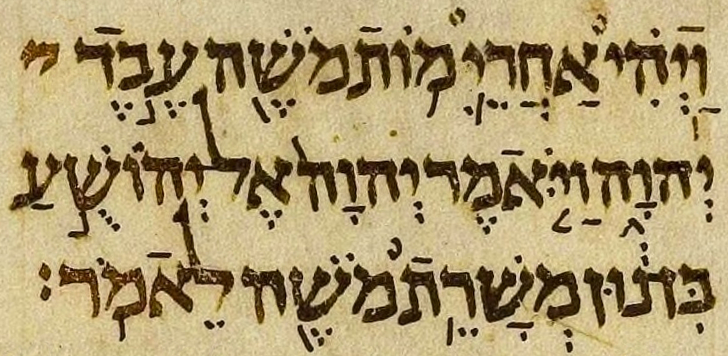
Unmasterable by any human means; his breath kindles coals and he makes the deep boil like a pot.
“Canst thou draw out leviathan with an hook?”
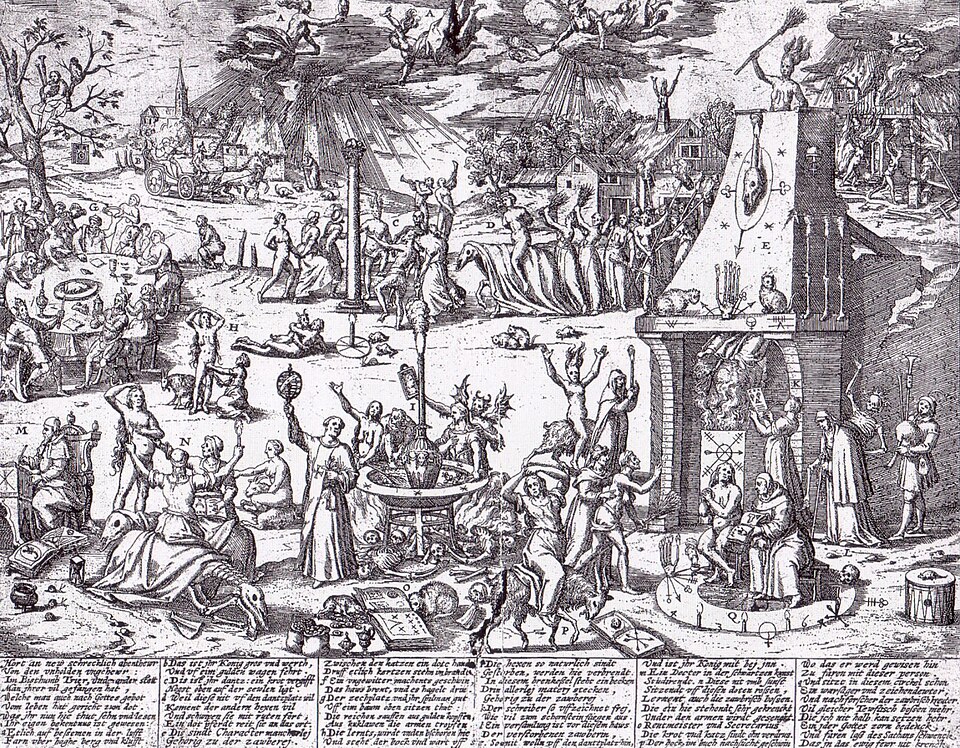
Named as the demon of envy in Binsfeld's assignment of one spirit to each capital sin.
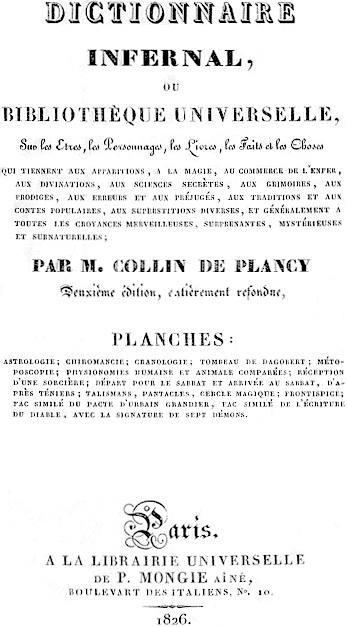
Given command of the infernal naval forces and the sin of envy.
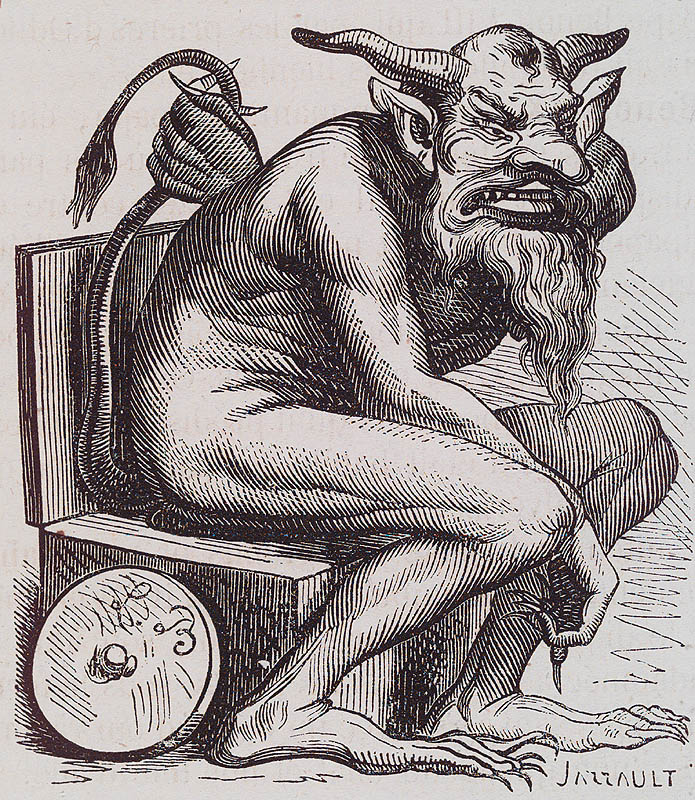
“Léviathan, grand amiral de l’enfer, selon les démonomanes. Wierus l’appelle le grand menteur.”Leviathan, grand admiral of hell, according to the demonomanes. Wier calls him the great liar. — translated for ColossiansOne
Connections
What is it connected to?
Placement
Where does it sit in the hierarchies?
The Three Infernal Hierarchies
First Hierarchy → Leviathan
Sins against faith. Opposed by Peter.
The Infernal Court
Great Officers → Leviathan
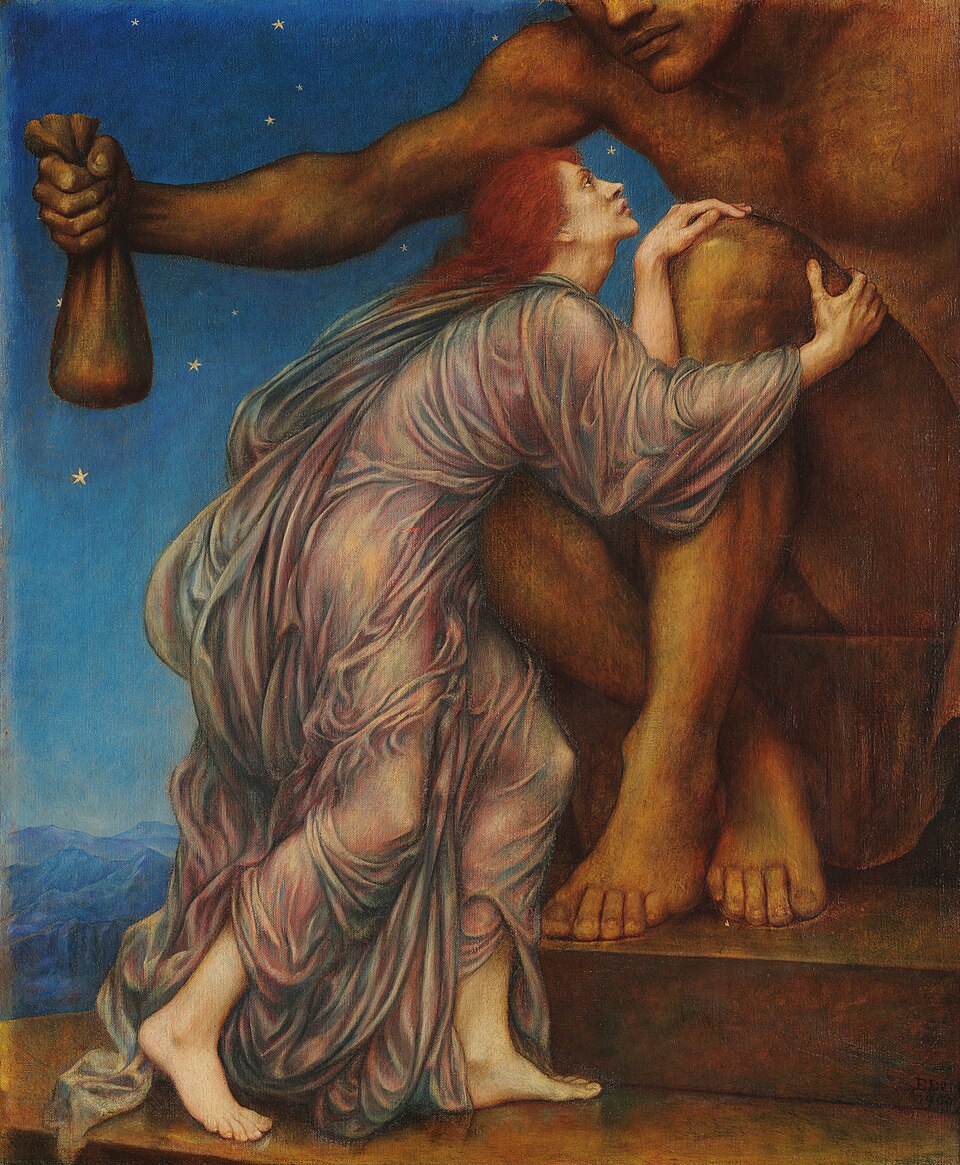
Grand Admiral.

The Seven Princes and the Deadly Sins
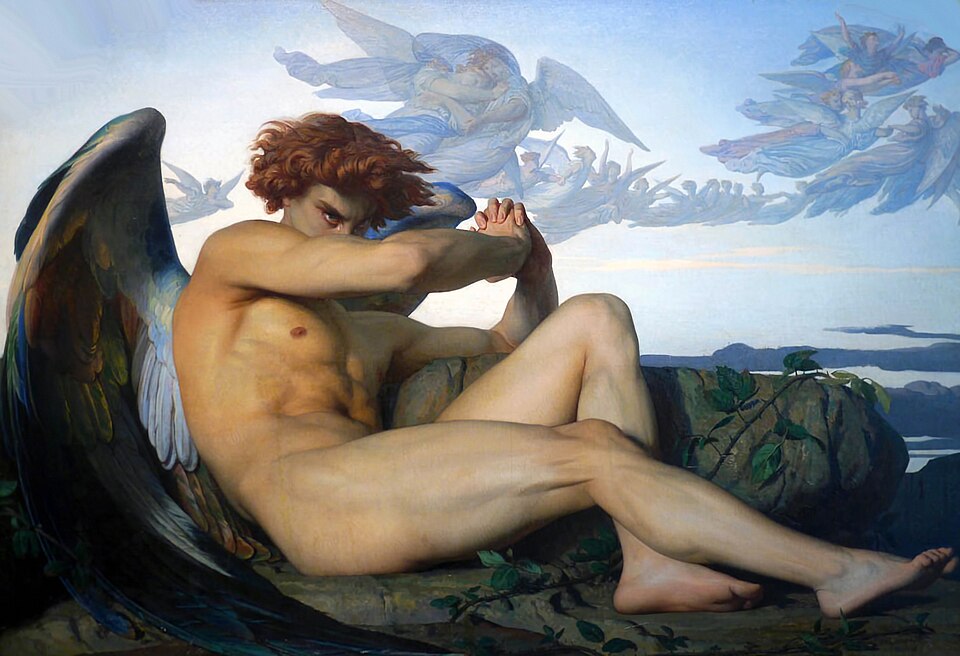
Envy
The least intuitive of the seven; Job's sea-beast has nothing to do with envy.
Afterwards
What did later readers make of it?
Hobbes put the name on the frontispiece of the founding text of modern political philosophy in 1651, taking from Job the one thing on earth that has no equal and using it for the commonwealth — a body made of people, unanswerable and necessary. That is why the word now means a vast organisation before it means a sea creature. Melville's Moby-Dick opens with a page of quotations under the same name, and the modern English use of leviathan for anything enormous descends from both.
Kept in its own section on purpose. Everything above is what the cited texts say; this is what was built on top of them afterwards, and blending the two is how most popular demonology goes wrong.
Answered from the sources
Common questions
Which texts mention Leviathan?
Is Leviathan the same as Lotan?
What rank is Leviathan?
How else is Leviathan spelled?
What is Leviathan said to do?
How old is Leviathan?
Nearest in the corpus
If Leviathan is what you came for, these are next
Chosen by proximity rather than by popularity: the same pantheon first, then the same rank, then the same kind of figure.
Asmoday
King · Goetic Spirit
Commands seventy-two legions, one for every spirit in the book. He is the Asmodeus of Tobit, who killed Sarah's seven husbands and was driven into Upper Egypt by Raphael, and behind that the Avestan Aeshma-daeva, the demon of wrath — one of very few Goetic spirits with an ancestry that can be traced.
Astaroth
Duke · Goetic Spirit
The Canaanite goddess Astarte, three thousand years on, made a male duke of hell with her name intact. The Goetia has him discourse willingly on the fall of the spirits, and warns the operator to hold a ring to his face against the stench of his breath.
Beelzebub
Prince · Infernal Court
'Lord of the Flies' — a Philistine god of Ekron whose name was almost certainly deformed as a Hebrew insult, then inherited by Christian demonology as the second power of hell.
Belial
King · Goetic Spirit
In the Hebrew Bible beliya'al is not a name but a word meaning worthlessness; by 2 Corinthians it is a person, and by the Goetia a king in a chariot of fire handing out senatorships. The text says he was created next after Lucifer and fell among the first, and will not answer truly without gifts.
The Spirits of Affliction
Group of Named Spirits · Deliverance tradition
The remaining 'spirit of X' phrases, grouped because the tradition's whole method stands or falls on how they are read.

Bael
King · Goetic Spirit
First of the seventy-two and, by the Goetia's own account, chief among them — a three-headed thing on spider's legs, ruling in the east and granting invisibility. The name is the Canaanite storm god Baal, three thousand years and one demotion later.
The books behind Leviathan
Every claim on this profile is attributed to one of these. They are public domain, listed oldest first, and each links to a full text where one is freely available.
Hebrew Bible & Deuterocanon
Various · c. 900–100 BCE · Hebrew, Aramaic, Greek
Read Hebrew Bible & Deuterocanon in full ↗Cover: Public domain · see en:Aleppo Codex; scanned by · Wikimedia file page
Tractatus de Confessionibus Maleficorum et Sagarum
Peter Binsfeld · 1589 · Latin
Read Tractatus de Confessionibus Maleficorum et Sagarum in full ↗Cover: Public domain · Unknown author · Wikimedia file page
Dictionnaire Infernal
Jacques Collin de Plancy · 1818; illustrated ed. 1863 · French
Read Dictionnaire Infernal in full ↗Cover: Public domain · Collin de Plancy · Wikimedia file page
Corpus last revised 29 August 2026. A reference site’s credibility rests on being maintained, so this is the date the sourced records last changed — not the date the page was rebuilt.