Deity · Canaanite · c. 840 BCE
Chemosh
Also called כמוש (per Wikidata)
National god of Moab, known from the Bible and from the Mesha Stele — where a Moabite king describes his own history in language almost identical to Israel's.
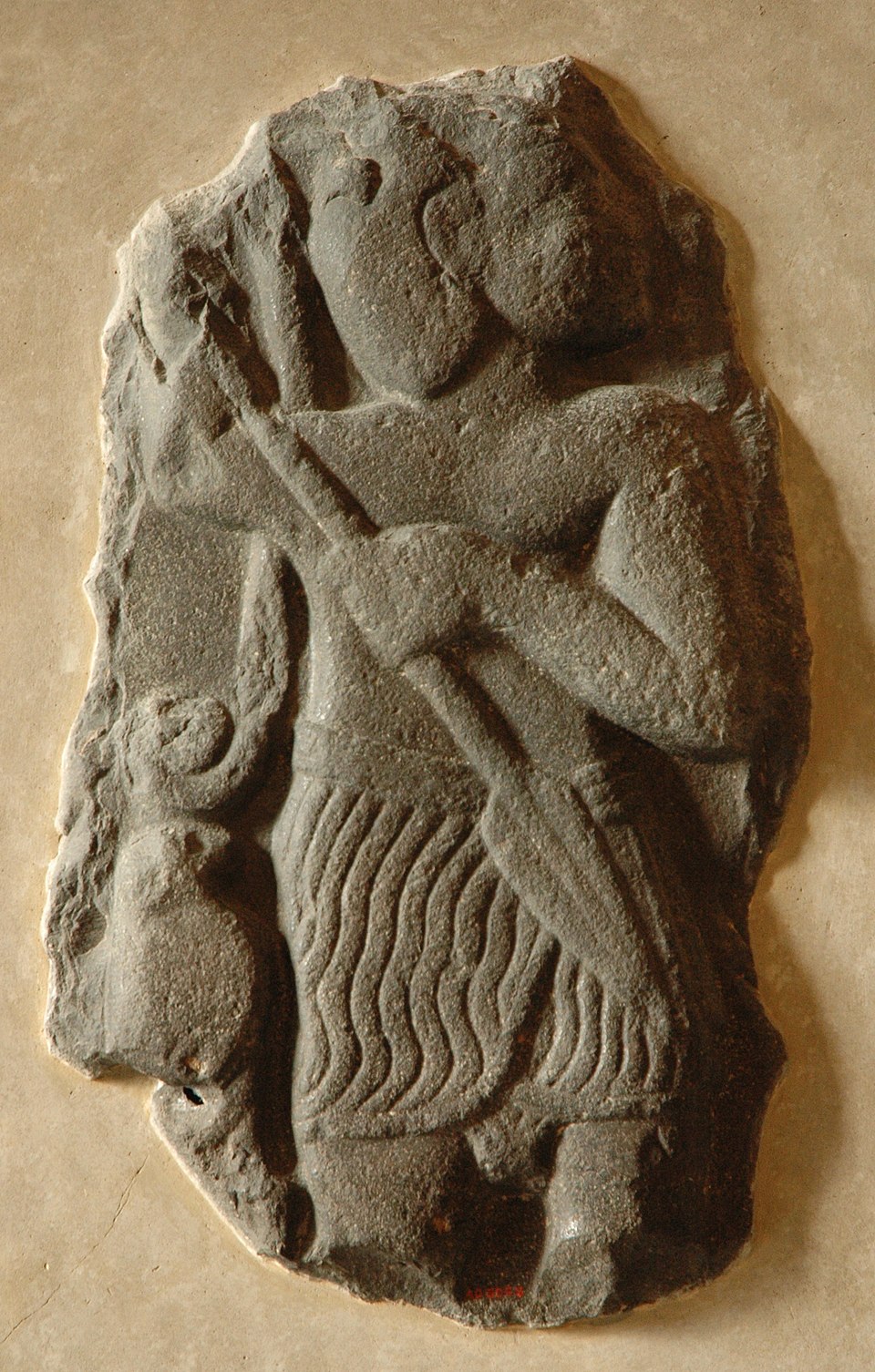
Well sourced
The Mesha Stele, found in 1868, gives the other side of the argument. In it King Mesha records that Chemosh was angry with his land, gave Moab into Israel's hand, and then relented and granted victory. The theology is structurally identical to the Deuteronomistic account of Israel's own defeats and deliverances — a god who punishes his people through foreign armies and then restores them. Read side by side, the two are recognisably the same religious grammar applied by neighbours to opposite ends.
Identity
Where does the name come from?
Where it was actually worshipped
Dibon in Moab, where the Mesha Stele was found and where Mesha says he built a high place for Chemosh because the god was angry with his land.
A figure with temples and a figure that only ever existed on a page are different kinds of thing, and the difference is easy to lose once both are entries in a list.
At a glance
Vitals
Vitals
Also known as
- First attested
- The Mesha Stele (the Moabite Stone) · c. 840 BCE
- Rank
- God of Moab
- Pantheon
- Canaanite
- Order
- Canaanite pantheon
- Base of operations
- Dibon in Moab, where the Mesha Stele was found and where Mesha says he built a high place for Chemosh because the god was angry with his land.
- Era
- c. 840 BCE
- Traditions
- Canaanite & Ugaritic
Traits
- Domain
- The nation of Moab, war
- Traditional form
- Not securely attested
Stats
Known connections
Identified with
1 site
Where was it worshipped?
Attested cult sites, located against the Pleiades gazetteer of the ancient world where it reaches and against Wikidata everywhere else. An absence here is not evidence that no cult existed: a good number of figures never had one, and the entry above says so where that is the case.
now Dhiban
The Moabite capital, and where the Mesha Stele was found — the one inscription that lets Chemosh speak for himself.
Where Mesha says he built a high place for him.
31.499, 35.781 · Pleiades 697654
3 attributed
What is it said to do?
Where these powers cluster
The 3 offices attributed to Chemosh, grouped by kind. Segment width is the share of powers falling in each category.
A bar dominated by one colour means a specialist; an even spread means a figure the sources credit with almost anything.
- martial2
- material1
2 texts
Which texts say so?
When these texts were written
Each dot is one of the 2 texts that names Chemosh, placed at that text's approximate date.
A wide spread means the figure was carried across many centuries and traditions; a tight cluster means a single period produced the whole record.
2 texts spanning roughly 440 years
The god of Moab, described by Moab rather than by its enemies. Mesha credits Chemosh with being angry at his land, with giving him victory over Israel, and with commanding the destruction of a town and its people. The Hebrew Bible records the same war from the other side, so the corpus holds both accounts of one campaign, each attributing the outcome to its own god.
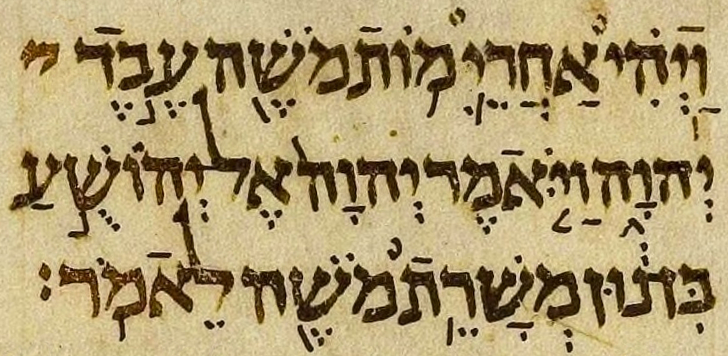
Named as the god for whom Solomon built a high place; the Mesha Stele gives the Moabite side in nearly identical theological terms.
Connections
What is it connected to?
Answered from the sources
Common questions
Which texts mention Chemosh?
Is Chemosh the same as Moloch?
What rank is Chemosh?
How else is Chemosh spelled?
What is Chemosh said to do?
How old is Chemosh?
Nearest in the corpus
If Chemosh is what you came for, these are next
Chosen by proximity rather than by popularity: the same pantheon first, then the same rank, then the same kind of figure.
Anat
Warrior Goddess · Canaanite
Baal's sister and avenger. She grinds Death himself to pieces and sows him in a field, which makes her the most violent figure in the Ugaritic corpus.
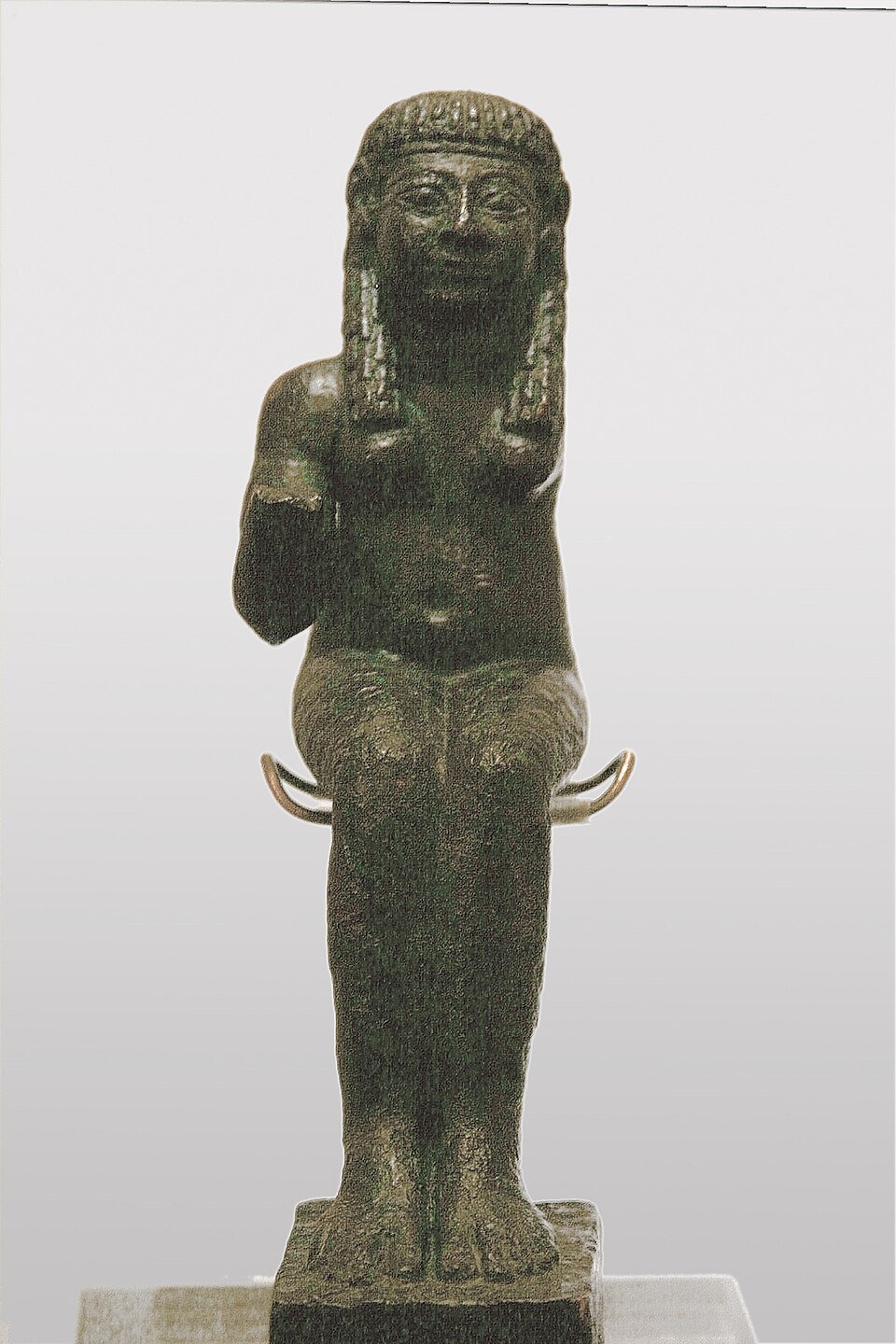
Astarte
Goddess of Love and War · Canaanite
The West Semitic goddess of love and war, cognate with Ishtar — and the direct ancestor of the Goetic duke Astaroth, who kept the name and lost the gender.
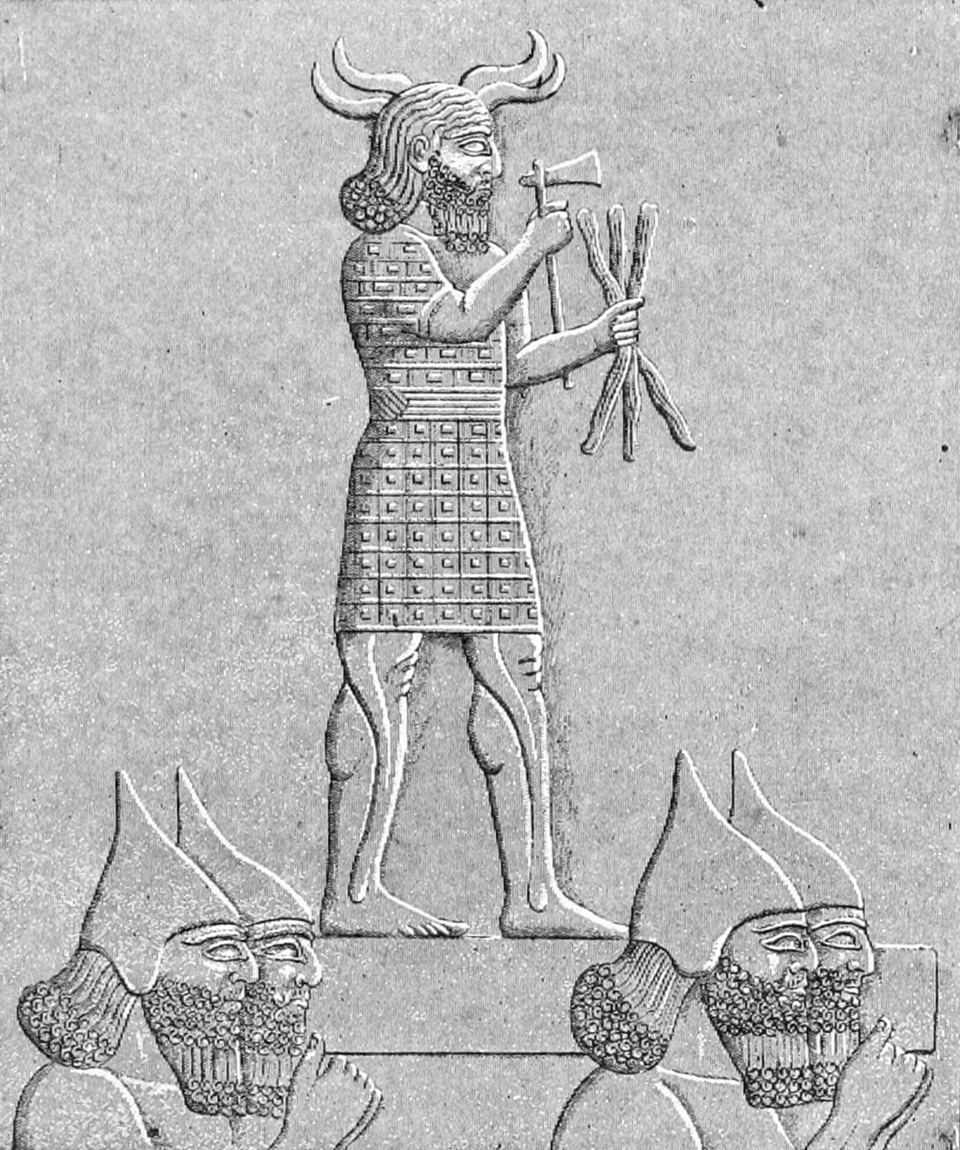
Baal Hadad
Storm God · Canaanite
The Canaanite storm and fertility god who defeats Sea and Death — and whose title, *baal* ('lord'), the Hebrew Bible turns into a generic term for false gods.
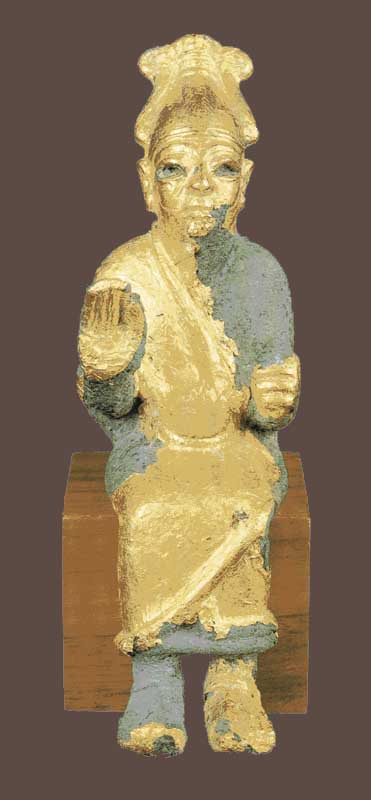
El
Father of the Gods · Canaanite
The aged high god who presides over the assembly at Ugarit — and whose name is one of the Hebrew Bible's own words for God.
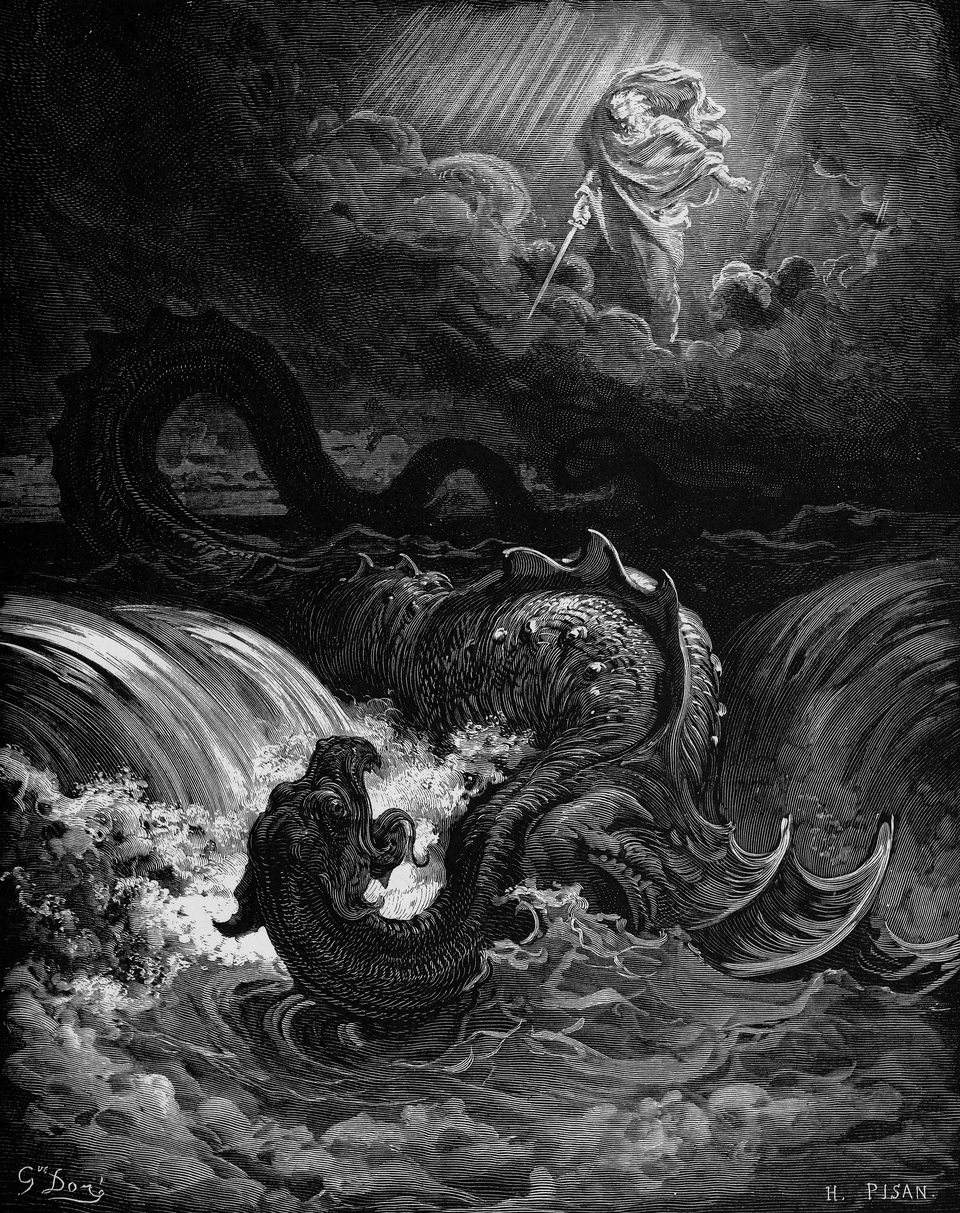
Lotan
Chaos Serpent · Canaanite
The seven-headed sea-serpent slain in the Baal Cycle, described in language Isaiah reuses almost verbatim for Leviathan.
Mot
God of Death · Canaanite
Death itself as a god, with a throat wide enough to swallow Baal. The later mouth-of-hell is this image, several cultures downstream.
The books behind Chemosh
Every claim on this profile is attributed to one of these. They are public domain, listed oldest first, and each links to a full text where one is freely available.
The Mesha Stele (the Moabite Stone)
Mesha, king of Moab · c. 840 BCE · Moabite
Read The Mesha Stele (the Moabite Stone) in full ↗Hebrew Bible & Deuterocanon
Various · c. 900–100 BCE · Hebrew, Aramaic, Greek
Read Hebrew Bible & Deuterocanon in full ↗Cover: Public domain · see en:Aleppo Codex; scanned by · Wikimedia file page
Corpus last revised 29 August 2026. A reference site’s credibility rests on being maintained, so this is the date the sourced records last changed — not the date the page was rebuilt.