Deity · Greek · c. 700 BCE
Ares
Also called Mars (Roman) · also recorded as Ἄρης (per Wikidata)
War as slaughter rather than strategy — disliked by the Greeks who worshipped him, and rehabilitated entirely by the Romans as Mars.
Deep source base
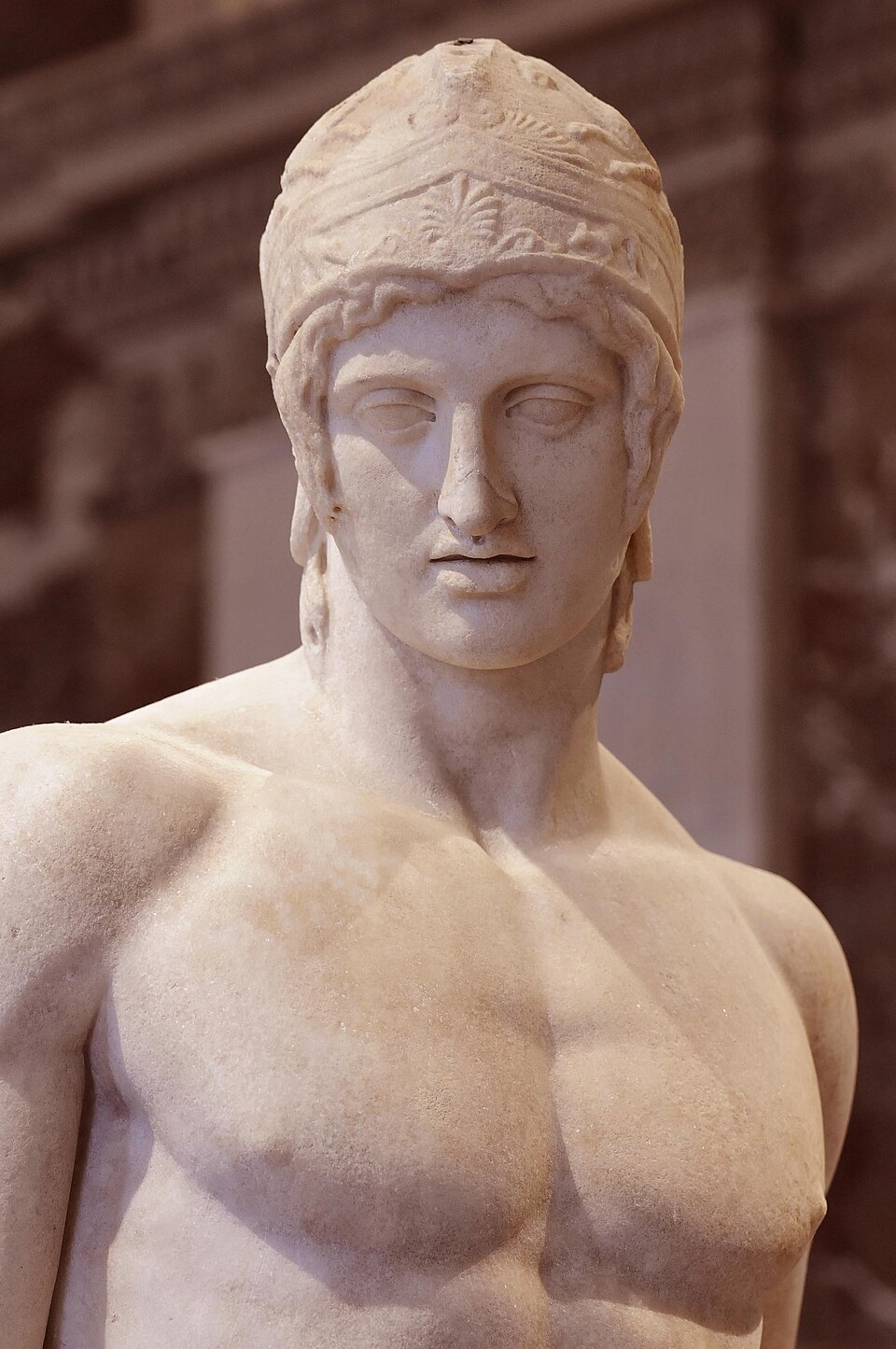
The Greek treatment of Ares is unusually hostile for a god of a major pantheon: Zeus tells him in the Iliad that he is the most hateful of all the gods. He embodies the destructive, disordered aspect of war against Athena's disciplined one. The Roman Mars is a genuinely different figure — an agricultural and boundary god as much as a martial one, second only to Jupiter in the state cult, and the father of Romulus. The equation of the two is a case where *interpretatio romana* flattened a real difference.
Identity
Where does the name come from?
Where it was actually worshipped
Strikingly few for an Olympian. A temple stood in the Athenian Agora, though it was built elsewhere in the fifth century and moved there under Augustus, which is not the same as a city choosing him.
A figure with temples and a figure that only ever existed on a page are different kinds of thing, and the difference is easy to lose once both are entries in a list.
At a glance
Vitals
Vitals
Also known as
- First attested
- The Iliad · c. 750 BCE
- Rank
- God of War
- Pantheon
- Greek
- Order
- Greek pantheon
- Base of operations
- Strikingly few for an Olympian. A temple stood in the Athenian Agora, though it was built elsewhere in the fifth century and moved there under Augustus, which is not the same as a city choosing him.
- Era
- c. 700 BCE
- Traditions
- Greek, Roman
- Placed in
- The Greek Succession
Traits
- Domain
- Bloodshed, the fury of battle
- Traditional form
- An armed warrior
- Metal of its planet (Agrippa, 1533)
- Iron and red brass — “Amongst Metals, Iron, and red Brass; and all fiery, red, and sulphureous things.” (I.27)
- Planet
- Mars
1 site
Where was it worshipped?
Attested cult sites, located against the Pleiades gazetteer of the ancient world where it reaches and against Wikidata everywhere else. An absence here is not evidence that no cult existed: a good number of figures never had one, and the entry above says so where that is the case.
now Athens
Athena's city and her Acropolis. Not the Athenae in Yemen, which the gazetteer offers first.
A temple in the Agora — but built elsewhere in the fifth century and moved there under Augustus, which is not a city choosing him.
37.972, 23.724 · Pleiades 579885
3 attributed
What is it said to do?
Where these powers cluster
The 3 offices attributed to Ares, grouped by kind. Segment width is the share of powers falling in each category.
A bar dominated by one colour means a specialist; an even spread means a figure the sources credit with almost anything.
- social1
- martial1
- malefic1
1 mark
Which marks is it attached to?
A mark a figure carries and a mark used against a figure are opposite claims, so each link says which it is.
3 texts
Which texts say so?
When these texts were written
Each dot is one of the 3 texts that names Ares, placed at that text's approximate date.
A wide spread means the figure was carried across many centuries and traditions; a tight cluster means a single period produced the whole record.
3 texts spanning roughly 150 years
Stabbed by a mortal with Athena guiding the spear, bellowing like ten thousand men and flying home to complain — where Zeus tells him he is the most hateful of all the gods. The Greeks wrote their war god as a lout and said so in the poem's own voice, which is the single most useful fact this corpus holds about him.
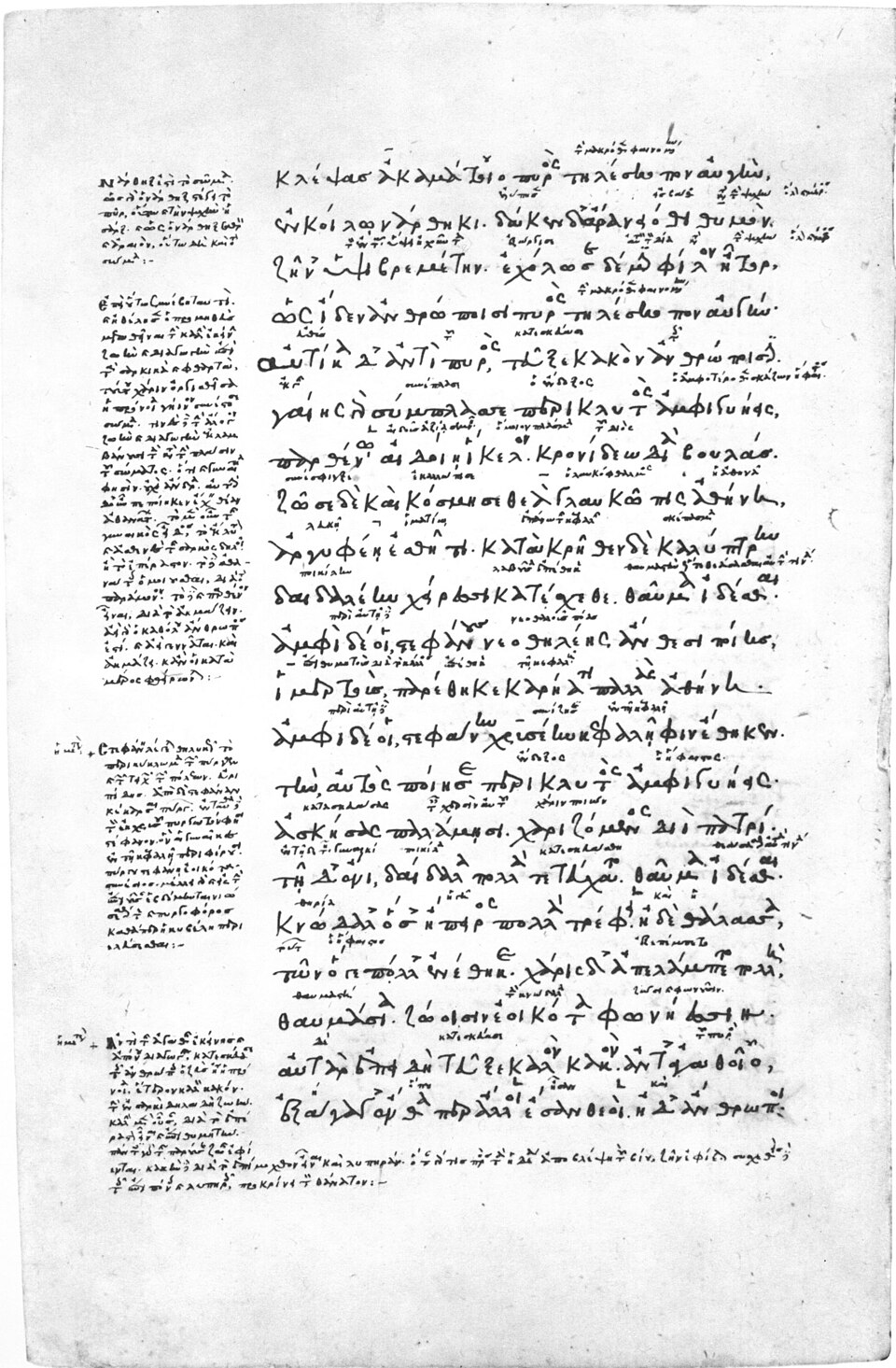
Addressed as a planet and a virtue as much as a god — courage, the sceptre of right, help against cowardice — which is the late, allegorised Ares that the astrological tradition takes up. The corpus keeps it beside the Iliad's Ares deliberately: same god, two centuries and one act of rehabilitation apart.
“Ares, exceeding in strength, chariot-rider, golden-helmed, doughty in heart, shield-bearer, Saviour of cities, harnessed in bronze, strong of arm, unwearying, mighty with the spear, O defence of Olympus, father of warlike Victory, ally of Themis, stern governor of the rebellious, leader of righteous men, sceptred King of manliness, who whirl your fiery sphere among the planets in their sevenfold courses through the aether wherein your blazing steeds ever bear you above the third firmament of heaven; hear me, helper of men, giver of dauntless youth!”
Connections
What is it connected to?
Placement
Where does it sit in the hierarchies?
Answered from the sources
Common questions
Which texts mention Ares?
Is Ares the same as Mars?
What rank is Ares?
How else is Ares spelled?
What is Ares said to do?
How old is Ares?
Nearest in the corpus
If Ares is what you came for, these are next
Chosen by proximity rather than by popularity: the same pantheon first, then the same rank, then the same kind of figure.
Artemis
Mistress of Animals · Greek
Huntress and protector of the young, whose Ephesian cult statue looks nothing like her and whose temple gave the ancient world one of its most durable protective formulas.
Hades
Lord of the Underworld · Greek
Ruler of the dead by lot rather than by punishment — a god of the underworld who is not evil, a distinction Christian cosmology cannot express.
The Daimones
Class of Spirits · Greek
Guardian spirits — Socrates had one that advised him — whose name the Greek scriptures borrowed for evil spirits, permanently poisoning the word.
Hecate
Goddess of Crossroads · Greek
Hesiod has Zeus honour her above all others. By the medieval period she presides over witchcraft instead, a demotion with no wrongdoing attached to it anywhere.
Apollo
God of Prophecy · Greek
Oracle-giver at Delphi, and the god who both sends plague and lifts it. Later traditions split that duality between an angel and a demon; Greece kept it in one figure.
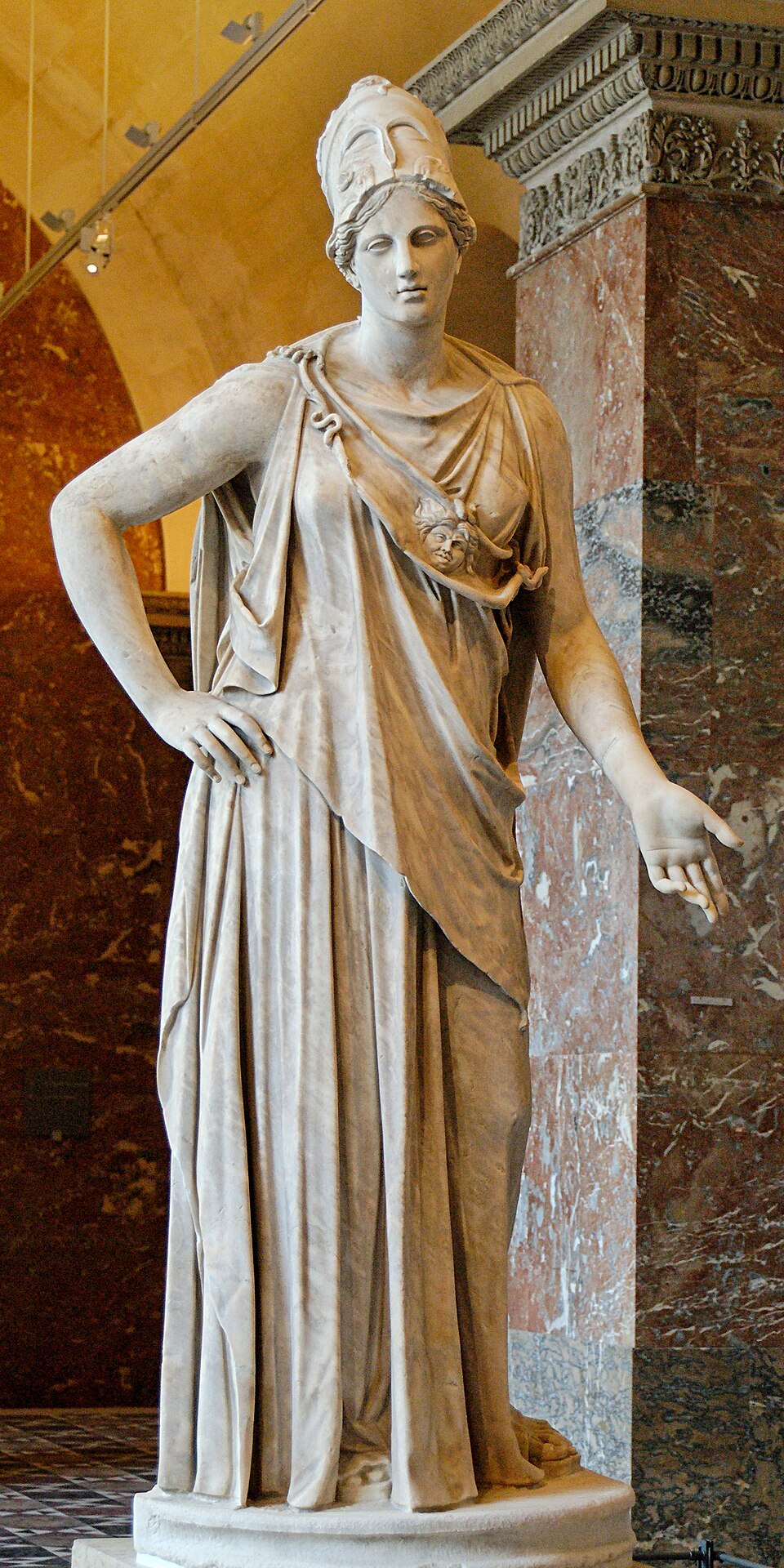
Athena
Goddess of Wisdom and War · Greek
Born from the head of Zeus, and the only Olympian to hold both war and craft. Where Ares is violence, she is strategy.
The books behind Ares
Every claim on this profile is attributed to one of these. They are public domain, listed oldest first, and each links to a full text where one is freely available.
Theogony & Works and Days
Hesiod · c. 700 BCE · Ancient Greek
Read Theogony & Works and Days in full ↗Cover: Public domain · Hesiod · Wikimedia file page
The Homeric Hymns
Anonymous; attributed in antiquity to Homer; tr. Hugh G. Evelyn-White · c. 700–500 BCE · Ancient Greek
Read The Homeric Hymns in full ↗
Corpus last revised 29 August 2026. A reference site’s credibility rests on being maintained, so this is the date the sourced records last changed — not the date the page was rebuilt.