seal · 17th century
The Triangle of Art
Drawn two feet outside the circle, and the reason the Goetia's spirits are visible at all: the triangle is where they are required to appear.
What the sources claim for it
A compelled position. Appearing in the triangle is the visible proof that the constraint has taken effect.
What is it made of?
The counterpart to the circle: an enclosure for the thing being summoned, set outside the one protecting the operator.
The triangle
The border
The inner circle
Triangle of Art
- 01
The triangle — Placed a set distance from the circle, usually to the east. The spirit is required to appear inside it.
- 02
The border — The name of Michael divided across the three sides in the Ars Goetia — angelic authority written into the boundary itself.
- 03
The inner circle — Many copies set a circle within the triangle, and a black mirror or vessel of water at its centre for the appearance.
History
Where does the Triangle of Art come from?
The Ars Goetia sets a triangle on the ground beyond the circle at the eastern quarter, bordered with the names Michael, Anaphaxeton and Tetragrammaton, with a black scrying mirror or a vessel of water at its centre. The spirit is commanded to appear in it, and the operator never leaves the circle to approach it.
The pairing is the argument. The circle keeps the operator in a place he is entitled to occupy; the triangle keeps the spirit in a place it is compelled to occupy. Everything the Goetia says about danger comes down to that geometry holding — the warnings are about spirits appearing elsewhere, or refusing the triangle, not about spirits refusing to come.
1 figure
Who is it attached to?
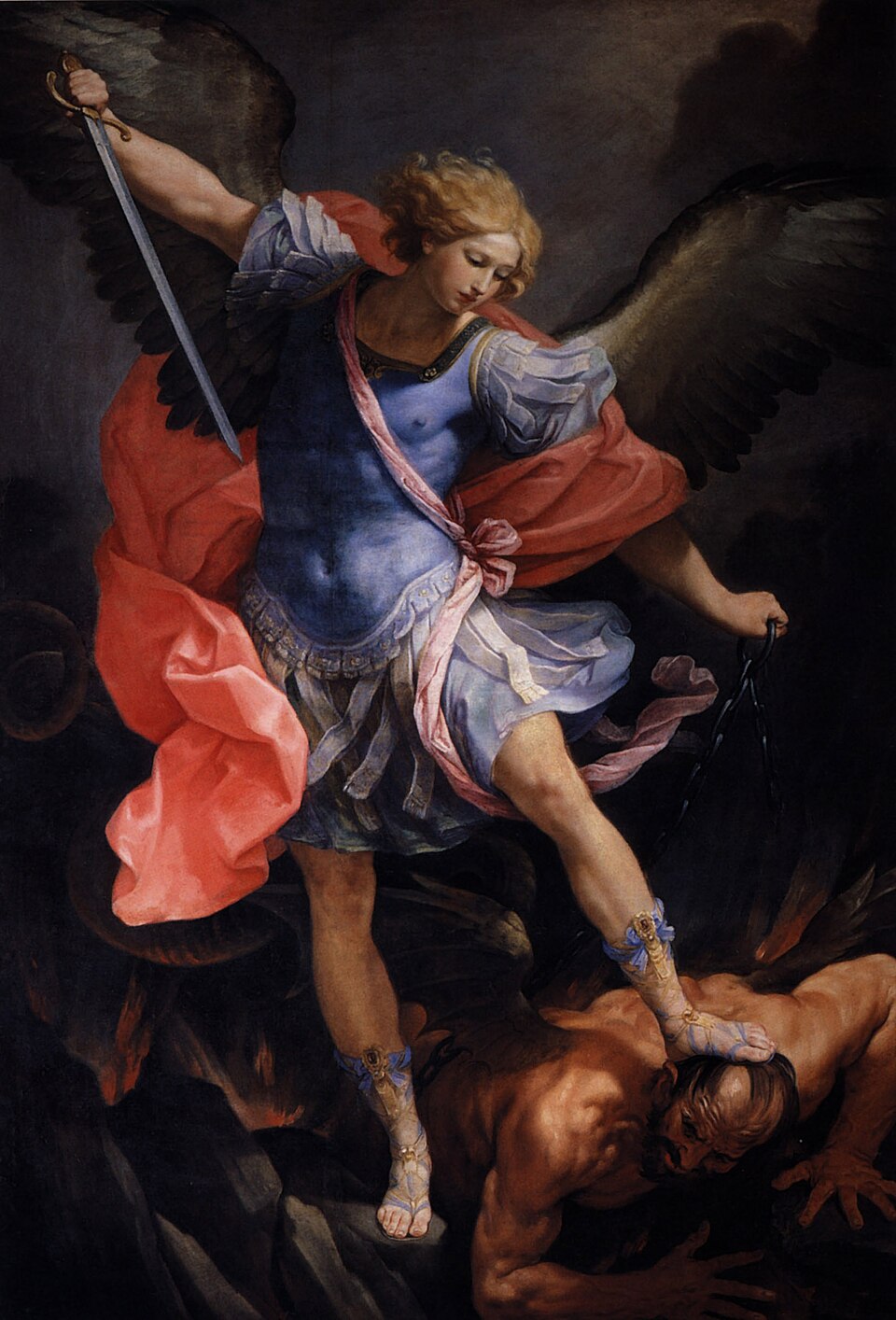
Figures who carry it
An attribute rather than a signature — held, worn or associated in the texts and the images.
The larger argument
Why is it in a corpus about spirits?
Two enclosures, opposite purposes, drawn in the same ink. The site keeps a spirit's own seal and a sign used against it as separate kinds of link for exactly this reason: geometry alone never tells you which side of the line a mark is working on.
Afterwards
What did it turn into?
Almost universally drawn today with a circle inscribed inside it and the three names around the border, following the 1904 edition's plate rather than any single manuscript.
Which texts describe it?
Oldest first, with what each one does with the mark. A mark described in a Bronze Age incantation and a mark first drawn in a seventeenth-century manuscript are different kinds of claim, whatever the shape has in common.
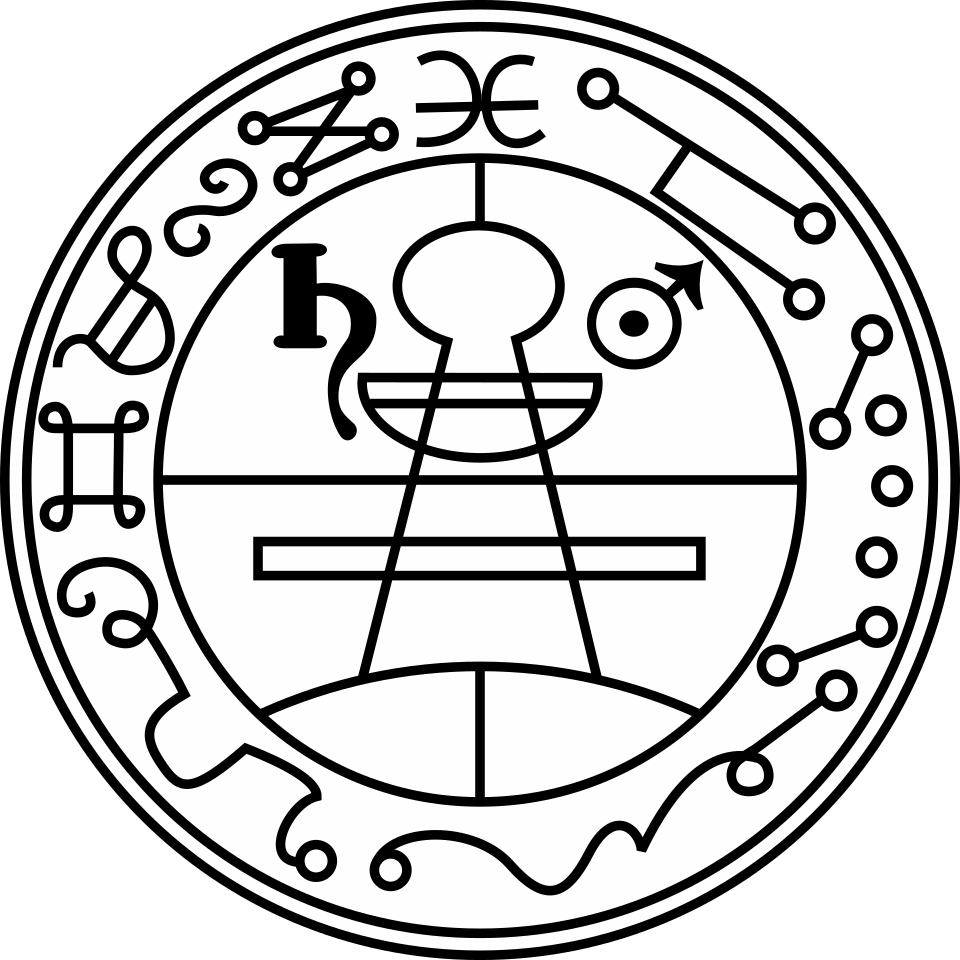
The Lesser Key of Solomon, Book I: Ars Goetia
Anonymous; ed. S. L. MacGregor Mathers & A. E. Waite · 17th c.; ed. 1904 · English (from Latin)
Placed two feet outside the circle with a black mirror at its centre.
Read The Lesser Key of Solomon, Book I: Ars Goetia in full ↗Cover: Public domain · anonymous design, redrawn by User:Fuzzypeg · Wikimedia file page
Nearby
Related marks
The Pentagram
A five-pointed star drawn in one unbroken line — an accounting mark, a Pythagorean password, a Christian emblem of the five wounds, and only recently a sign of evil.
The Tetragrammaton
Four letters that stopped being pronounced and became, in consequence, the most powerful thing you could write on a piece of equipment.
The Seal of Solomon
A signet ring, not a shape. The Testament of Solomon makes it the instrument by which every demon in the book is compelled to give its name.
The Abraxas Gem
A rooster-headed figure with snakes for legs, cut into jasper by the thousand, and the numerological reason a magic word means 365.
The Circle
A drawn boundary with names written into it — the oldest continuously used device in the Western operative tradition, and the one that defines everything else on the floor.
The Brass Vessel
The container the legend says Solomon sealed the spirits into, thrown into a lake and opened by Babylonians who expected treasure. It is where the Ars Goetia says its seventy-two came from.