What the sources claim for it
In its own text, an identification: a name encoded so that the audience can recognise a specific living enemy without the text naming him.
What is it made of?
A gematria puzzle rather than a quantity: Greek and Hebrew letters double as numerals, so a name can be added up. The best-supported solution is Nero Caesar written in Hebrew letters.
Nun
N
Resh
R
Vav
O
Final nun
N
Qof
Q
Samekh
S
Resh
R
Number of the Beast
- 01
Nun · N — 50.
- 02
Resh · R — 200 — Neron, the Greek form of the name, transliterated into Hebrew.
- 03
Vav · O — 6.
- 04
Final nun · N — 50. Present in the Greek spelling of the name, absent in the Latin one.
- 05
Qof · Q — 100 — the start of Caesar.
- 06
Samekh · S — 60.
- 07
Resh · R — 200. The seven letters total 666; drop the final nun for the Latin spelling and the same name gives 616, the variant some early manuscripts carry.
History
Where does the Number of the Beast come from?
Revelation 13:18 does not present the number as a symbol. It presents it as a cipher and tells the reader it is solvable: the number of the beast is the number of a man. In a world where Greek and Hebrew letters double as numerals, that is an instruction to add up a name, and the oldest and best-supported answer is Nero Caesar written in Hebrew letters, which totals 666. The variant reading 616, present in some early manuscripts, is what the Latin spelling of the same name gives — which is strong evidence the puzzle was about a name rather than a quantity.
What happened afterwards is a study in a mark outliving its key. Once the immediate reference is lost, the number becomes free to attach to anyone: medieval and Reformation writers work it against popes and emperors in turn, and by the modern period it has stopped pointing at a person at all and simply means the diabolical.
The larger argument
Why is it in a corpus about spirits?
666 is what a name looks like once its key is lost. Revelation encodes a specific living man so that its first audience can recognise him and the authorities cannot; within two centuries the reference is gone and the number is free to be aimed at anyone. Every misattribution this site documents — a Canaanite god read as a demon, a medieval emblem read as satanic — is that same process, and this is the case where the text itself tells you a solution was intended.
Afterwards
What did it turn into?
Now the default shorthand for demonic content anywhere in popular culture, and attached to no name at all. The gematria that made it a puzzle is the part that dropped out first.
Which texts describe it?
Oldest first, with what each one does with the mark. A mark described in a Bronze Age incantation and a mark first drawn in a seventeenth-century manuscript are different kinds of claim, whatever the shape has in common.
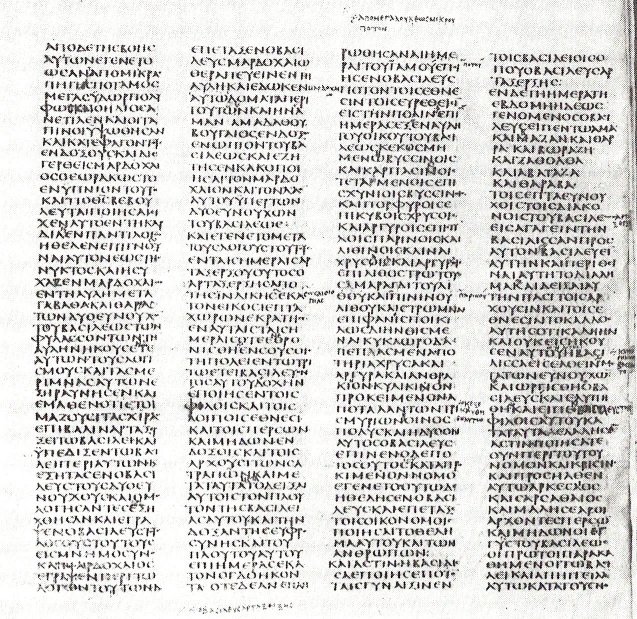
New Testament
Various · c. 50–110 CE · Koine Greek
Revelation 13:18, with the counting instruction attached.
Read New Testament in full ↗Cover: Public domain · Wikimedia file page
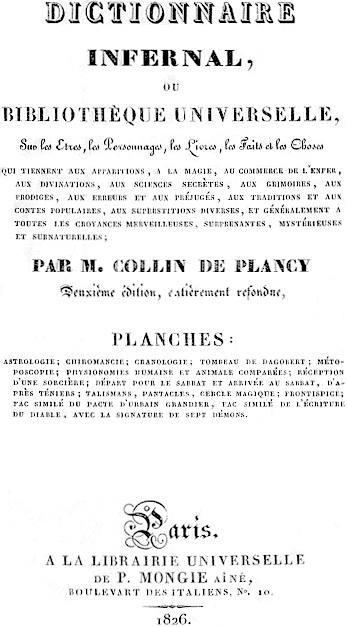
Dictionnaire Infernal
Jacques Collin de Plancy · 1818; illustrated ed. 1863 · French
Nineteenth-century demonology, where the number circulates already detached from any name.
Read Dictionnaire Infernal in full ↗Cover: Public domain · Collin de Plancy · Wikimedia file page
Nearby
Related marks
The Tetragrammaton
Four letters that stopped being pronounced and became, in consequence, the most powerful thing you could write on a piece of equipment.
The Bronze Serpent
A healing standard that stood in the Temple for centuries until a reforming king smashed it — the Hebrew Bible's own account of a symbol going wrong.
The Brass Vessel
The container the legend says Solomon sealed the spirits into, thrown into a lake and opened by Babylonians who expected treasure. It is where the Ars Goetia says its seventy-two came from.
AGLA
An acronym, not a word: Atah Gibor Le-olam Adonai, 'Thou art mighty forever, Lord', compressed to four letters and written on almost everything.
The Lamen
The one piece of Solomonic equipment worn rather than drawn: a disc at the breast carrying the divine names, and the operator's own credential rather than the spirit's.
The Celestial Alphabets
Three alphabets Agrippa prints for writing the names of angels — Hebrew letters redrawn with rings at the joints, so that a script becomes a set of sigils.