Tradition
Mesoamerican
Aztec and Maya deities, recorded largely through colonial sources with all the distortion that implies.
What is the Mesoamerican tradition?
The Aztec and Maya material carries a source problem that has to be stated before anything else. Most of what survives was recorded during and after the conquest, much of it by missionaries documenting a religion they were dismantling, and the indigenous books were destroyed in quantity.
What that means in practice is that the colonial-era accounts are simultaneously the main evidence and an interested party. Where they describe a deity as demonic, that is a claim by a specific writer with a specific purpose, and this site attributes it rather than repeating it.
The surviving codices, the inscriptions and the archaeology are the counterweight, and where they agree with a colonial description the description is on firmer ground. Where they do not, the disagreement is what gets shown.
Which texts does this tradition rest on?
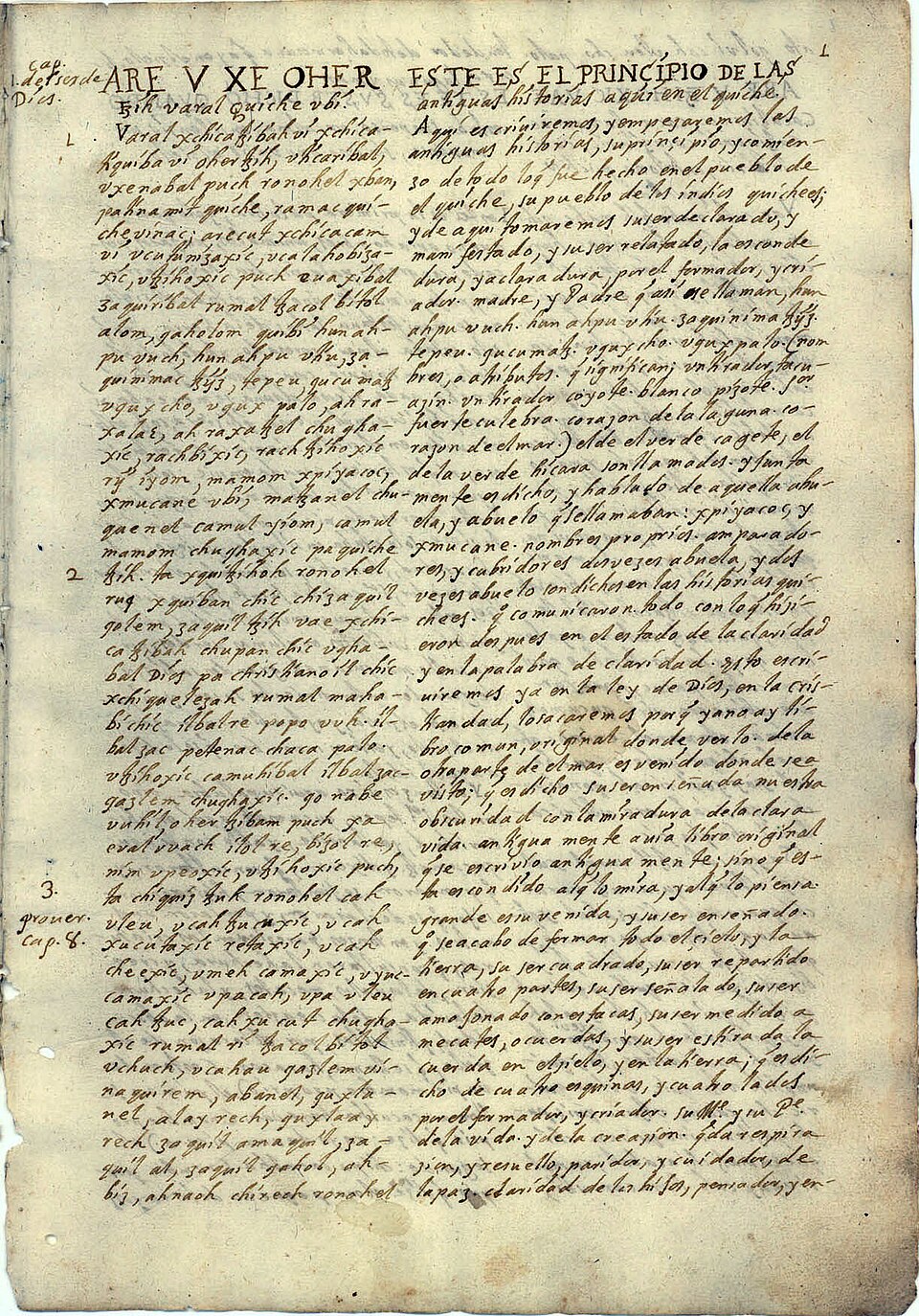
Popol Vuh
Anonymous K'iche' Maya · 16th c., from older material
The K'iche' Maya creation account, including the Hero Twins' defeat of the lords of Xibalba. Recorded in the Latin alphabet after the conquest, which is why it survives at all.
1 entries contributed
Annals of Cuauhtitlan and the Legend of the Suns
Anonymous Nahua annalists; the Codex Chimalpopoca · c. 1570, from pre-conquest material
Nahua history written in Nahuatl by Nahua annalists after the conquest, which is a rarer thing than it sounds. It carries the succession of the five suns and the fullest account of Quetzalcoatl at Tollan: the ruler shamed by Tezcatlipoca into drunkenness and flight, who burns himself on the shore and becomes the morning star. A god's disgrace narrated by his own tradition rather than by a friar.
3 entries contributed
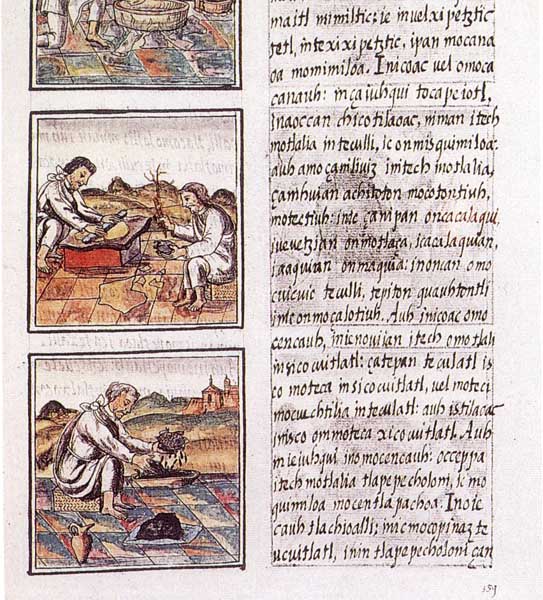
Florentine Codex
Bernardino de Sahagún with Nahua informants · 1545-1590
A Franciscan's encyclopedia of Aztec religion, compiled from Nahua testimony in order to identify idolatry and suppress it. Indispensable and thoroughly compromised at once.
5 entries contributed
Historia de las Indias de Nueva España
Fray Diego Durán · c. 1581
A Dominican who grew up speaking Nahuatl, recording the religion he was employed to destroy in more detail than any of his colleagues and arguing throughout that its gods are devils and its rites a diabolical parody of the sacraments. The corpus carries him for both halves at once: the description is first-rate evidence, and the framing is a working example of the recruitment this site tracks — a god is not argued out of existence, it is reassigned.
4 entries contributed
Which marks belong to it?
Oldest first. A mark used by several traditions appears on each of their pages — which is the point: the shapes crossed these boundaries far more easily than the names did.
The Feathered Serpent
from c. 100 CE
A snake with quetzal plumage, carved at Teotihuacan a thousand years before the Aztecs — a symbol that outlasted several of the states that used it.
The Smoking Mirror
from c. 1300 CE
A polished obsidian disc that shows smoke as well as a face — a god's name, his missing foot, and a working divination instrument at once.
Who is filed under Mesoamerican?
Ordered by attestation score — how early and how independent the texts that name each figure are, rather than how famous the figure has since become.
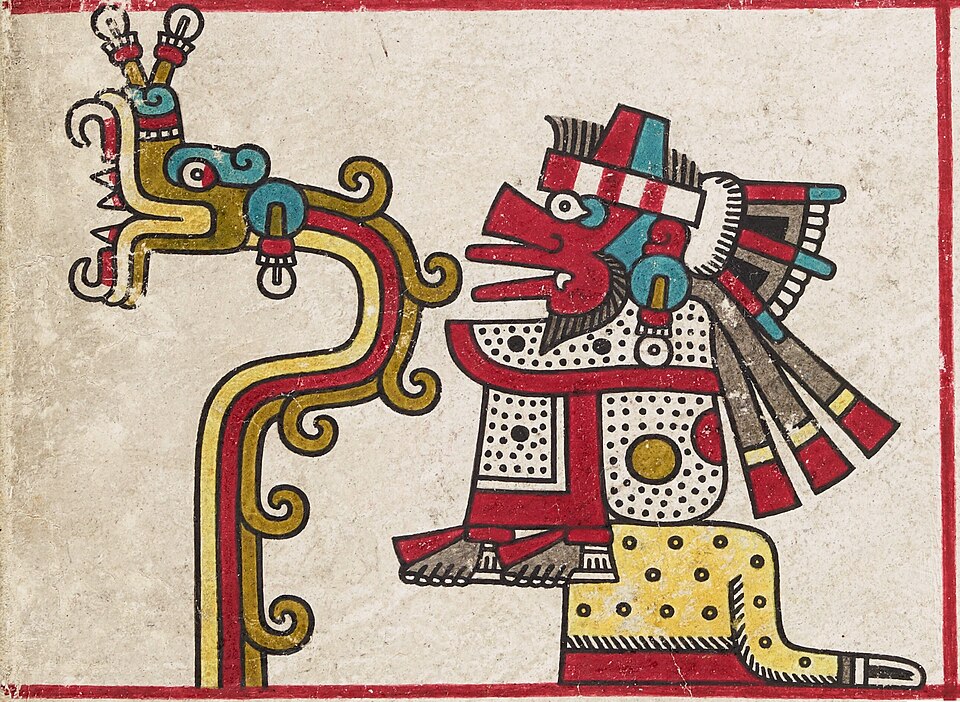
Quetzalcoatl
Feathered Serpent · Mesoamerican
The feathered serpent who goes down into the underworld to recover the bones of humanity. Here, for once, the serpent is not the monster.
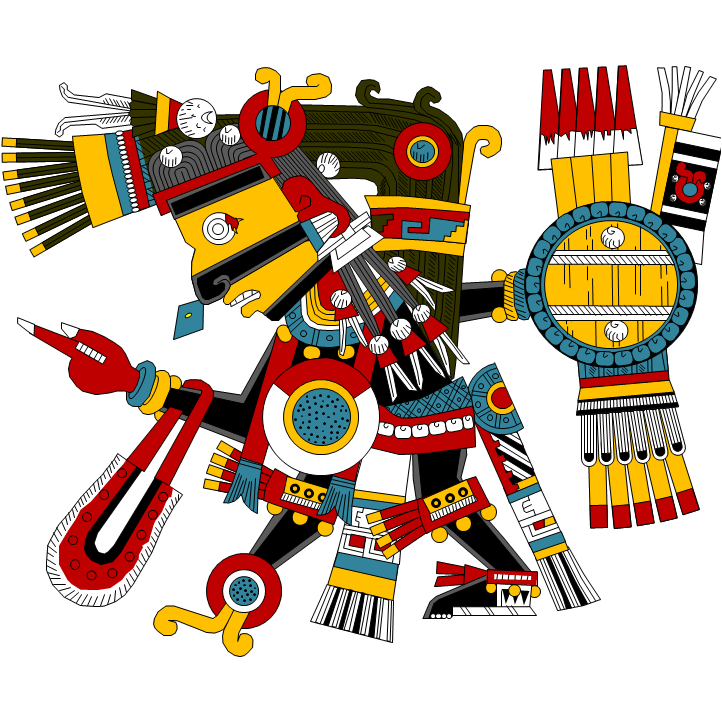
Tezcatlipoca
Lord of the Near and the Nigh · Mesoamerican
God of the night sky, sorcery and arbitrary fate — Quetzalcoatl's rival, and impossible to place on a good/evil axis.
Huitzilopochtli
The War God of the Mexica · Mesoamerican
The Mexica war god, born fully armed to defend his mother from his four hundred siblings — a tribal patron who became the state god of an empire and the sun that had to be fed.
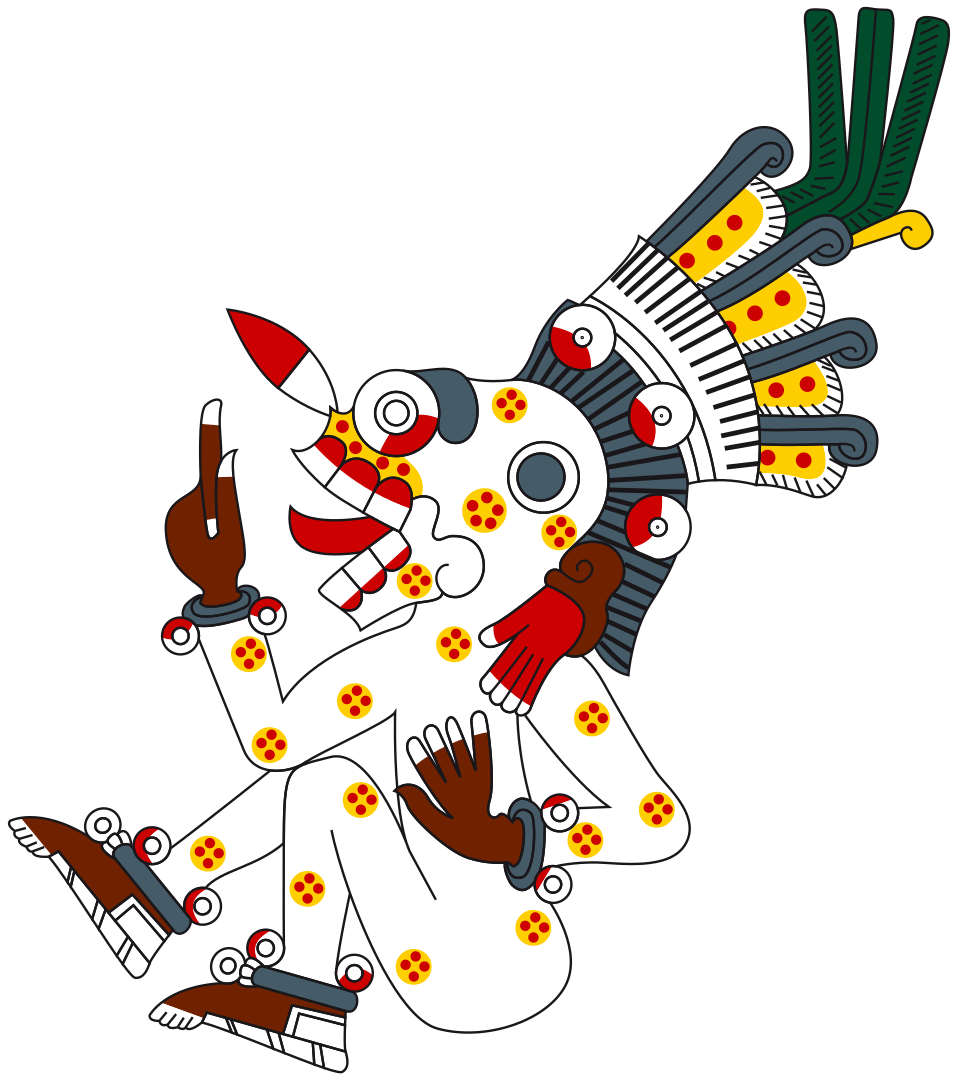
Mictlantecuhtli
Lord of Mictlan · Mesoamerican
The Aztec god who rules the ninth and lowest underworld, where the ordinary dead arrive after a four-year journey. Nothing is punished there.
Tlaloc
He Who Makes Things Sprout · Mesoamerican
The Nahua rain god, who takes the drowned and the lightning-struck into a paradise of his own — and whose rites, as the Spanish friars recorded with horror, were performed on children.
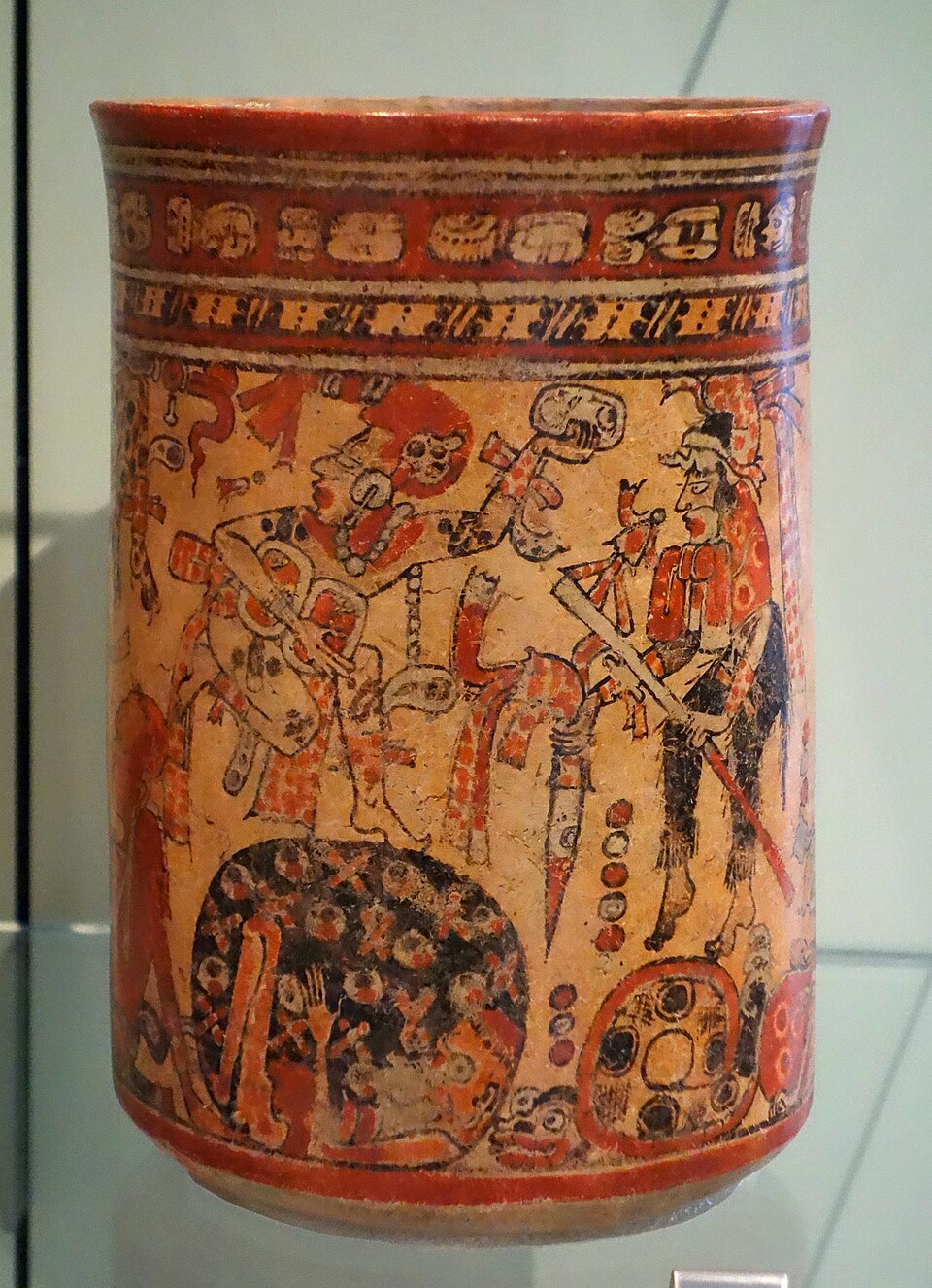
The Lords of Xibalba
Underworld Lords · Mesoamerican
Twelve Maya lords of the underworld, each named for the sickness he inflicts, who trap visitors in a sequence of houses of ordeal. The Hero Twins outwit them.