Deity · Mesoamerican · c. 1400 CE
Tlaloc
Also called Tlálloc
The Nahua rain god, who takes the drowned and the lightning-struck into a paradise of his own — and whose rites, as the Spanish friars recorded with horror, were performed on children.
Single lineage
Two things about him matter for this corpus. The first is Tlalocan, his green afterlife: where a Nahua dead person went was determined by how they died rather than how they behaved, and those taken by water or by storm went to him. A destination assigned by manner of death rather than by conduct is a genuinely different afterlife logic from every judgment scene on this site. The second is the recording. Durán and the Florentine Codex describe the child sacrifices in detail, from opposed motives — one arguing the religion was diabolical, the other compiling it in Nahuatl to be understood — and the corpus keeps both because the description is evidence whichever hand wrote it.
Identity
Where does the name come from?
Where it was actually worshipped
The northern shrine on the Templo Mayor at Tenochtitlan, and the sanctuary on Mount Tlaloc
A figure with temples and a figure that only ever existed on a page are different kinds of thing, and the difference is easy to lose once both are entries in a list.
At a glance
Vitals
Vitals
Also known as
- First attested
- Florentine Codex · 1545-1590
- Rank
- He Who Makes Things Sprout
- Pantheon
- Mesoamerican
- Order
- Mesoamerican pantheon
- Base of operations
- The northern shrine on the Templo Mayor at Tenochtitlan, and the sanctuary on Mount Tlaloc
- Era
- c. 1400 CE
- Traditions
- Mesoamerican
Traits
- Domain
- Rain, lightning, drought, the drowned and the storm-struck dead
- Traditional form
- Goggle eyes and fangs, with a jar of water
Stats
Known connections
Opposed by
1 site
Where was it worshipped?
Attested cult sites, located against the Pleiades gazetteer of the ancient world where it reaches and against Wikidata everywhere else. An absence here is not evidence that no cult existed: a good number of figures never had one, and the entry above says so where that is the case.
now Mexico City
The sacred precinct of Tenochtitlan, where the god of the night sky and the god of the dead both had houses.
The northern shrine on the double pyramid, opposite Huitzilopochtli's.
19.435, -99.131 · Wikidata Q774021
4 attributed
What is it said to do?
Where these powers cluster
The 4 offices attributed to Tlaloc, grouped by kind. Segment width is the share of powers falling in each category.
A bar dominated by one colour means a specialist; an even spread means a figure the sources credit with almost anything.
- malefic2
- material1
- transformation1
2 texts
Which texts say so, and where do they disagree?
When these texts were written
Each dot is one of the 2 texts that names Tlaloc, placed at that text's approximate date.
A wide spread means the figure was carried across many centuries and traditions; a tight cluster means a single period produced the whole record.
2 texts, all inside a single century
Where the texts differ
- Name: given as Tlaloc, Tláloc
- Rank: given as Lord of the rains; God of rain
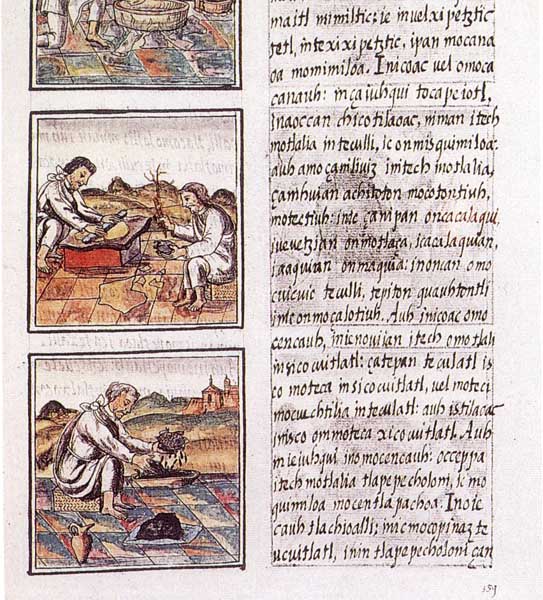
The rains, the mountains and the storm; those who drown or are struck by lightning go to his paradise rather than to Mictlan.
Described with his temple on the great pyramid, his festivals and their offerings, by a friar who records the practice fully while arguing that the god is a devil.
Connections
What is it connected to?
Answered from the sources
Common questions
Which texts mention Tlaloc?
What rank is Tlaloc?
How else is Tlaloc spelled?
What is Tlaloc said to do?
How old is Tlaloc?
Nearest in the corpus
If Tlaloc is what you came for, these are next
Chosen by proximity rather than by popularity: the same pantheon first, then the same rank, then the same kind of figure.
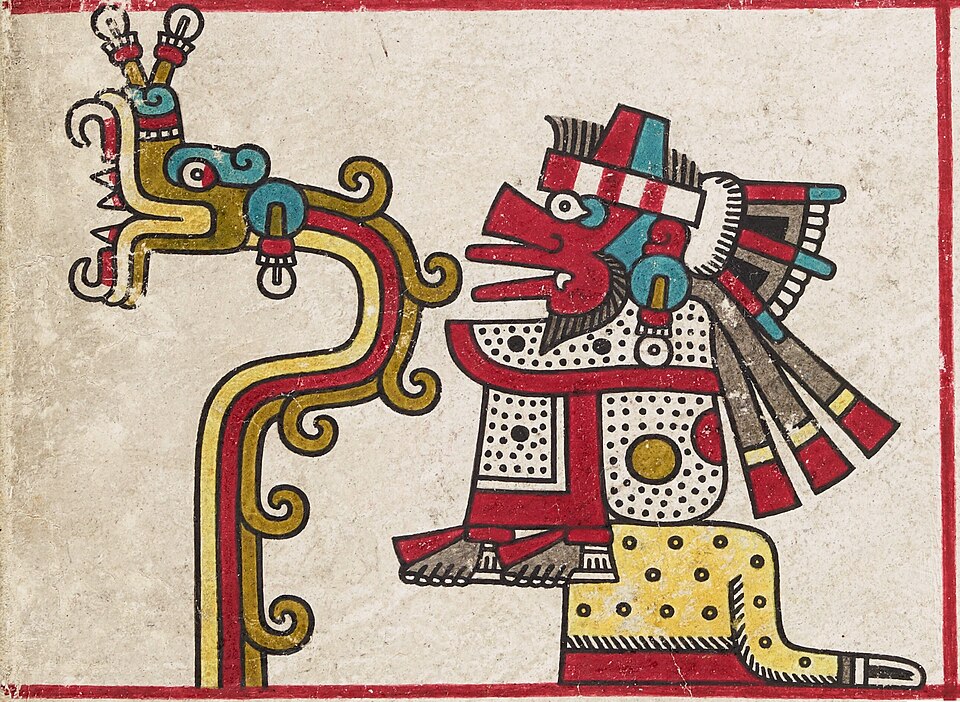
Quetzalcoatl
Feathered Serpent · Mesoamerican
The feathered serpent who goes down into the underworld to recover the bones of humanity. Here, for once, the serpent is not the monster.
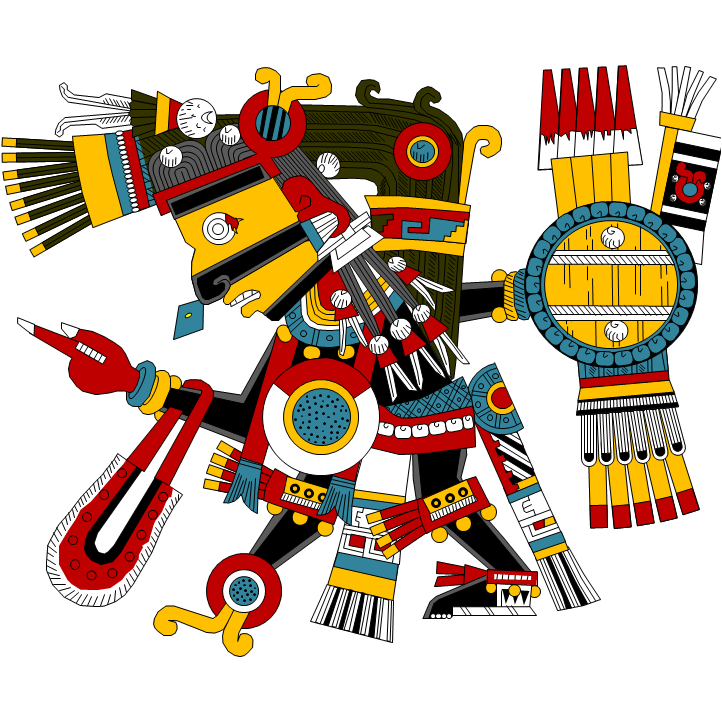
Tezcatlipoca
Lord of the Near and the Nigh · Mesoamerican
God of the night sky, sorcery and arbitrary fate — Quetzalcoatl's rival, and impossible to place on a good/evil axis.
Huitzilopochtli
The War God of the Mexica · Mesoamerican
The Mexica war god, born fully armed to defend his mother from his four hundred siblings — a tribal patron who became the state god of an empire and the sun that had to be fed.
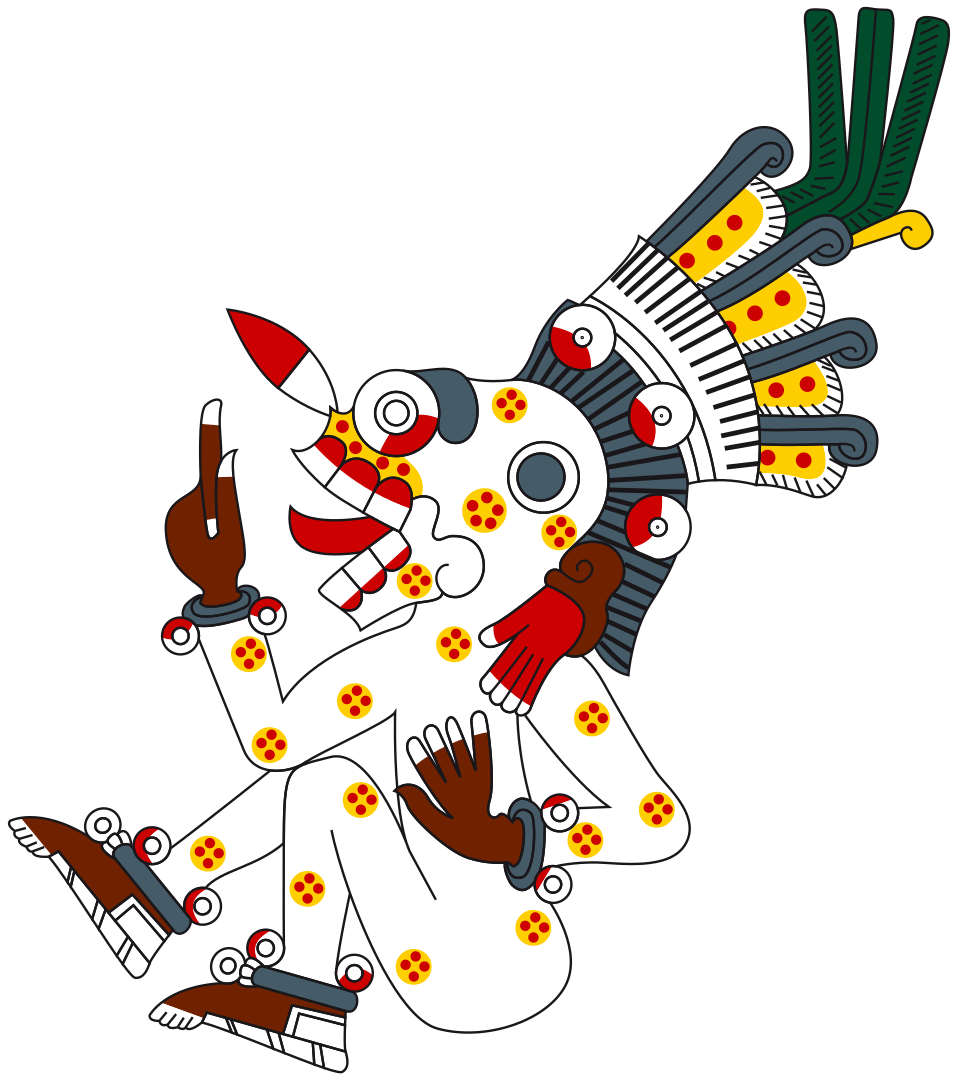
Mictlantecuhtli
Lord of Mictlan · Mesoamerican
The Aztec god who rules the ninth and lowest underworld, where the ordinary dead arrive after a four-year journey. Nothing is punished there.
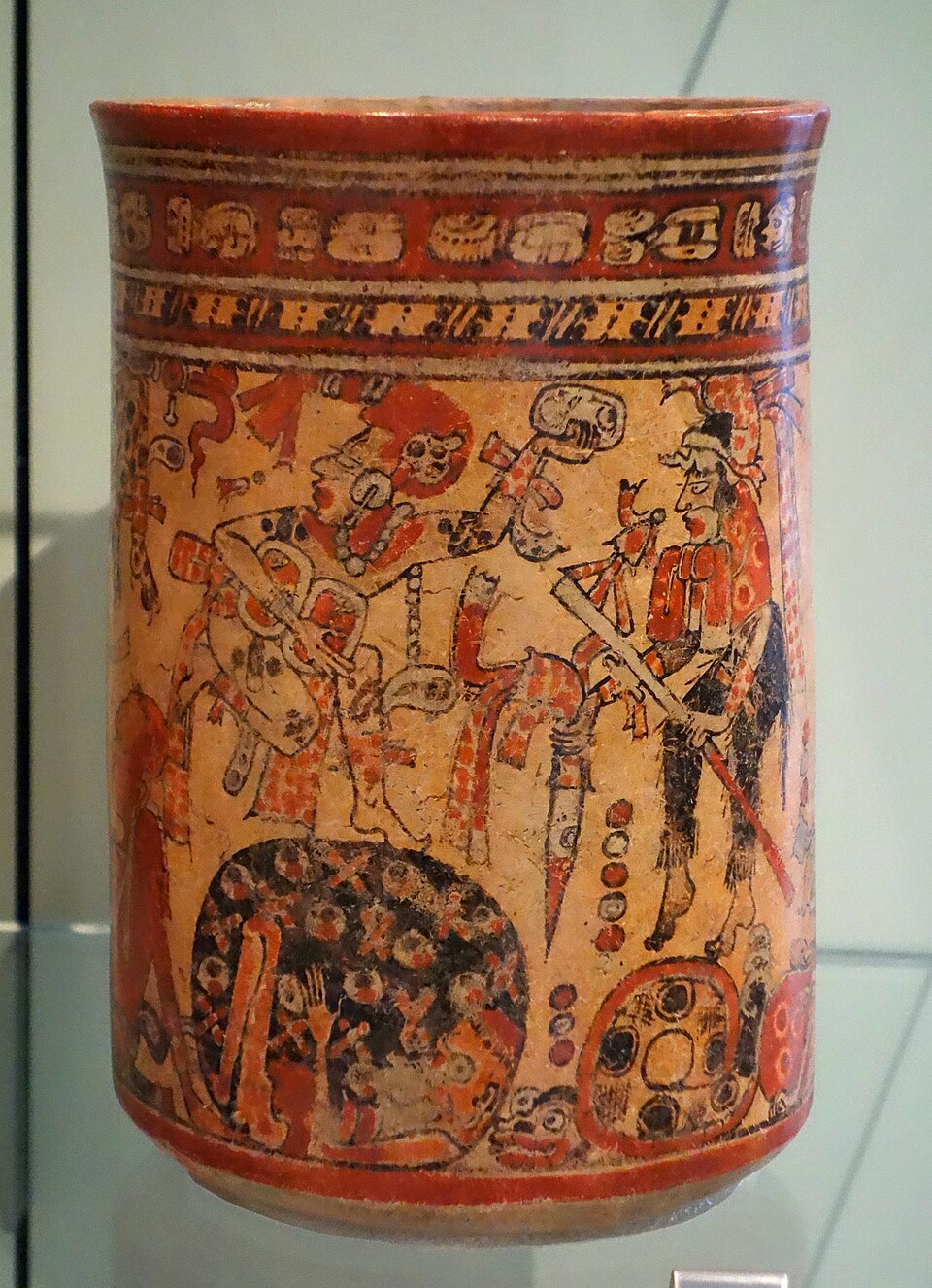
The Lords of Xibalba
Underworld Lords · Mesoamerican
Twelve Maya lords of the underworld, each named for the sickness he inflicts, who trap visitors in a sequence of houses of ordeal. The Hero Twins outwit them.
Artemis
Mistress of Animals · Greek
Huntress and protector of the young, whose Ephesian cult statue looks nothing like her and whose temple gave the ancient world one of its most durable protective formulas.
The books behind Tlaloc
Every claim on this profile is attributed to one of these. They are public domain, listed oldest first, and each links to a full text where one is freely available.
Florentine Codex
Bernardino de Sahagún with Nahua informants · 1545-1590 · Nahuatl and Spanish
Read Florentine Codex in full ↗Cover: Public domain · Bernardino de Sahagún · Wikimedia file page
Historia de las Indias de Nueva España
Fray Diego Durán · c. 1581 · Spanish
Read Historia de las Indias de Nueva España in full ↗
Corpus last revised 29 August 2026. A reference site’s credibility rests on being maintained, so this is the date the sourced records last changed — not the date the page was rebuilt.