Mesoamerican · Spanish · c. 1581
Historia de las Indias de Nueva España
Fray Diego Durán
A Dominican who grew up speaking Nahuatl, recording the religion he was employed to destroy in more detail than any of his colleagues and arguing throughout that its gods are devils and its rites a diabolical parody of the sacraments. The corpus carries him for both halves at once: the description is first-rate evidence, and the framing is a working example of the recruitment this site tracks — a god is not argued out of existence, it is reassigned.
Read Historia de las Indias de Nueva España in full at the linked edition →What this text attests · 4
| Name here | Rank given | # | Powers described |
|---|---|---|---|
| The chief idol | — | Treated as the principal devil of the Mexica and described at length: the image, the great temple, the festivals and the sacrifices, by a Dominican arguing the whole system is a diabolical parody. | |
| — | — | The friar's version, and a warning label. Durán describes the cult in unmatched detail and simultaneously argues that this god must have been the apostle Thomas — a Christian preacher misremembered — because the alternative is that the resemblances mean nothing. Assimilation and condemnation are the same reflex, and this corpus carries an example of each in one author. | |
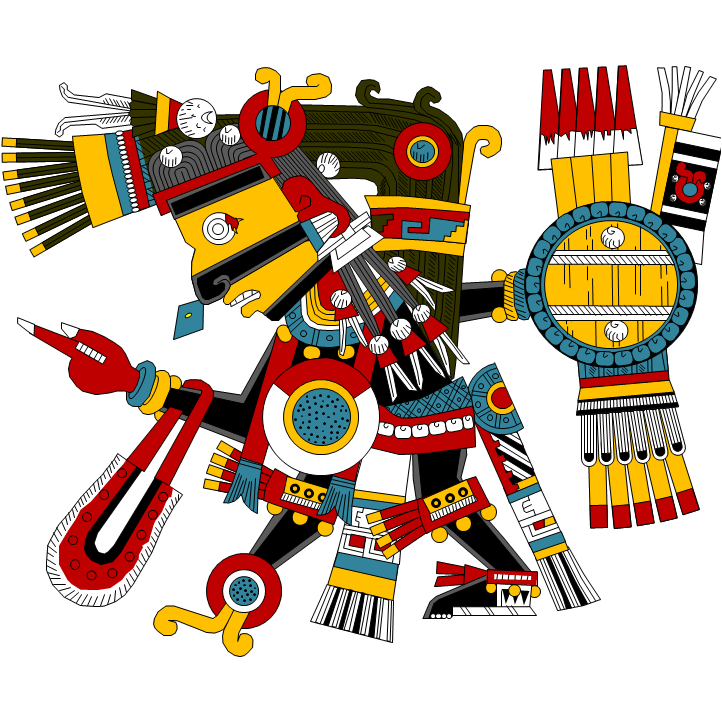
| — | — | Recorded at length by a man who calls him a devil and a demon throughout, and who nonetheless preserves the festival, the impersonator kept for a year and honoured before being killed, and the obsidian mirror. The corpus's cleanest instance of its own subject: the description is evidence, the framing is the recruitment. | |
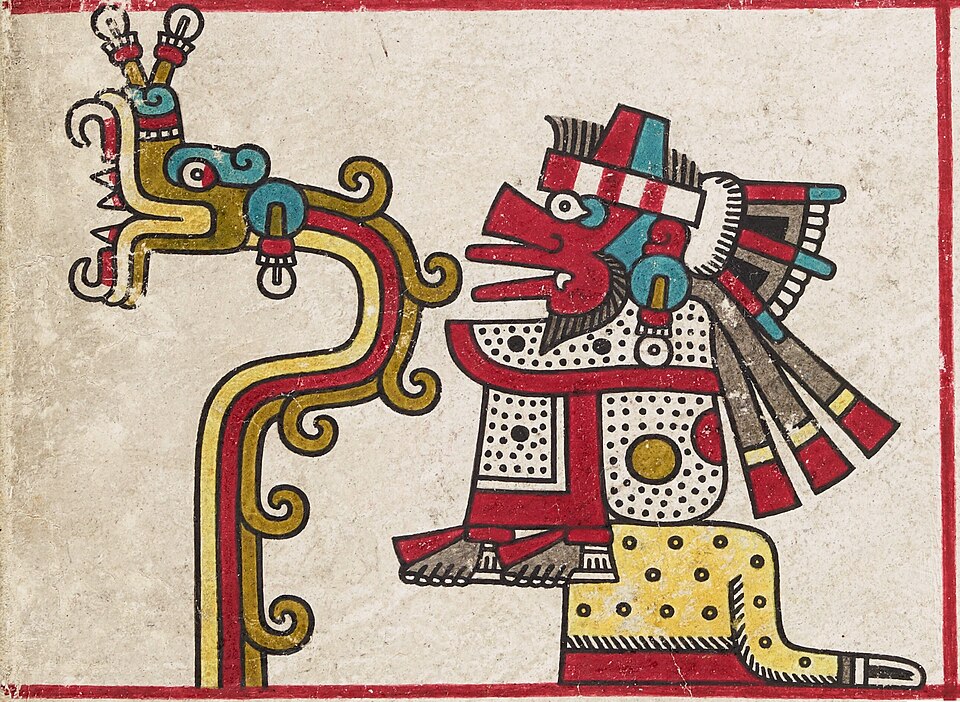
Tláloc = Tlaloc | God of rain | — | Described with his temple on the great pyramid, his festivals and their offerings, by a friar who records the practice fully while arguing that the god is a devil. |