Deity · Mesoamerican · c. 1550 CE
Quetzalcoatl
Also called Kukulkan (Maya), Feathered Serpent
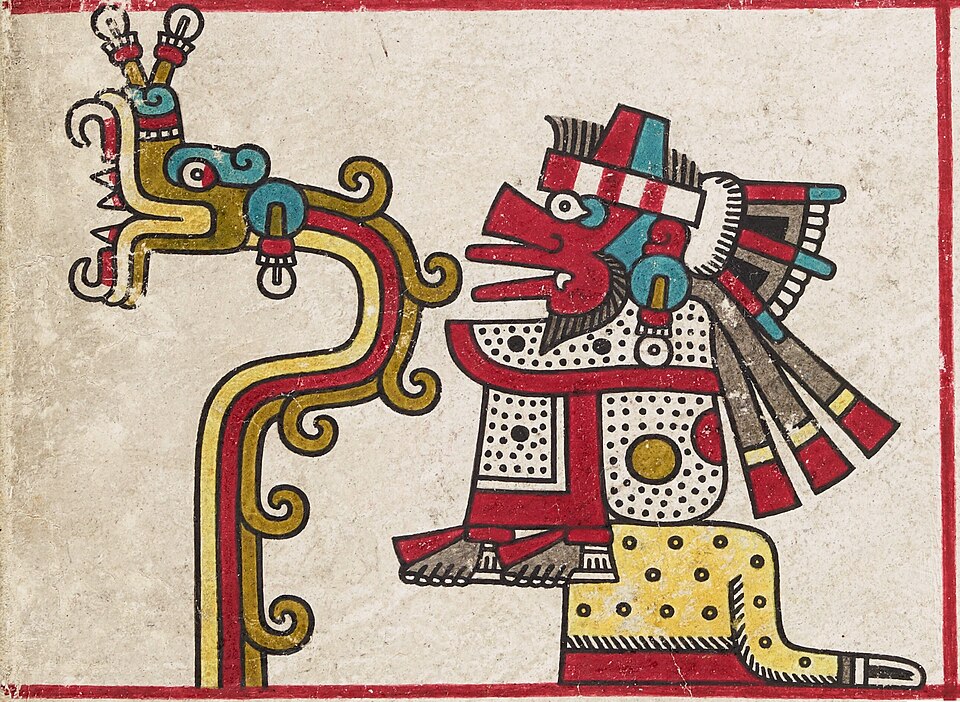
The feathered serpent who goes down into the underworld to recover the bones of humanity. Here, for once, the serpent is not the monster.
Narrow source base
Across the Near East and the Indo-European world, the serpent is the thing the sky god has to kill. in Mesoamerica the feathered serpent is a culture-bringer, patron of priests and the calendar, and the god who retrieves the bones of the dead from Mictlan to remake humanity. Any claim that serpent-hostility is a universal religious instinct has to account for this, and does not do so easily.
Identity
Where does the name come from?
Where it was actually worshipped
Teotihuacan, whose Temple of the Feathered Serpent is faced with his heads; Cholula, the largest pyramid by volume anywhere; and Tula, from which the story of his exile is told.
A figure with temples and a figure that only ever existed on a page are different kinds of thing, and the difference is easy to lose once both are entries in a list.
At a glance
Vitals
Vitals
Also known as
- First attested
- Annals of Cuauhtitlan and the Legend of the Suns · c. 1570, from pre-conquest material
- Rank
- Feathered Serpent
- Pantheon
- Mesoamerican
- Order
- Mesoamerican pantheon
- Base of operations
- Teotihuacan, whose Temple of the Feathered Serpent is faced with his heads; Cholula, the largest pyramid by volume anywhere; and Tula, from which the story of his exile is told.
- Era
- c. 1550 CE
- Traditions
- Mesoamerican
Traits
- Domain
- Wind, learning, the calendar, priesthood, maize
- Traditional form
- A plumed serpent, or a wind god with a beaked mask
Stats
Known connections
Opposed by
Identified with
2 sites
Where was it worshipped?
Attested cult sites, located against the Pleiades gazetteer of the ancient world where it reaches and against Wikidata everywhere else. An absence here is not evidence that no cult existed: a good number of figures never had one, and the entry above says so where that is the case.
The Temple of the Feathered Serpent is faced with his heads, alternating with the storm-god mask.
19.692, -98.844 · Wikidata Q172613
The largest pyramid by volume anywhere, with a church on top of it.
19.058, -98.302 · Wikidata Q1417475
4 attributed
What is it said to do?
Where these powers cluster
The 4 offices attributed to Quetzalcoatl, grouped by kind. Segment width is the share of powers falling in each category.
A bar dominated by one colour means a specialist; an even spread means a figure the sources credit with almost anything.
- knowledge1
- divination1
- transformation1
- material1
knowledge
divination
transformation
material
1 mark
Which marks is it attached to?
A mark a figure carries and a mark used against a figure are opposite claims, so each link says which it is.
3 texts
Which texts say so?
When these texts were written
Each dot is one of the 3 texts that names Quetzalcoatl, placed at that text's approximate date.
A wide spread means the figure was carried across many centuries and traditions; a tight cluster means a single period produced the whole record.
3 texts, all inside a single century
The disgrace at Tollan, told by Nahua annalists in Nahuatl: shamed by Tezcatlipoca into drunkenness and into breaking his own observances, he leaves, burns himself on the eastern shore and rises as the morning star. A god's fall narrated by his own tradition rather than by a friar is the rarest kind of evidence this corpus holds.
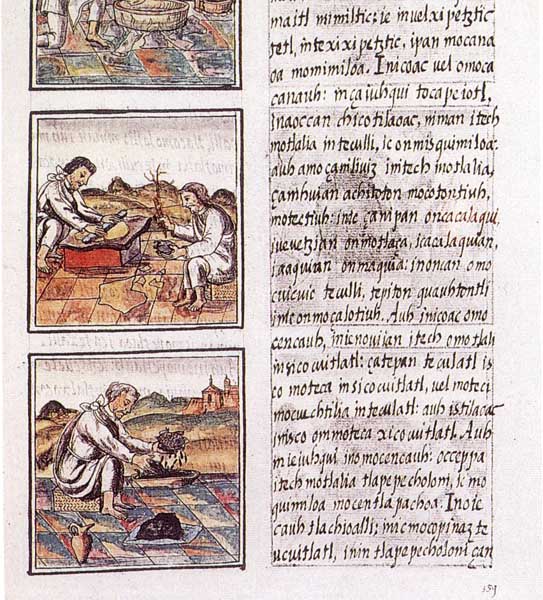
Patron of priests, learning and the calendar; recovers the bones of the ancestors from the underworld.
The friar's version, and a warning label. Durán describes the cult in unmatched detail and simultaneously argues that this god must have been the apostle Thomas — a Christian preacher misremembered — because the alternative is that the resemblances mean nothing. Assimilation and condemnation are the same reflex, and this corpus carries an example of each in one author.
Connections
What is it connected to?
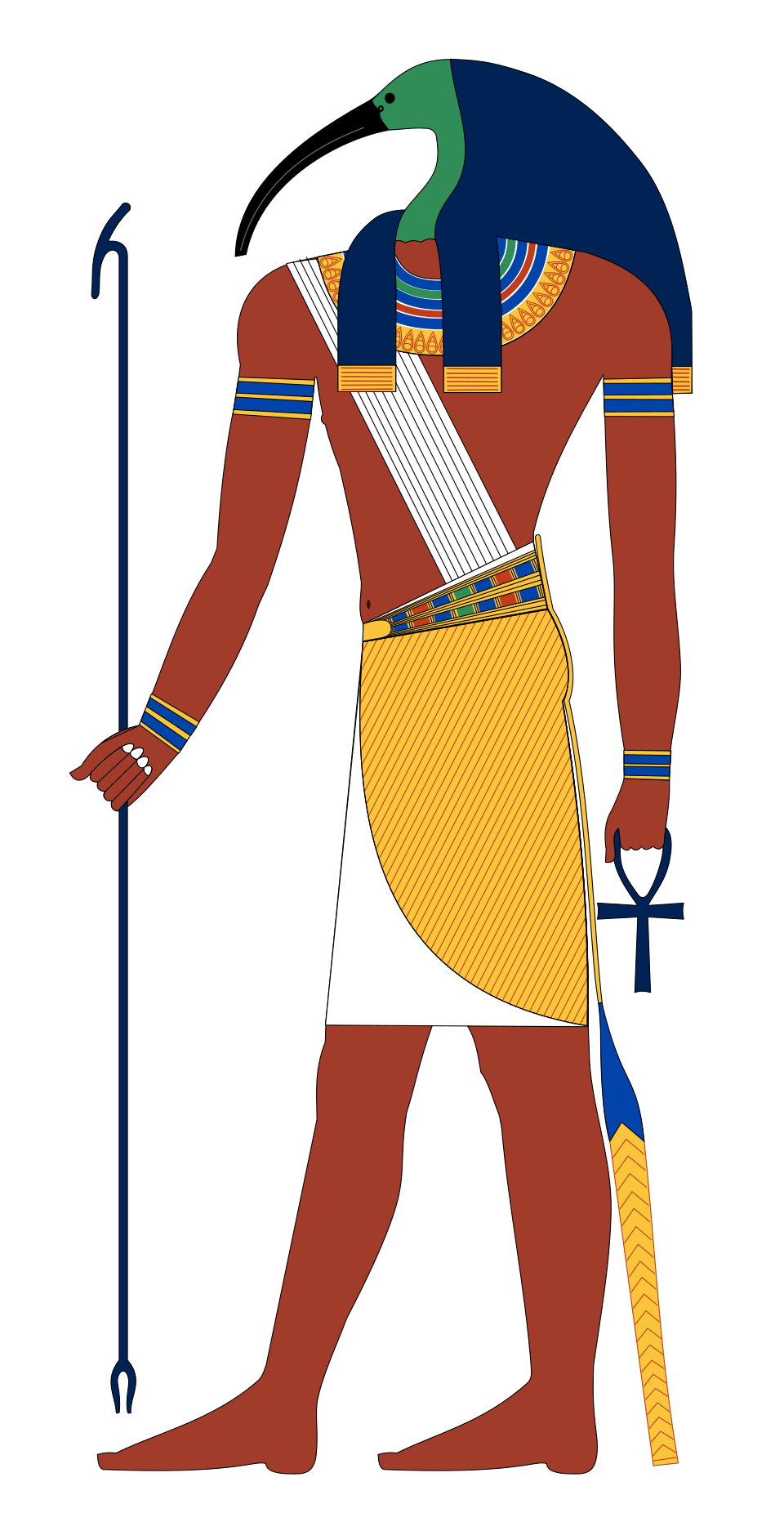
Identified with Thoth
Bringers of the calendar, writing and priestly learning.
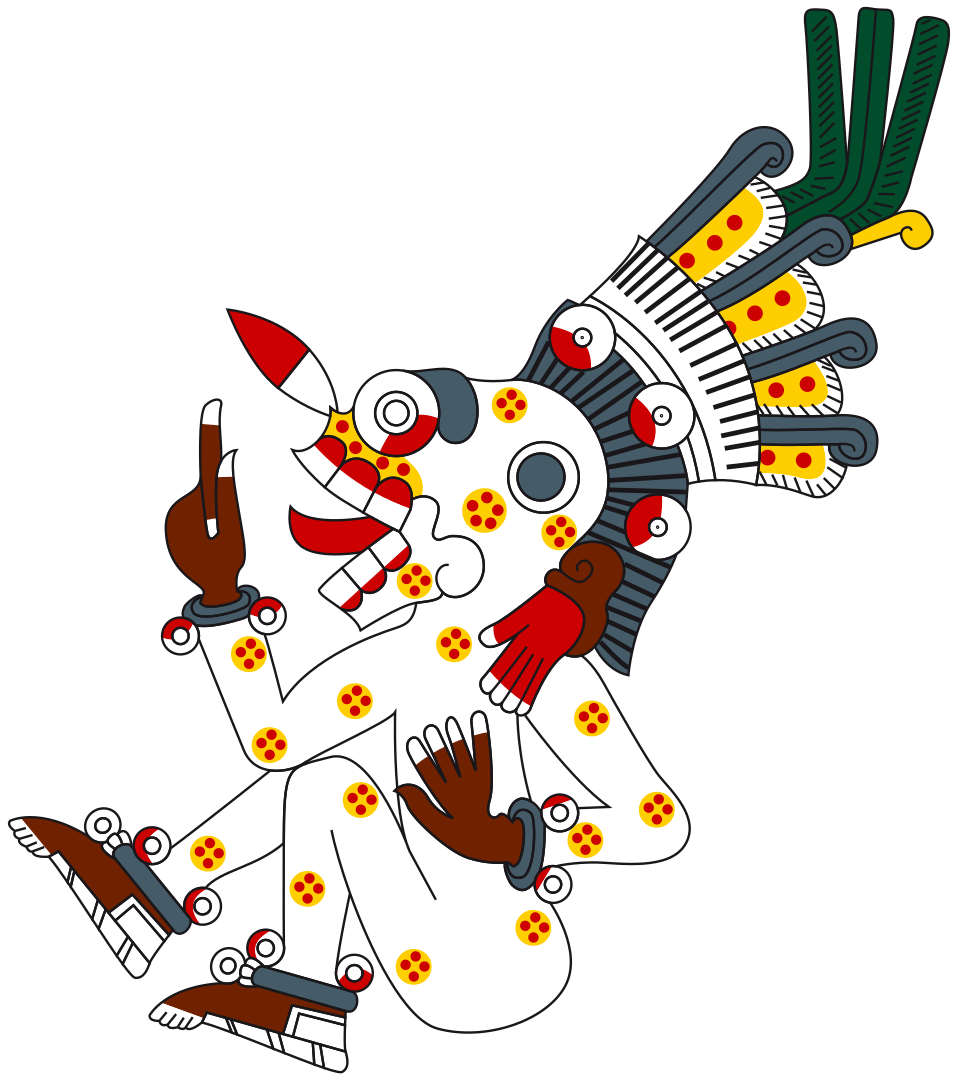
Opposes Mictlantecuhtli
Goes down for the bones of the previous humanity, is given conditions and then obstructed, and escapes with them broken.
Opposed by Tezcatlipoca
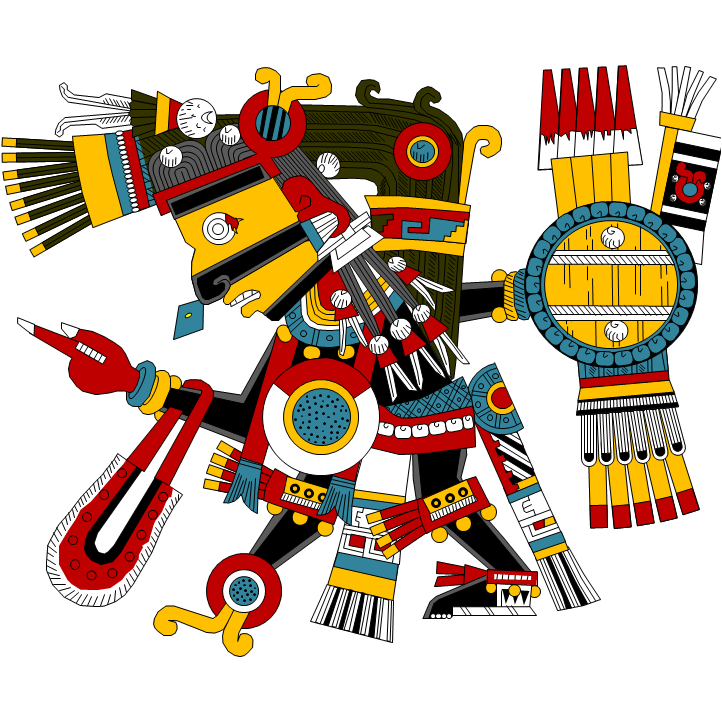
Drives Quetzalcoatl from Tula — a rivalry that resists mapping onto good against evil.
Afterwards
What did later readers make of it?
Two modern careers. In Mexico he is a national symbol, the civilising god of the Nahua past invoked in muralism and in state iconography as evidence of a civilisation the conquest interrupted. Outside it he has been drafted into ancient-astronaut writing and into the claim that Cortés was mistaken for him returning — a story now generally treated by historians as a post-conquest construction rather than a Mexica belief, which makes its persistence a good illustration of how a conquest narrative gets tidied up afterwards by the winning side.
Kept in its own section on purpose. Everything above is what the cited texts say; this is what was built on top of them afterwards, and blending the two is how most popular demonology goes wrong.
Answered from the sources
Common questions
Which texts mention Quetzalcoatl?
Is Quetzalcoatl the same as Thoth?
What rank is Quetzalcoatl?
How else is Quetzalcoatl spelled?
What is Quetzalcoatl said to do?
How old is Quetzalcoatl?
Nearest in the corpus
If Quetzalcoatl is what you came for, these are next
Chosen by proximity rather than by popularity: the same pantheon first, then the same rank, then the same kind of figure.
Tezcatlipoca
Lord of the Near and the Nigh · Mesoamerican
God of the night sky, sorcery and arbitrary fate — Quetzalcoatl's rival, and impossible to place on a good/evil axis.
Huitzilopochtli
The War God of the Mexica · Mesoamerican
The Mexica war god, born fully armed to defend his mother from his four hundred siblings — a tribal patron who became the state god of an empire and the sun that had to be fed.
Mictlantecuhtli
Lord of Mictlan · Mesoamerican
The Aztec god who rules the ninth and lowest underworld, where the ordinary dead arrive after a four-year journey. Nothing is punished there.
Tlaloc
He Who Makes Things Sprout · Mesoamerican
The Nahua rain god, who takes the drowned and the lightning-struck into a paradise of his own — and whose rites, as the Spanish friars recorded with horror, were performed on children.
The Lords of Xibalba
Underworld Lords · Mesoamerican
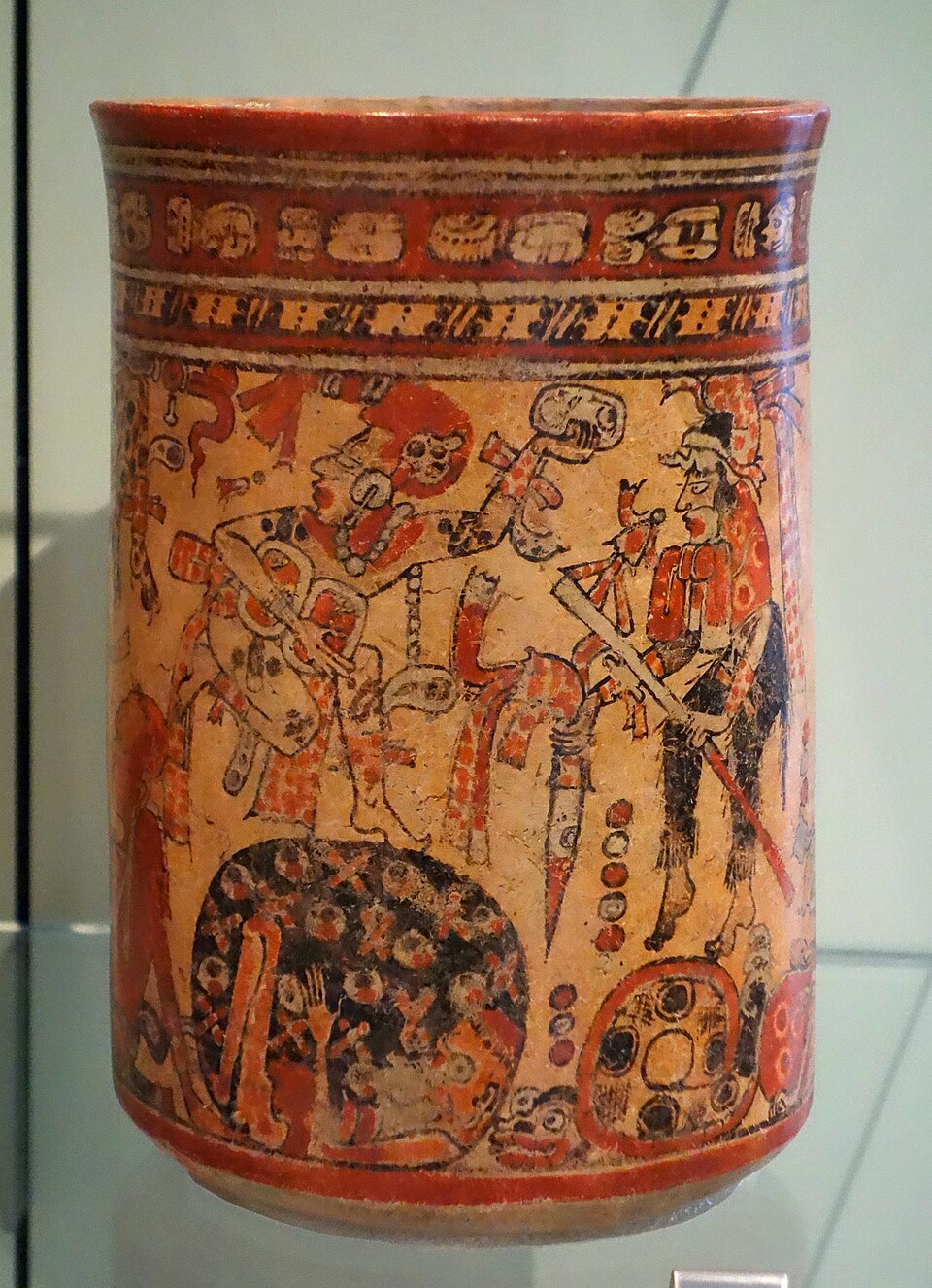
Twelve Maya lords of the underworld, each named for the sickness he inflicts, who trap visitors in a sequence of houses of ordeal. The Hero Twins outwit them.
Artemis
Mistress of Animals · Greek
Huntress and protector of the young, whose Ephesian cult statue looks nothing like her and whose temple gave the ancient world one of its most durable protective formulas.
The books behind Quetzalcoatl
Every claim on this profile is attributed to one of these. They are public domain, listed oldest first, and each links to a full text where one is freely available.
Annals of Cuauhtitlan and the Legend of the Suns
Anonymous Nahua annalists; the Codex Chimalpopoca · c. 1570, from pre-conquest material · Nahuatl
Read Annals of Cuauhtitlan and the Legend of the Suns in full ↗Florentine Codex
Bernardino de Sahagún with Nahua informants · 1545-1590 · Nahuatl and Spanish
Read Florentine Codex in full ↗Cover: Public domain · Bernardino de Sahagún · Wikimedia file page
Historia de las Indias de Nueva España
Fray Diego Durán · c. 1581 · Spanish
Read Historia de las Indias de Nueva España in full ↗
Corpus last revised 29 August 2026. A reference site’s credibility rests on being maintained, so this is the date the sourced records last changed — not the date the page was rebuilt.