Tradition
Enochian
The Watchers, their descent, and the archangels of 1 Enoch.
What is the Enochian tradition?
1 Enoch is the oldest full narrative account of angelic rebellion, and almost everything the later tradition believes about fallen angels traces back to it rather than to Genesis. The Watchers descend, take human wives, and teach forbidden arts — metallurgy, cosmetics, astrology, sorcery — and their offspring are giants whose destruction requires the Flood.
The text matters disproportionately for two reasons. It names the rebels, which no canonical text does, and it supplies a motive and a mechanism for evil entering the world that is more narratively satisfying than anything in Genesis. Christian tradition largely dropped Enoch from the canon while keeping its story, which is why the fallen-angel narrative most people know has no scriptural basis they can point to.
It is also where several of the archangels acquire their portfolios. Where a later text says Raphael is the angel of healing or Uriel the angel of the underworld, the trail usually runs back here.
Which texts does this tradition rest on?
Which marks belong to it?
Oldest first. A mark used by several traditions appears on each of their pages — which is the point: the shapes crossed these boundaries far more easily than the names did.
The Smoking Mirror
from c. 1300 CE
A polished obsidian disc that shows smoke as well as a face — a god's name, his missing foot, and a working divination instrument at once.
The Celestial Alphabets
printed 1531
Three alphabets Agrippa prints for writing the names of angels — Hebrew letters redrawn with rings at the joints, so that a script becomes a set of sigils.
Sigillum Dei Aemeth
1582–1583
A nine-inch wax disc of nested heptagons carrying angel names, made to stand under the legs of a table — the physical foundation of the Enochian sessions.
The Enochian Alphabet
1583–1584
Twenty-one letters dictated square by square from lettered grids, in a script the sessions claimed was the language Adam spoke.
Who is filed under Enochian?
Ordered by attestation score — how early and how independent the texts that name each figure are, rather than how famous the figure has since become.
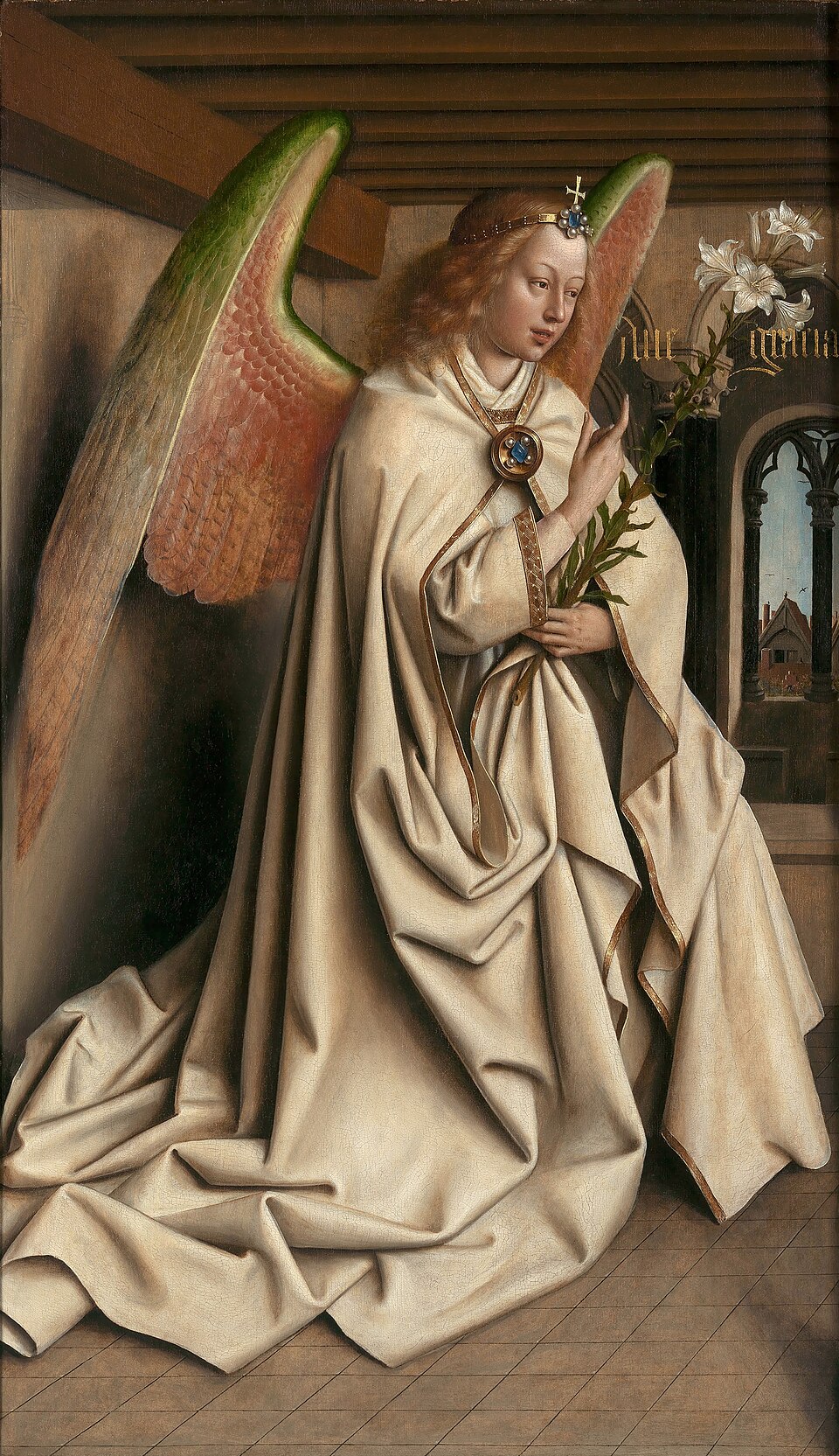
Gabriel
Archangel · Archangels / Chief Princes
The messenger. The angel who explains Daniel's visions, announces two births in Luke, and in Islam delivers the entire Qur'an.
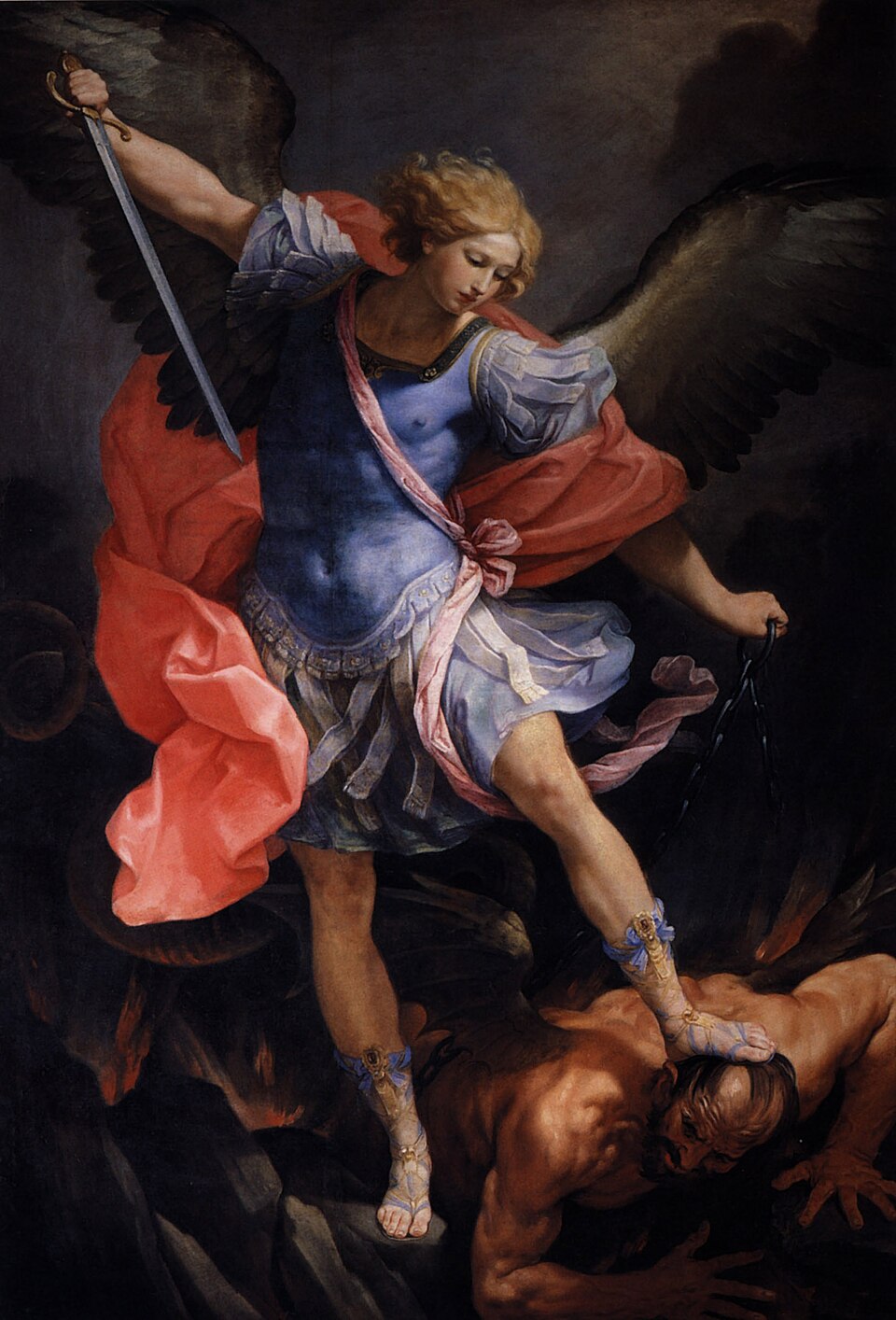
Michael
Archangel · Archangels / Chief Princes
The warring archangel: prince of Israel in Daniel, captain of the host in Revelation, and the only angel the New Testament calls an archangel outright.
The Nephilim
Offspring of the Sons of God
The offspring of the sons of God and the daughters of men, given two verses in Genesis and a full history in 1 Enoch — the corpus's clearest case of a silence in scripture being filled in elsewhere.
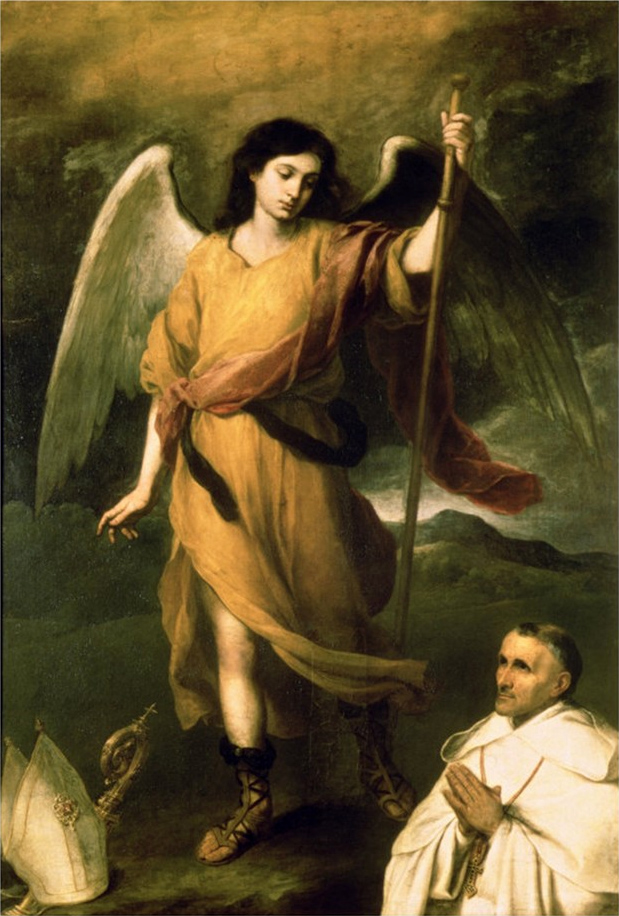
Raphael
Archangel · Archangels / Chief Princes
The healer, whose name means 'God heals'. He spends the Book of Tobit disguised as a human travelling companion, which makes it the longest sustained portrait of an angel anywhere in the biblical corpus.
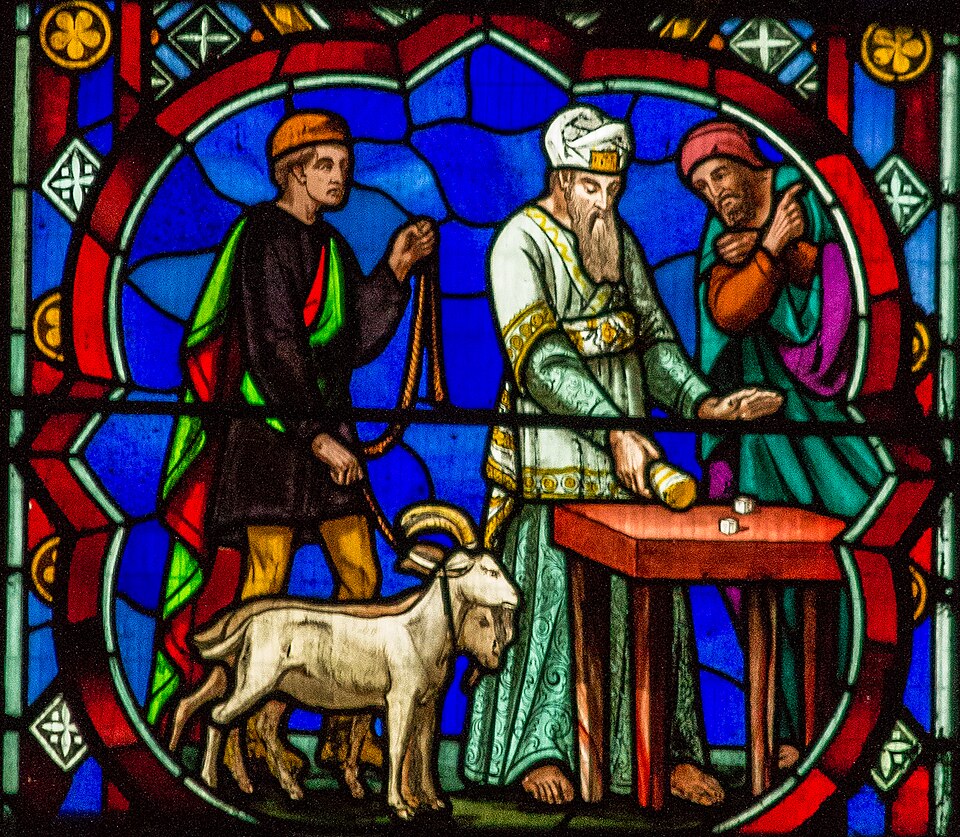
Azazel
Chief Watcher · The Watchers
The scapegoat's destination in Leviticus, and the Watcher who taught weapons and cosmetics in 1 Enoch. Translators cannot even agree whether the word is a name, a place or an abstraction.
The Seven Who Stand
The Seven · Archangels / Chief Princes
The seven who present the prayers of the saints — a group named as a body in Tobit and Revelation before any list of individual names settled.
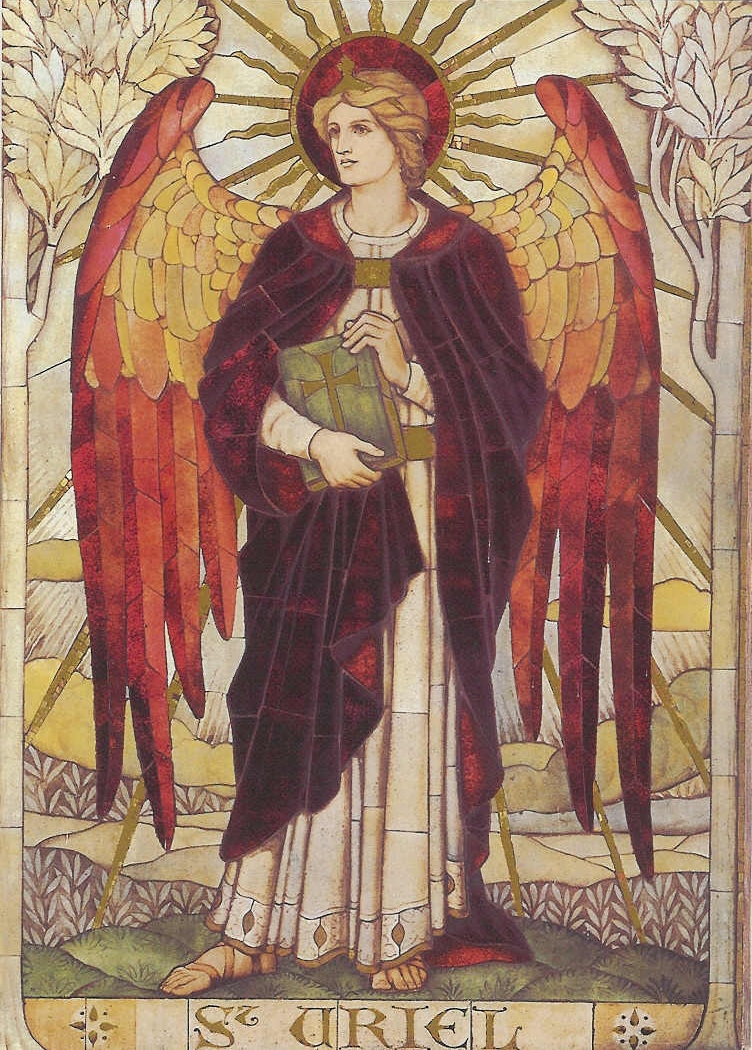
Uriel
Archangel · Archangels / Chief Princes
'Fire of God' — the archangel of the fourth seat, never named in the canonical Bible, and formally struck from the approved list by a Roman synod in 745.
Ananel
Chief of Ten · The Watchers
Of the thirteen chiefs of tens, his is the only name that reaches English in a single form — the rest arrive with two spellings or three. What does not arrive at all is any account of what he did after the descent.
Arakiba
Chief of Ten · The Watchers
Stands second among the leaders, immediately after Semjaza, and the text never returns to him. His name travels worse than any other Watcher's: Arâkîba where Charles translates the Ethiopic, Urakabarameel in the witnesses behind the Greek — barely recognisable as the same word.
Araqiel
Watcher · The Watchers
One of the two hundred Watchers who descended in 1 Enoch. He taught the signs of the earth, which is to say geomancy.
Armaros
Chief of Ten · The Watchers
Taught how to break enchantments — the counter-spell to Semjaza's spell, and the only Watcher whose art is purely defensive.
Baraqiel
Watcher · The Watchers
Taught astrology; his name means 'lightning of God'.
Batarel
Chief of Ten · The Watchers
Batârêl in Charles, Batraal in the lists that reached English through Greek. Under either spelling he swears the oath on Hermon and does nothing further that the text records.
Danel
Chief of Ten · The Watchers
Three unrelated figures carry this name — a Ugaritic king, the biblical prophet, and this Watcher — and only the coincidence connects them. 1 Enoch records his oath and nothing he taught.
Ezeqeel
Chief of Ten · The Watchers
Meteorology is on the charge sheet. He taught men to read the clouds, and 1 Enoch files that beside metalwork and astrology as one of the crimes that brought the flood.
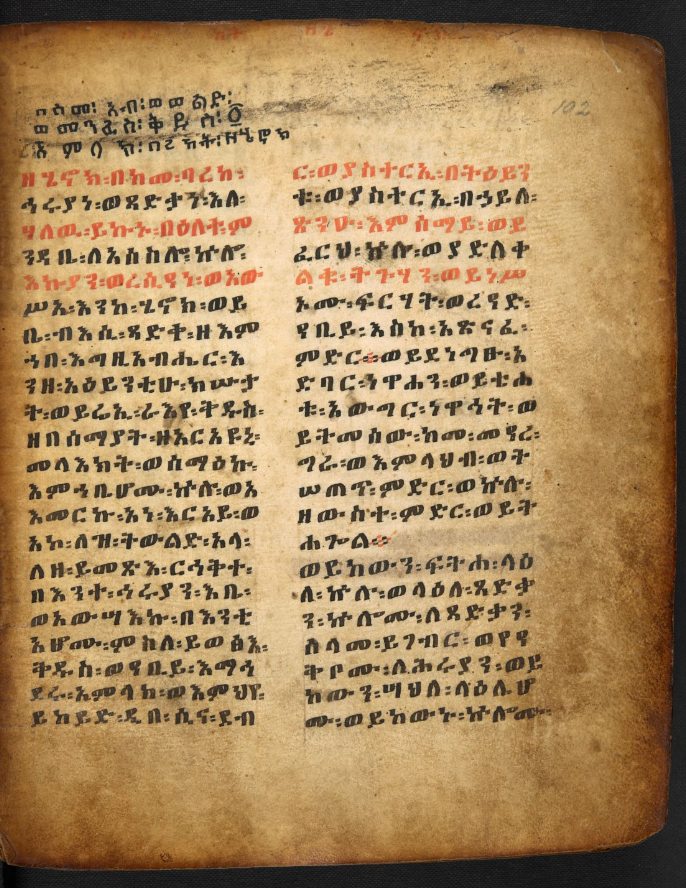
Gadreel
Watcher · The Watchers
1 Enoch names him rather than the serpent as the one who led Eve astray, and credits him with inventing weapons besides.
Jomjael
Chief of Ten · The Watchers
His entire biography as a Watcher is one act: binding himself by the oath on Hermon in 1 Enoch alongside the other chiefs. Yomiel is what the name becomes once the diacritics are dropped, and it is no better attested than the original.
Kasdeja
Watcher · The Watchers
Taught the smitings of the spirits and the demons, and the striking of the embryo in the womb.
Kokabiel
Watcher · The Watchers
Taught the constellations — astrology as one of the forbidden arts brought down at the descent.
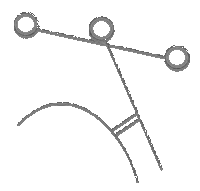
Penemue
Watcher · The Watchers
Taught humanity to write — which 1 Enoch treats as one of the gravest of the transmitted sins.
Raguel
Archangel · Archangels / Chief Princes
The archangel who takes vengeance on the world of the lights — and one of those condemned by name at the Roman synod of 745.
Rameel
Chief of Ten · The Watchers
Shares a name with Remiel, one of the holy archangels — a collision 1 Enoch keeps apart and later lists do not, which is how the same figure ends up filed on both sides of the rebellion.
Remiel
Archangel · Archangels / Chief Princes
Set over those who rise — the archangel of the resurrection and of true visions.
Samsapeel
Chief of Ten · The Watchers
Holds the sun's share of a three-way division of the sky, with Sariel on the moon and Kokabel on the stars. What 1 Enoch condemns is not what the signs foretold but that he explained them at all.
Sariel
Archangel · Archangels / Chief Princes
One of the seven archangels of 1 Enoch, set over the spirits who sin against the spirit. Canonical scripture never names him.
Satarel
Chief of Ten · The Watchers
Only nine of the leaders named in 1 Enoch 6:7 are given a teaching in chapter 8, and he is not among the nine. He is recorded as Satarêl and as Sartael, and silent under both.
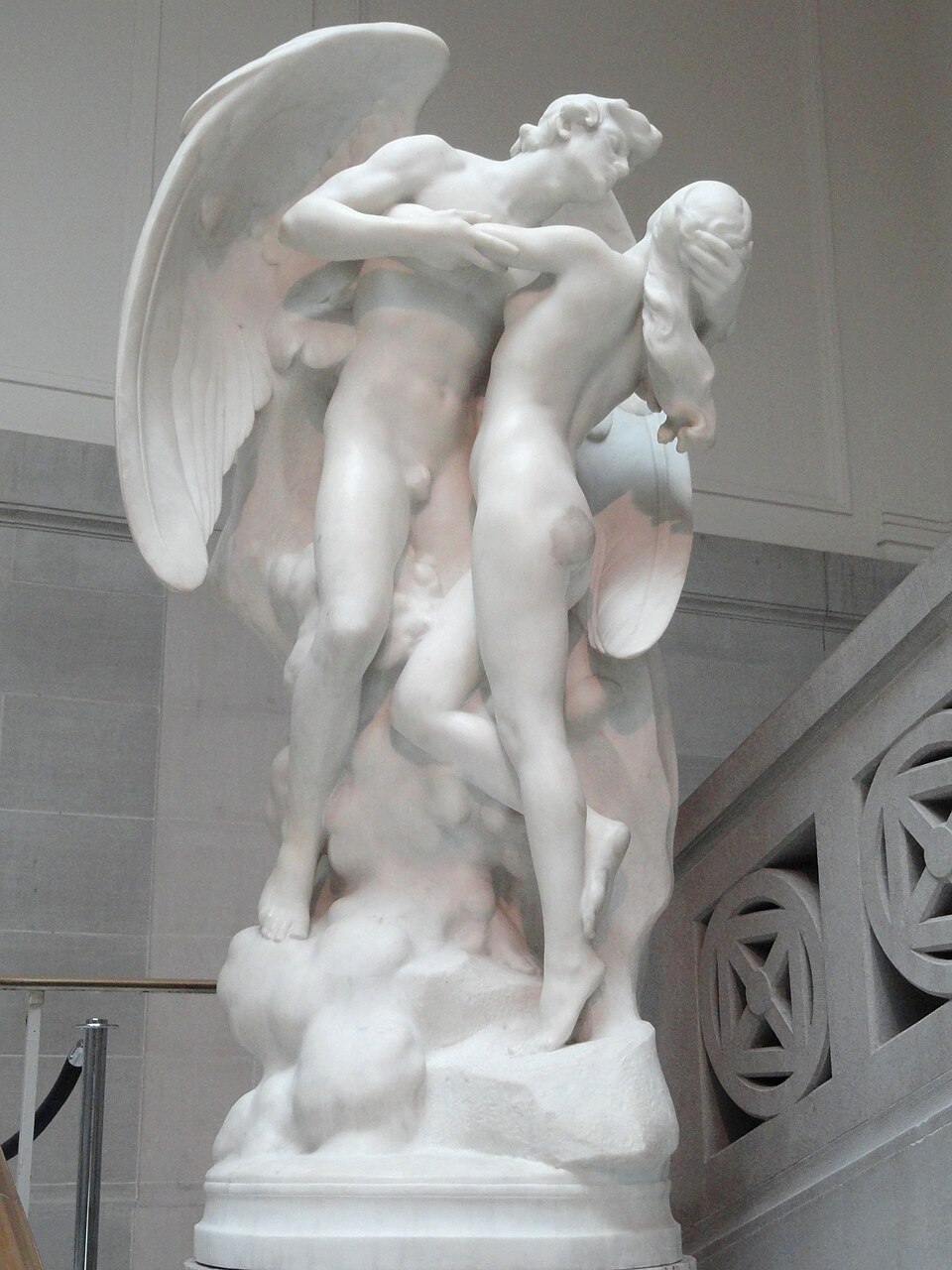
Semjaza
Leader of the Watchers · The Watchers
The Watcher who proposed the descent and bound the other two hundred to it by mutual oath on Mount Hermon.
Tamiel
Chief of Ten · The Watchers
Later tradition made him a teacher of astronomy. 1 Enoch does not: it gives him an oath, a rank over ten of the two hundred, and no art at all. The astronomy is an inheritance from somewhere else.
Turel
Chief of Ten · The Watchers
No teaching, no punishment, no later appearance: of the Watchers named in 1 Enoch he is among the emptiest entries. He binds himself by the oath and leaves the narrative there — the fate of most of the twenty, and of none of the ones anybody remembers.
Zaqiel
Chief of Ten · The Watchers
The two forms his name reaches English in, Zaqîêl and Sathiel, have almost nothing in common but the ending — the -el that marks him as one of God's, and that survives in these names long after everything else about them has been lost. Neither form is given a teaching.