seal · documented from the 17th century
The Opón Ifá
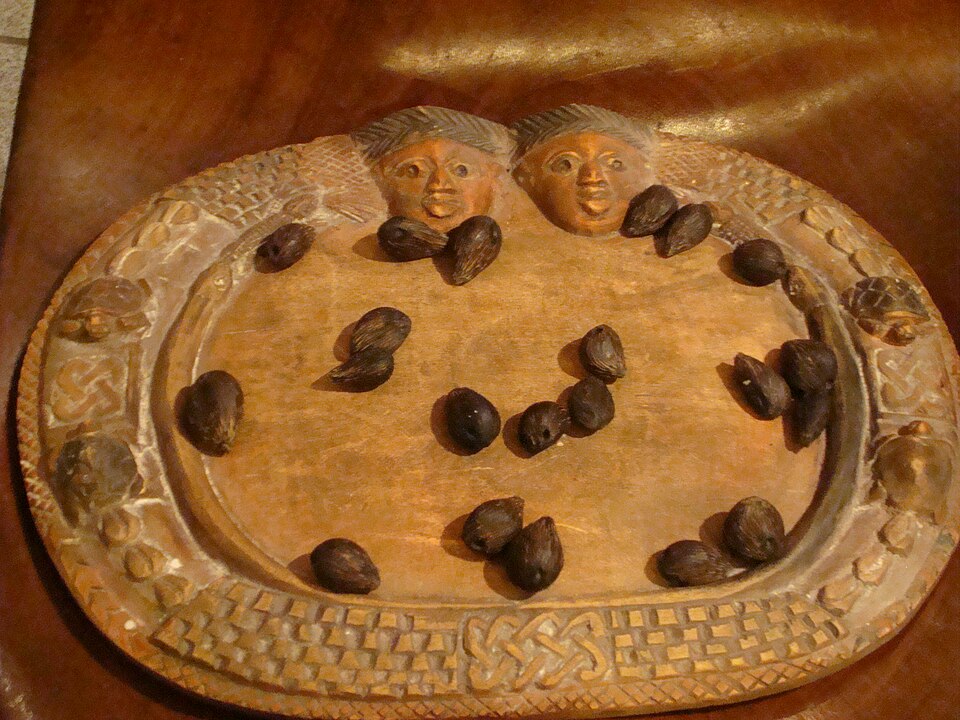
A carved wooden tray dusted with powder, marked in sixteen possible figures — and with Èṣù's face cut into the rim, watching the border.
What the sources claim for it
A field on which an answer can be written, with the messenger who has to carry it present at the edge.
History
Where does the Opón Ifá come from?
Ifá divination is performed on a round or rectangular tray. The diviner casts palm nuts or a divining chain and marks the results in the dust as a binary figure; there are sixteen principal odù and two hundred and fifty-six in the full set, each attached to a body of verse the diviner must know by memory.
The rim is always carved, and the face carved at the top is Èṣù's. He is the one who carries messages between this world and the other, and no divination proceeds without acknowledging him — so the instrument has its intermediary built into its frame. UNESCO listed the Ifá system as intangible cultural heritage in 2005.
1 figure
Who is it attached to?
Figures who carry it
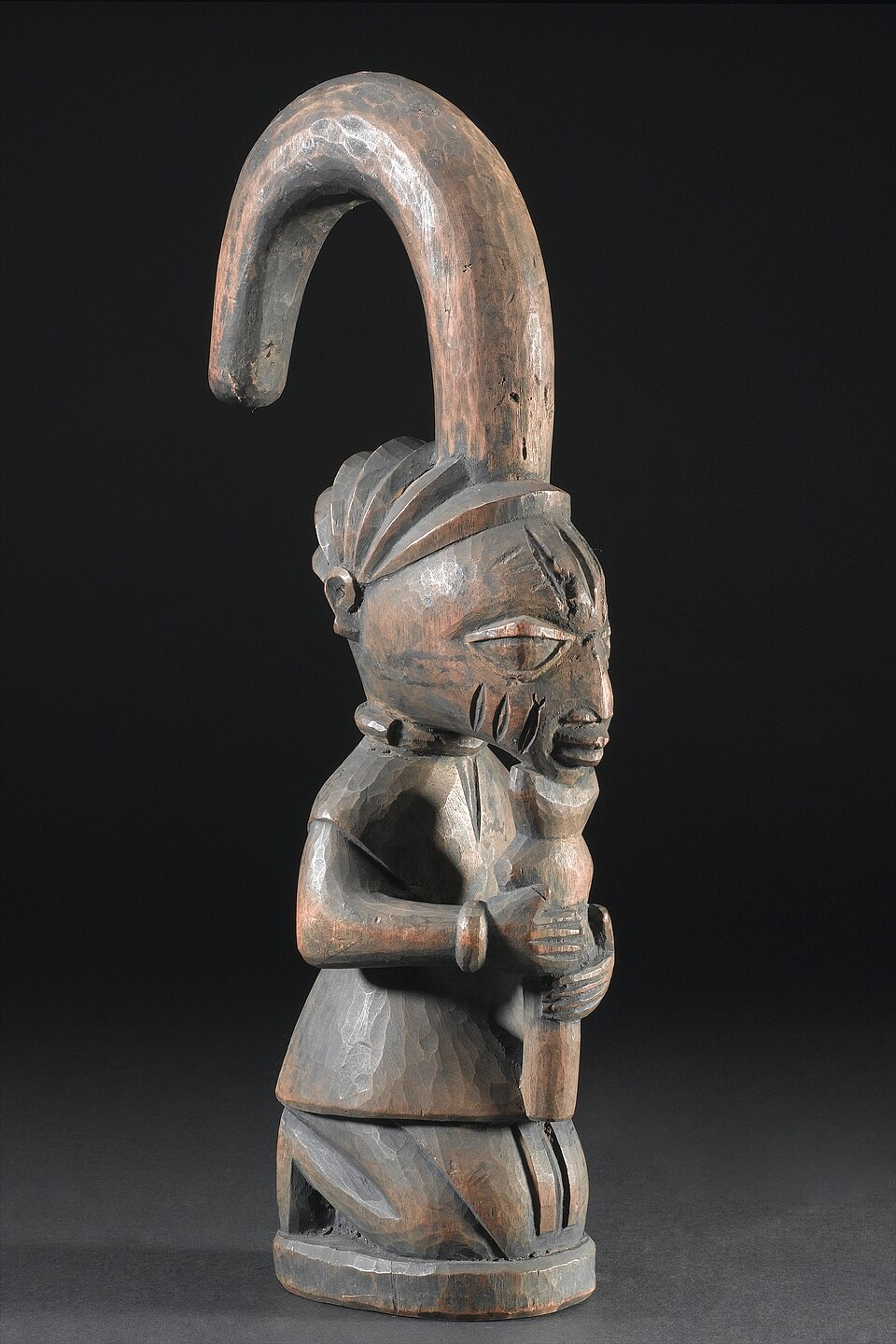
An attribute rather than a signature — held, worn or associated in the texts and the images.
Afterwards
What did it turn into?
Continuous in Nigeria, Benin and the Americas, and one of the very few divination systems in this corpus that is documented by its living practitioners rather than reconstructed from a manuscript.
Which texts describe it?
Oldest first, with what each one does with the mark. A mark described in a Bronze Age incantation and a mark first drawn in a seventeenth-century manuscript are different kinds of claim, whatever the shape has in common.
The Odu Ifá
Oral; transmitted by babalawo · Oral tradition, first transcribed 19th-20th c. · Yoruba
The verse corpus the tray is the instrument for reading.
Read The Odu Ifá in full ↗Cover: Public domain · Toluaye · Wikimedia file page
Nearby
Related marks
The Oṣé Ṣàngó
A double-headed axe carried on the head of a dancer — and, in practice, the neolithic stone celts that turn up in fields after a storm.
The Iron of Ògún
Not an image but a material: worked iron itself — machete, anvil, nails, and now car parts — is Ògún's presence.
The Was Sceptre
A straight staff with a forked foot and an animal head — and the animal, on the best reading, is Set's.
The Rod and Ring
The objects a seated god hands to a standing king at the top of Hammurabi's stele — most likely a measuring rod and a coiled line.
The Delphic Tripod
A three-legged bronze stand and the seat of the Pythia — the piece of furniture that authorised more Greek political decisions than any assembly.
The Seal of Solomon
A signet ring, not a shape. The Testament of Solomon makes it the instrument by which every demon in the book is compelled to give its name.