Tradition
Yoruba & Diaspora
The orisha, and the syncretism with Catholic saints that preserved them across the Atlantic.
What is the Yoruba & Diaspora tradition?
The orisha are a living tradition, which distinguishes this hub from most of the others here: the material is not a reconstruction from dead texts but a practice with practitioners.
Its syncretism is the best-documented case on this site of syncretism as survival strategy. Enslaved people in the Americas identified orisha with Catholic saints, and the identification preserved the tradition through a period when practising it openly was dangerous. Shango under the name of Santa Barbara is not a confusion of two figures; it is a deliberate act with a purpose.
That makes it a useful corrective to the demonisation pattern that dominates the rest of the corpus. Both are the same mechanism — a figure moving into another religion's vocabulary — and one produced a demon while the other produced a saint, depending entirely on who held the power to name.
Which texts does this tradition rest on?
The History of the Yorubas
Samuel Johnson; edited by O. Johnson · Written 1897, published 1921
A Yoruba clergyman's history of his own people, written from oral tradition and from the court historians of Oyo. Its treatment of Shango is the reason it is here: Johnson places him in the king-list as the fourth Alaafin of Oyo, a violent ruler who hanged himself and was afterwards declared a god by his followers. Euhemerism performed from inside a tradition, by a Christian who is also a source for it, and a useful check on the assumption that only outsiders explain gods away.
7 entries contributed
The Odu Ifá
Oral; transmitted by babalawo · Oral tradition, first transcribed 19th-20th c.
The Ifá divination corpus, a vast oral literature naming and characterising the orisha. Its transmission is still living, which makes it unlike every other source listed here.
7 entries contributed
Which marks belong to it?
Oldest first. A mark used by several traditions appears on each of their pages — which is the point: the shapes crossed these boundaries far more easily than the names did.
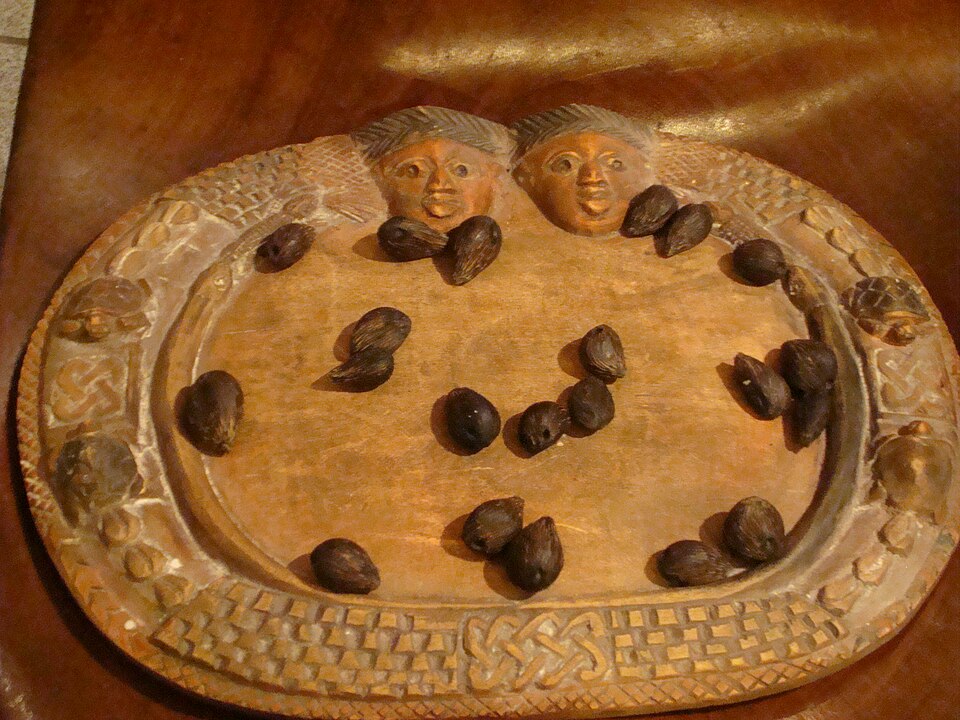
The Opón Ifá
documented from the 17th century
A carved wooden tray dusted with powder, marked in sixteen possible figures — and with Èṣù's face cut into the rim, watching the border.
The Oṣé Ṣàngó
in continuous use; documented from the 19th century
A double-headed axe carried on the head of a dancer — and, in practice, the neolithic stone celts that turn up in fields after a storm.
The Iron of Ògún
in continuous use; documented from the 19th century
Not an image but a material: worked iron itself — machete, anvil, nails, and now car parts — is Ògún's presence.
Who is filed under Yoruba & Diaspora?
Ordered by attestation score — how early and how independent the texts that name each figure are, rather than how famous the figure has since become.
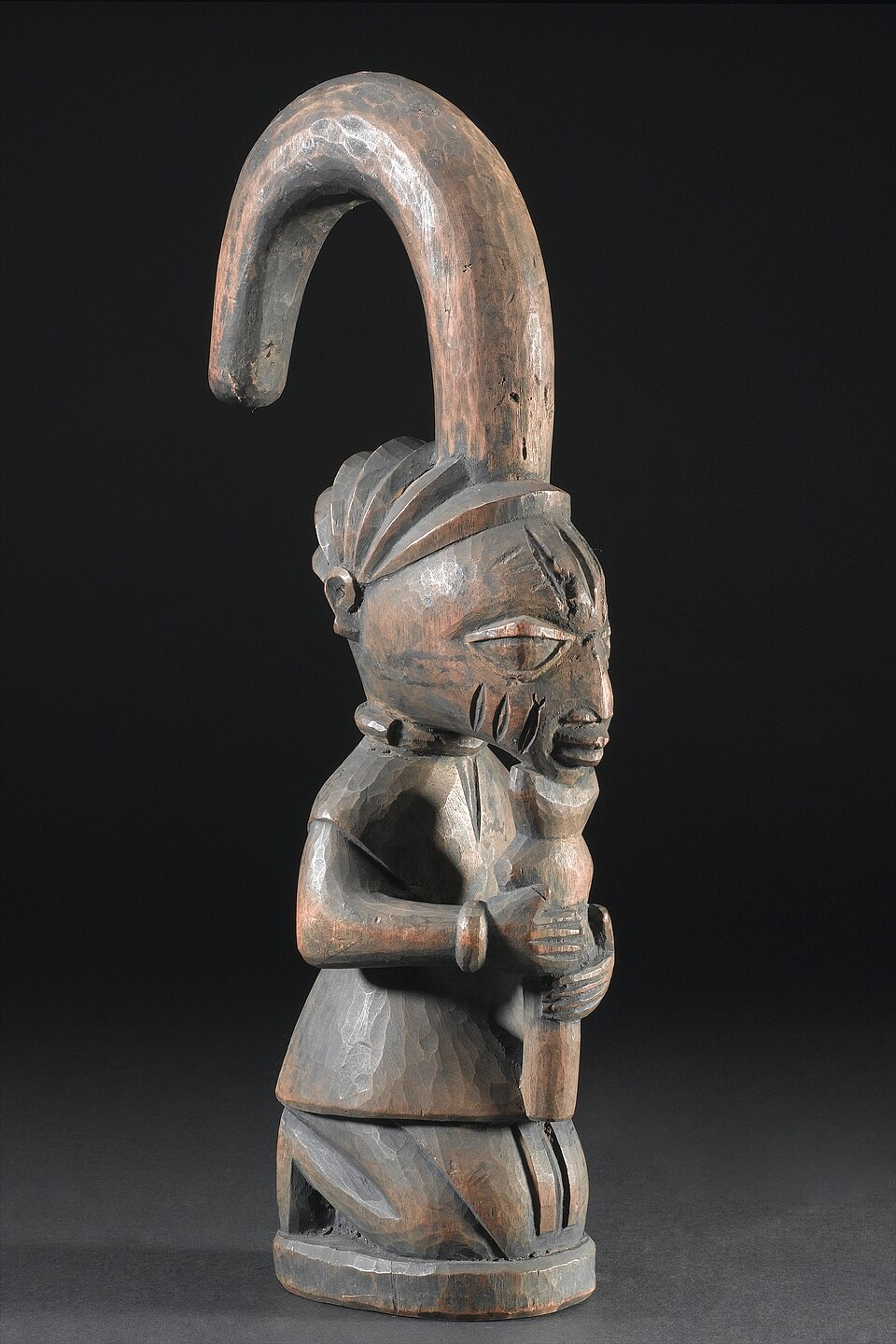
Eshu
Divine Messenger · Yoruba
Messenger between humanity and the orisha, addressed first in any rite. Missionaries met a trickster at a crossroads and called him Satan, and the mistake has proved very hard to undo.
Obatala
King of the White Cloth · Yoruba
The Yoruba orisha who moulds human bodies before birth, and who made the disabled ones while drunk on palm wine — which is why he is owed to them and why his worship forbids the drink.
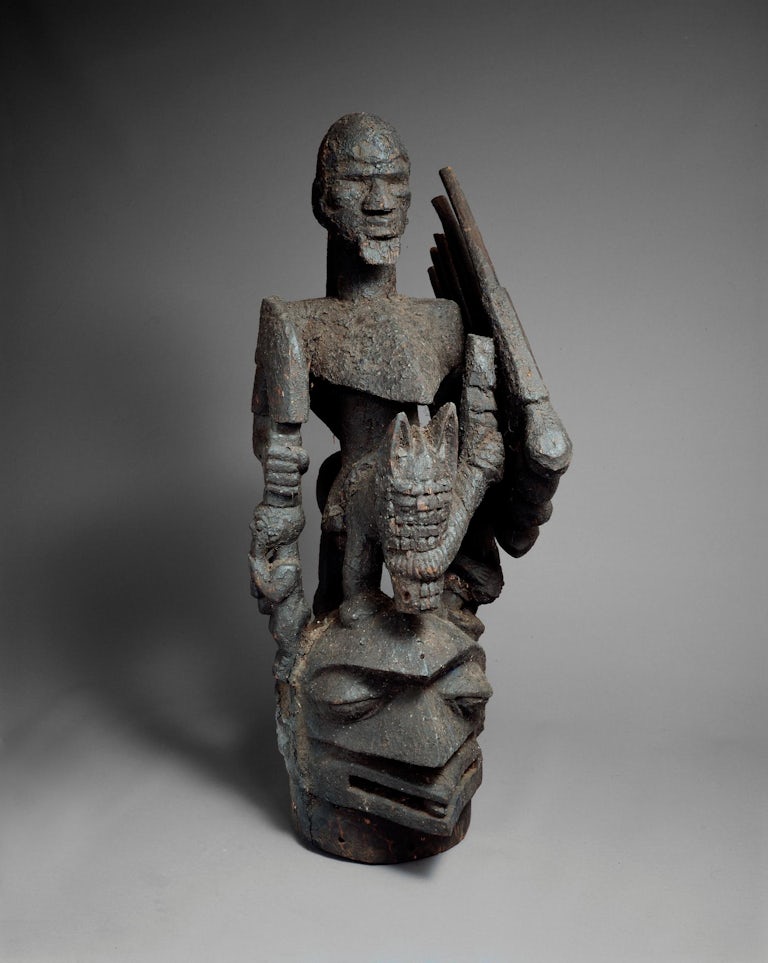
Ogun
Orisha of Iron · Yoruba
Orisha of iron and of the tools made from it — patron of smiths, surgeons and soldiers alike, since all three cut.
Olodumare
The Supreme Being · Yoruba
The Yoruba supreme being, who has no images, no temples and no priests of his own — the orisha are the ones addressed, and the corpus's clearest example of a high god who is not worshipped directly.
Orunmila
Witness to Destiny · Yoruba
The Yoruba orisha of divination, who was present when each person chose their destiny and is consulted to find out what was chosen — the figure the whole Ifá corpus belongs to.
Oya
Owner of the Wind · Yoruba
The Yoruba orisha of wind and storm, wife of Shango and keeper of the gate between the living and the dead — the one who goes ahead of the thunder.
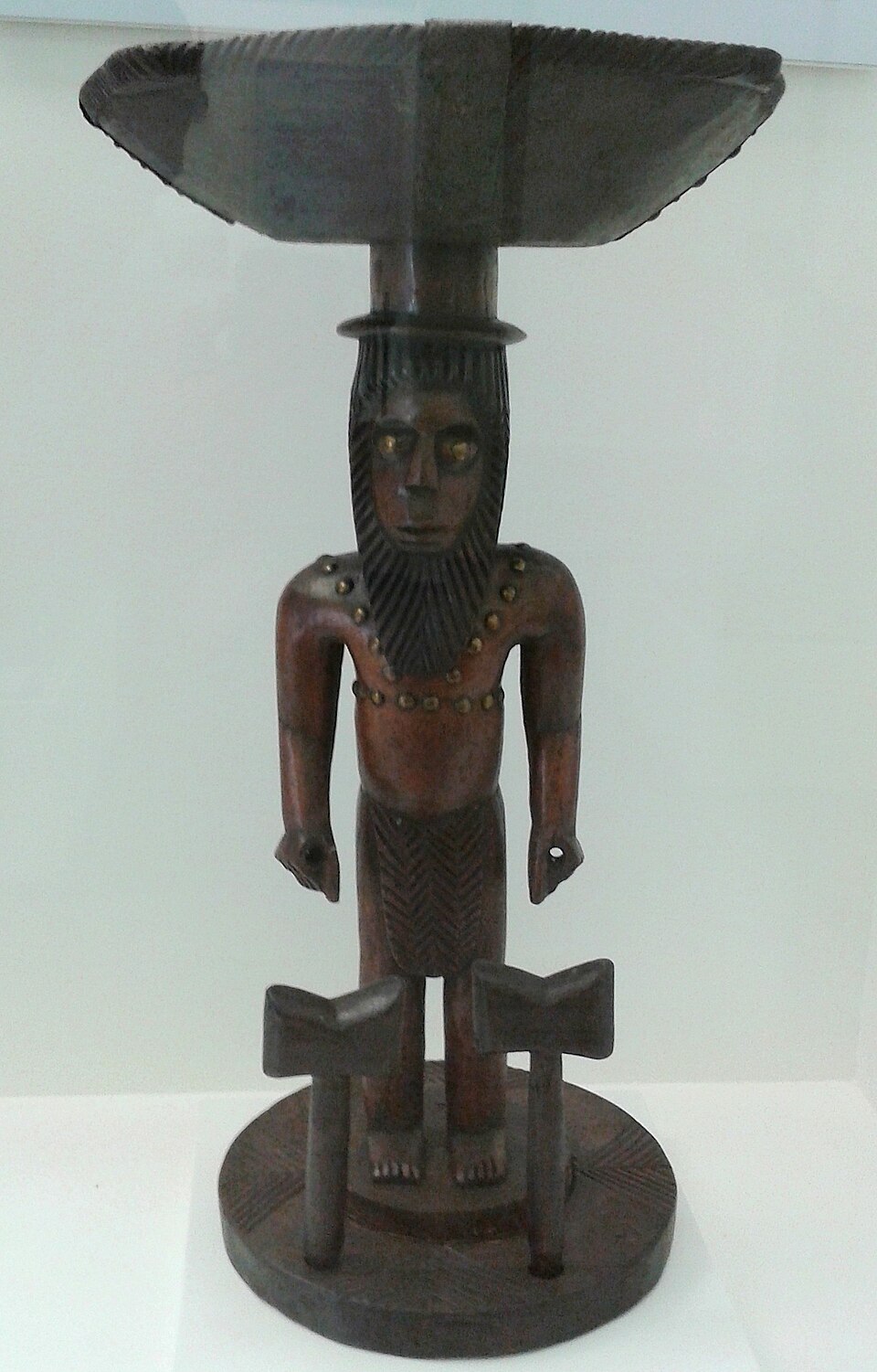
Shango
Orisha of Thunder · Yoruba
Thunder-orisha and a remembered king of Oyo — a historical ruler who became a god, which is euhemerism running the other way.