protective · in continuous use; documented from the 19th century
The Oṣé Ṣàngó
A double-headed axe carried on the head of a dancer — and, in practice, the neolithic stone celts that turn up in fields after a storm.
What the sources claim for it
The strike itself, kept as an object. The god's power evidenced by what he left in the ground.
History
Where does the Oṣé Ṣàngó come from?
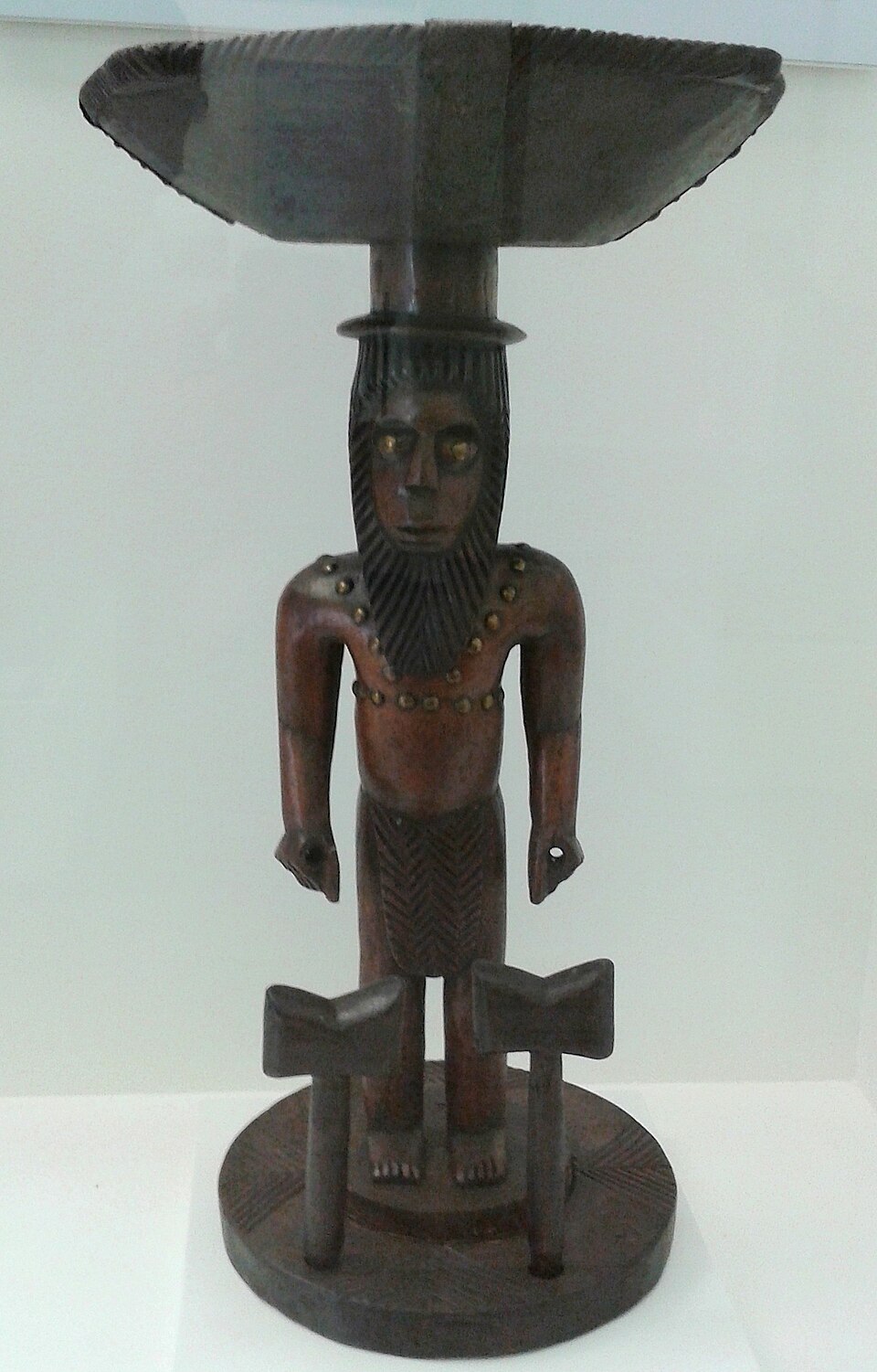
Ṣàngó's emblem is a double axe, carried as a wooden dance staff and set on shrines. The material association is specific: polished stone axe-heads found in the ground are understood as thunderstones, thrown down where lightning struck, and they are kept in the god's shrine vessels.
That is a piece of interpretation with a long life across many cultures — prehistoric tools reappearing centuries later and being read as the physical residue of a storm god's strike. Here it is not a survival or a misunderstanding but a working part of the cult, and the objects have an established place in it.
1 figure
Who is it attached to?
Figures who carry it
An attribute rather than a signature — held, worn or associated in the texts and the images.
Afterwards
What did it turn into?
Carried into the Americas with the Atlantic slave trade and continuous in Candomblé, Santería and Vodun, where Ṣàngó remains among the most widely served figures.
Which texts describe it?
Oldest first, with what each one does with the mark. A mark described in a Bronze Age incantation and a mark first drawn in a seventeenth-century manuscript are different kinds of claim, whatever the shape has in common.
The Odu Ifá
Oral; transmitted by babalawo · Oral tradition, first transcribed 19th-20th c. · Yoruba
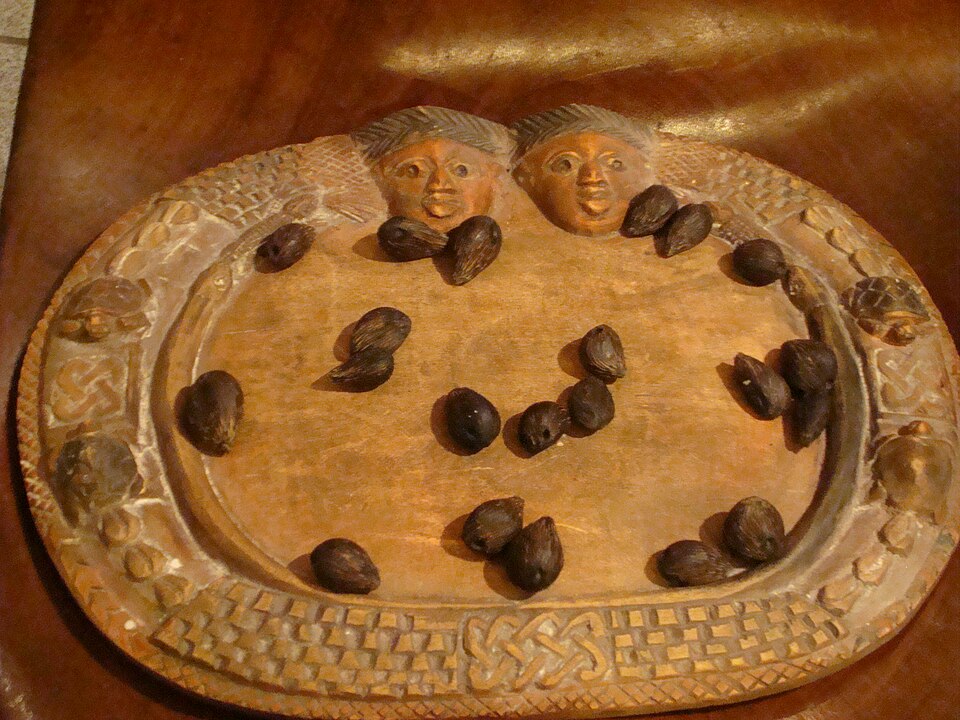
The oral divination literature in which Ṣàngó's character and offices are set out.
Read The Odu Ifá in full ↗Cover: Public domain · Toluaye · Wikimedia file page
Nearby
Related marks
The Opón Ifá
A carved wooden tray dusted with powder, marked in sixteen possible figures — and with Èṣù's face cut into the rim, watching the border.
The Iron of Ògún
Not an image but a material: worked iron itself — machete, anvil, nails, and now car parts — is Ògún's presence.
The Ankh
The sign for 'life', held to the nose of a king by a god. Not an amulet first — a hieroglyph that got carried into three dimensions.
The Djed Pillar
A four-tiered column meaning stability, later read as the backbone of Osiris and raised upright at festival as a resurrection.
The Star of Ishtar
Eight points for the planet Venus, and the standard way of writing a goddess into a scene without drawing her.
The Uraeus
A cobra rearing at the front of a crown, understood as the eye of the sun placed where it can spit at whatever approaches the wearer's face.