protective · attested in folk use from the medieval period
The Thunder Marks
A six-petalled rosette scratched into roof beams to stop lightning — a compass-and-straightedge figure any carpenter can lay out.
What the sources claim for it
Protection of the building from the storm, by marking it with the storm god's own sign.
History
Where does the Thunder Marks come from?
Six-petal rosettes and related solar marks are cut into the rafters, doorframes and gables of houses across the Slavic-speaking world, and folk explanation ties them to Perun and to protection from lightning and fire. The figure is trivially constructible: set a compass, keep the radius, step it six times around the circle.
How far back the practice runs is a genuinely open question. The medieval documentation is thin, Christianisation is early and thorough, and the modern reconstruction of Slavic paganism has a well-known tendency to fill gaps confidently. What is solid is the folk practice and its stated purpose; the pre-Christian pedigree is likely but not demonstrated.
2 figures
Who is it attached to?
Figures who carry it
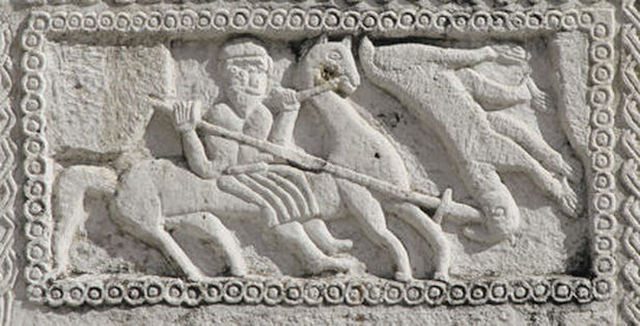
An attribute rather than a signature — held, worn or associated in the texts and the images.
Figures it is used against
The mark is aimed at them. A ward names its target, which makes these the sharpest attributions on the page.

Afterwards
What did it turn into?
Central to modern Rodnovery and to Slavic national-romantic design, where the pre-Christian dating is generally asserted rather than argued.
Which texts describe it?
Oldest first, with what each one does with the mark. A mark described in a Bronze Age incantation and a mark first drawn in a seventeenth-century manuscript are different kinds of claim, whatever the shape has in common.
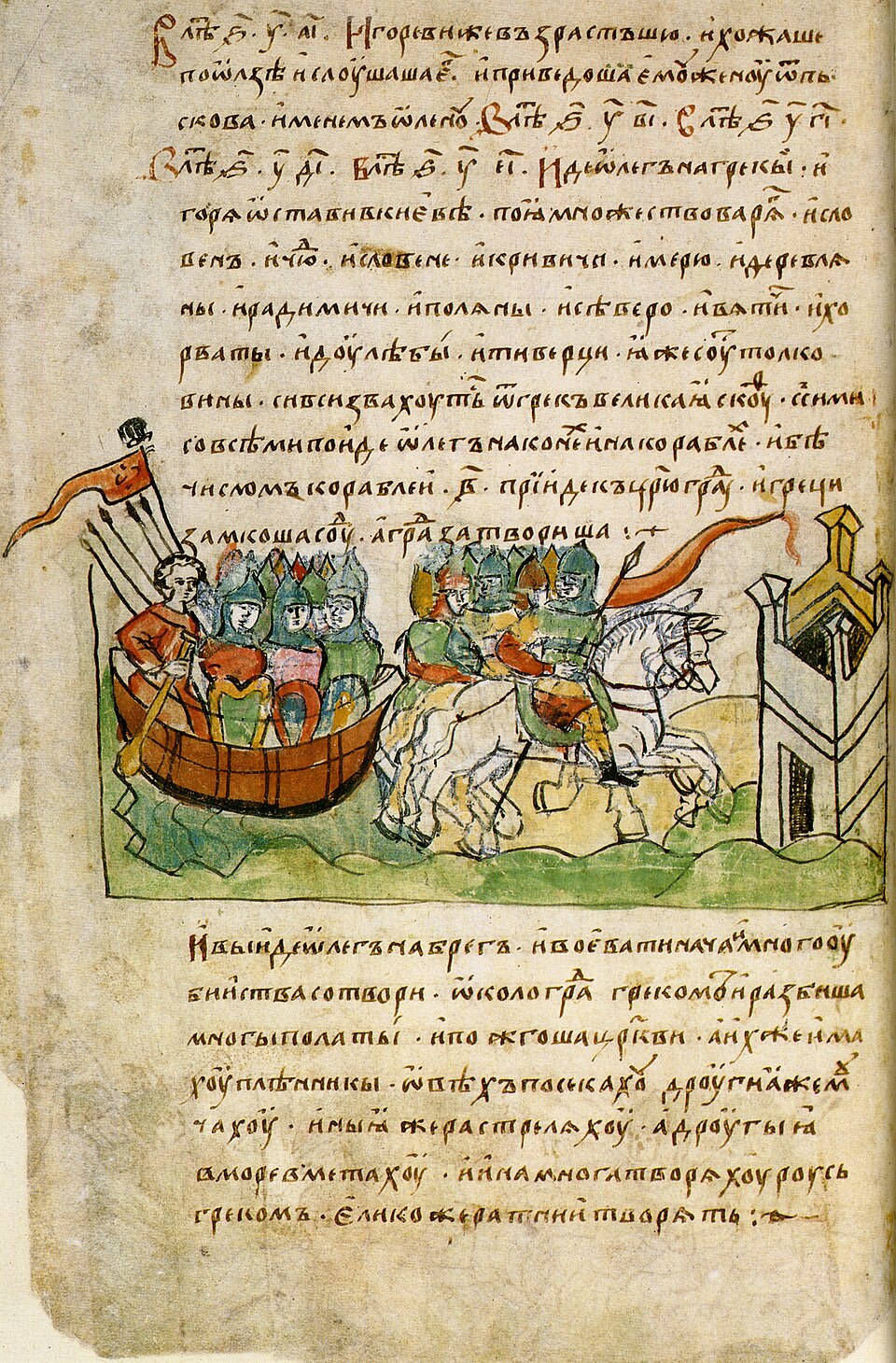
The Primary Chronicle & Slavic Folk Record
Attributed to Nestor and later compilers · c. 1113, describing earlier practice · Old East Slavic
Records Perun's idol at Kyiv and its destruction in 988 — the cult the marks are attributed to.
Read The Primary Chronicle & Slavic Folk Record in full ↗Cover: Public domain · from the Middle Ages, unknown · Wikimedia file page
Nearby
Related marks
The Pentagram
A five-pointed star drawn in one unbroken line — an accounting mark, a Pythagorean password, a Christian emblem of the five wounds, and only recently a sign of evil.
The Swastika
An auspicious mark used continuously for four and a half thousand years across most of the world, and destroyed as a public sign in the West by twelve years of one European party's use of it.
The Standing Stone
An upright unworked stone marking a place where something happened — the oldest kind of monument, and one the Bible both erects and forbids.
The Nazar
Blue glass with a white and black eye at its centre, worn on the theory that a look can be sent back.
The Pazuzu Head
A demon's face worn to keep a demon out — the clearest surviving case of a malevolent spirit hired as a doorman.
The Gorgoneion
A severed monster's face on a shield, a roof tile, an oven and a coin — the most-produced apotropaic image of the ancient Mediterranean.