Mortal · c. 1000 BCE
The Sons of Rapha
Also called The champions of Gath, Those born to the giant
Four Philistine champions the Hebrew Bible says were born to the rapha in Gath — the giant's household, killed one by one in a short appendix at the end of 2 Samuel.
Narrow source base
They are commonly called Goliath's brothers, and the text is more particular than that. 2 Samuel 21:15-22 lists four men killed by David's warriors and says of them, all four together, that they were born to ha-rapha in Gath. Ishbi-benob carries a spear of three hundred shekels of bronze and nearly kills David, who is retired from the field afterwards. Saph, whom Chronicles calls Sippai, is killed at Gob. Then Goliath the Gittite, with the weaver's beam — the verse Chronicles rewrites to make him Lahmi, brother of Goliath. The fourth is unnamed, a man of great stature with six fingers on each hand and six toes on each foot, who taunts Israel and is killed by David's nephew.
The phrase is the reason this entry exists. Ha-rapha is the singular behind Rephaim, so these four are filed by the text itself as belonging to the same stock as the people east of the Jordan and, at one remove, as the word Isaiah uses for the shades in Sheol. A Philistine fighting family, a defeated nation, and the dead all sit under one root, and the corpus keeps the group entry so that connection has somewhere to live.
At a glance
Vitals
Vitals
Also known as
- First attested
- Hebrew Bible & Deuterocanon · c. 900–100 BCE
- Named there as
- Those born to the giant in Gath
- Rank
- Four Champions of Gath
- Era
- c. 1000 BCE
- Traditions
- Jewish
Stats
Known connections
Chain of command
1 attributed
What is it said to do?
Where these powers cluster
The 1 offices attributed to The Sons of Rapha, grouped by kind. Segment width is the share of powers falling in each category.
A bar dominated by one colour means a specialist; an even spread means a figure the sources credit with almost anything.
- martial1
1 texts
Which texts say so?
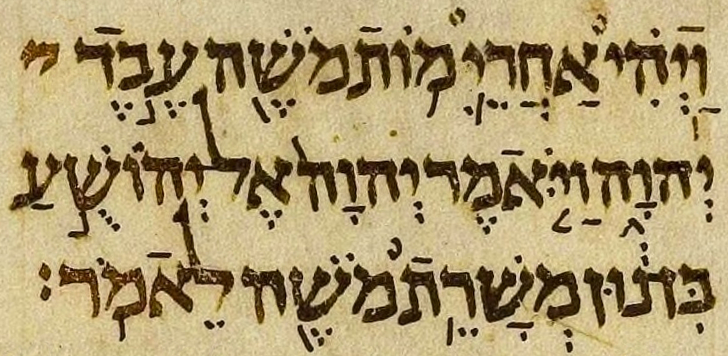
Ishbi-benob, Saph (Sippai in Chronicles), Goliath the Gittite and an unnamed six-fingered man, all four said to have been born to ha-rapha in Gath and each killed by one of David's men. 2 Samuel 21:15-22, with the parallel at 1 Chronicles 20:4-8.
Connections
What is it connected to?
Serves The Rephaim
2 Samuel 21:22 says all four were born to ha-rapha in Gath — the singular behind the plural this entry carries. Membership, not service.
Served by Goliath
He is one of the four in 2 Samuel 21:19, or the brother of one of them at 1 Chronicles 20:5, depending on which account is read. Membership, not service.
Answered from the sources
Common questions
Which texts mention The Sons of Rapha?
What rank is The Sons of Rapha?
How else is The Sons of Rapha spelled?
What is The Sons of Rapha said to do?
How old is The Sons of Rapha?
Nearest in the corpus
If The Sons of Rapha is what you came for, these are next
Chosen by proximity rather than by popularity: the same pantheon first, then the same rank, then the same kind of figure.
The Rephaim
A People, and the Dead
One word doing two jobs: a people east of the Jordan, and the shades of the dead — a double sense the Ugaritic texts already carry centuries before the Hebrew ones.
Goliath
Champion of Gath
The Philistine champion of 1 Samuel 17, and the best-known giant in any of these texts — whose height the manuscripts do not agree on, and whose death the Hebrew Bible reports twice with two different killers.
Jezebel
Queen of Israel · Canaanite
A Phoenician princess married to Ahab, who backed Baal and Asherah against the prophets of Israel. Revelation later borrows her name for a rival teacher, and it has been a label rather than a person ever since.
Nimrod
The First Mighty One
The first man the Bible calls mighty on the earth, founder of Babel, Erech and Akkad — a king in Genesis and nothing worse, who becomes a tyrant everywhere afterwards.
Og of Bashan
The Last of the Rephaim
A king east of the Jordan, described as the last remnant of the Rephaim, and evidenced in his own text by a piece of furniture — an iron bedstead nine cubits long, on display at Rabbah.
Enkidu
The Wild Man · Mesopotamian
Formed from clay to be Gilgamesh's match and made human by a week with a woman, he is the corpus's clearest statement that civilisation is a loss as well as a gain.
The book behind The Sons of Rapha
Every claim on this profile is attributed to one of these. It is public domain, listed oldest first, and each links to a full text where one is freely available.
Hebrew Bible & Deuterocanon
Various · c. 900–100 BCE · Hebrew, Aramaic, Greek
Read Hebrew Bible & Deuterocanon in full ↗Cover: Public domain · see en:Aleppo Codex; scanned by · Wikimedia file page
Corpus last revised 29 August 2026. A reference site’s credibility rests on being maintained, so this is the date the sourced records last changed — not the date the page was rebuilt.