Mortal · c. 600 BCE
Nimrod
Also called Nimrod son of Cush
The first man the Bible calls mighty on the earth, founder of Babel, Erech and Akkad — a king in Genesis and nothing worse, who becomes a tyrant everywhere afterwards.
Well sourced
Genesis 10 gives Nimrod six verses and no crime. He is the son of Cush, the first to be a mighty one on the earth, a mighty hunter before the LORD, and the beginning of his kingdom is Babel, Erech, Akkad and Calneh in the land of Shinar, from which he goes out and builds Nineveh. That is the whole of it. He is not said to have built the tower, not said to have rebelled, and not said to have hunted men.
Everything else attaches later. The tower is in the next chapter and names nobody; the connection is an inference so old and so often repeated that most readers meet it as scripture. Micah calls Assyria the land of Nimrod, which is a geographical label, and 1 Chronicles simply repeats the genealogy.
He is here because he is the hinge. The Mesopotamian cities this corpus carries are the cities Genesis assigns to him, and he is the point where the biblical material and the Mesopotamian material touch without either being a borrowing from the other.
At a glance
Vitals
Vitals
Also known as
- First attested
- Hebrew Bible & Deuterocanon · c. 900–100 BCE
- Rank
- The First Mighty One
- Era
- c. 600 BCE
- Traditions
- Christian, Jewish
Stats
2 sites
Where was it worshipped?
Attested cult sites, located against the Pleiades gazetteer of the ancient world where it reaches and against Wikidata everywhere else. An absence here is not evidence that no cult existed: a good number of figures never had one, and the entry above says so where that is the case.
now Hillah
Marduk's city, and the first of the four Genesis assigns to Nimrod. The corpus reaches it from both directions: Esagila is here, and so is the tower the Bible does not actually attribute to him.
Babel, the first city named in the beginning of his kingdom at Genesis 10:10.
32.537, 44.425 · Pleiades 893951
now Warka
The Eanna, Inanna's house, and one of the oldest monumental precincts anywhere.
Erech, the second of the four cities of Shinar at Genesis 10:10.
31.323, 45.639 · Pleiades 912986
2 attributed
What is it said to do?
Where these powers cluster
The 2 offices attributed to Nimrod, grouped by kind. Segment width is the share of powers falling in each category.
A bar dominated by one colour means a specialist; an even spread means a figure the sources credit with almost anything.
- martial2
2 texts
Which texts say so?
When these texts were written
Each dot is one of the 2 texts that names Nimrod, placed at that text's approximate date.
A wide spread means the figure was carried across many centuries and traditions; a tight cluster means a single period produced the whole record.
2 texts spanning roughly 493 years
Named in the table of nations as the first mighty one on the earth, with Babel, Erech, Akkad and Calneh as the beginning of his kingdom and Nineveh built afterwards. Genesis 10:8-12; the genealogy repeats at 1 Chronicles 1:10, and Assyria is called the land of Nimrod at Micah 5:6.
Where the tyrant comes from. Josephus makes him the man who turned the people from God to a contempt of him, built the tower so that a second flood could not reach them, and ruled by force — none of which is in Genesis, and all of which is now what the name means.
Connections
What is it connected to?
No relationship to another figure in this corpus is recorded in the texts cited above. Where an edge exists here it is because a source states it, so an empty section means the sources are silent rather than that the connection is unknown.
Afterwards
What did later readers make of it?
The tyrant, the tower-builder and the persecutor of Abraham are all post-biblical, arriving through Josephus and the rabbinic and Islamic traditions, and they are now far more familiar than the text. Modern proposals identifying him with Gilgamesh, with Sargon, or with the god Ninurta are arguments from resemblance rather than readings any text supports, and this corpus records them as proposals without adopting one.
Kept in its own section on purpose. Everything above is what the cited texts say; this is what was built on top of them afterwards, and blending the two is how most popular demonology goes wrong.
Answered from the sources
Common questions
Which texts mention Nimrod?
What rank is Nimrod?
How else is Nimrod spelled?
What is Nimrod said to do?
How old is Nimrod?
Nearest in the corpus
If Nimrod is what you came for, these are next
Chosen by proximity rather than by popularity: the same pantheon first, then the same rank, then the same kind of figure.
The Rephaim
A People, and the Dead
One word doing two jobs: a people east of the Jordan, and the shades of the dead — a double sense the Ugaritic texts already carry centuries before the Hebrew ones.
Goliath
Champion of Gath
The Philistine champion of 1 Samuel 17, and the best-known giant in any of these texts — whose height the manuscripts do not agree on, and whose death the Hebrew Bible reports twice with two different killers.
Jezebel
Queen of Israel · Canaanite
A Phoenician princess married to Ahab, who backed Baal and Asherah against the prophets of Israel. Revelation later borrows her name for a rival teacher, and it has been a label rather than a person ever since.
Og of Bashan
The Last of the Rephaim
A king east of the Jordan, described as the last remnant of the Rephaim, and evidenced in his own text by a piece of furniture — an iron bedstead nine cubits long, on display at Rabbah.
Enkidu
The Wild Man · Mesopotamian
Formed from clay to be Gilgamesh's match and made human by a week with a woman, he is the corpus's clearest statement that civilisation is a loss as well as a gain.
The Anakim
A People of Great Stature
A people of Hebron whom the scouts of the Hebrew Bible report as impossibly tall and identify with the Nephilim — inside the very report the text goes on to call false.
The books behind Nimrod
Every claim on this profile is attributed to one of these. They are public domain, listed oldest first, and each links to a full text where one is freely available.
Hebrew Bible & Deuterocanon
Various · c. 900–100 BCE · Hebrew, Aramaic, Greek
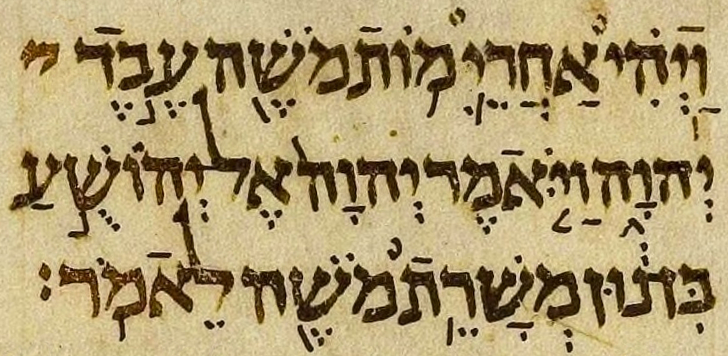
Read Hebrew Bible & Deuterocanon in full ↗Cover: Public domain · see en:Aleppo Codex; scanned by · Wikimedia file page
Antiquities of the Jews
Flavius Josephus; trans. William Whiston, 1737 · c. 93 CE · Greek
Read Antiquities of the Jews in full ↗
Corpus last revised 29 August 2026. A reference site’s credibility rests on being maintained, so this is the date the sourced records last changed — not the date the page was rebuilt.