Demonic · Deliverance tradition · c. 80 CE
Legion
The only spirit in the gospels that answers when asked its name — and answers with a military unit.
Narrow source base
Jesus asks the Gerasene demoniac's spirit for its name and gets back: 'My name is Legion: for we are many.' The man lives among tombs, cannot be bound with chains, and cuts himself with stones. The spirits ask not to be sent out of the country, are permitted into a herd of swine, and the herd drowns.
What makes the passage unusual is that it is the only place in the gospels where a spirit is asked for a name and gives one. That is the operational core of deliverance ministry — identify the spirit, name it, expel it — and it rests very largely on this one exchange.
The name itself carries freight the text does not comment on. A legion was the occupying army; the swine were unclean animals a Jewish community would not keep, in a Gentile region; and the herd drowns in the sea, which is where the population might reasonably have wished the occupiers. Whether Mark intended any of that is disputed, and he does not say.
Identity
Where does the name come from?
What the name means
Latin *legio*, a Roman army unit of roughly five to six thousand men. The demoniac lives in the Decapolis under Roman occupation, and the spirit answers a question about its name with the name of the occupying force. Commentators have argued for two thousand years about whether that is coincidence.
Where it was actually worshipped
None. A category in modern deliverance teaching rather than a figure anyone has ever worshipped — these are diagnoses of a condition, and a diagnosis has no address.
A figure with temples and a figure that only ever existed on a page are different kinds of thing, and the difference is easy to lose once both are entries in a list.
At a glance
Vitals
Vitals
- First attested
- New Testament · c. 50–110 CE
- Rank
- Named Spirit
- Order
- Deliverance tradition
- Base of operations
- None. A category in modern deliverance teaching rather than a figure anyone has ever worshipped — these are diagnoses of a condition, and a diagnosis has no address.
- Era
- c. 80 CE
- Traditions
- Christian, Deliverance & Spiritual Warfare
Traits
- Domain
- Multiplicity, self-destruction, occupation
- How firm the basis is
- Strong — the spirit gives this name itself, in the text
- Textual basis
- Mark 5:9, Luke 8:30
Stats
Known connections
Chain of command
4 attributed
What is it said to do?
Where these powers cluster
The 4 offices attributed to Legion, grouped by kind. Segment width is the share of powers falling in each category.
A bar dominated by one colour means a specialist; an even spread means a figure the sources credit with almost anything.
- martial2
- malefic2
1 claim
What is it blamed for?
Harms attributed to this figure by a named text. An attribution is not a diagnosis, and where a claim carries a grading it is about how well it rests on the passage it cites.
2 texts
Which texts say so, and where do they disagree?
When these texts were written
Each dot is one of the 2 texts that names Legion, placed at that text's approximate date.
A wide spread means the figure was carried across many centuries and traditions; a tight cluster means a single period produced the whole record.
2 texts spanning roughly 1,893 years
Where the texts differ
- Rank: given as Unclean spirit; Ruling spirit
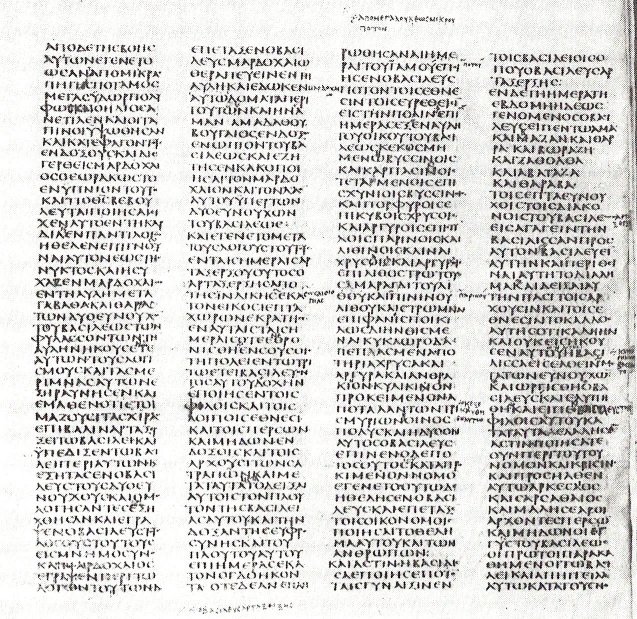
Possesses the Gerasene man among the tombs; he cannot be bound, and cuts himself with stones. Asked its name, it answers Legion, because they are many. It begs not to be sent out of the country and enters a herd of swine, which drown.
“My name is Legion: for we are many.”
Cited as the warrant for demanding a spirit's name during deliverance, and for the idea that demons operate in grouped families under one head.
Connections
What is it connected to?
Afterwards
What did later readers make of it?
The naming exchange is cited more often in deliverance literature than any other passage, as warrant for the practice of demanding a spirit's name. It also supplies the recurring idea of demons operating in groups under a single identity.
Kept in its own section on purpose. Everything above is what the cited texts say; this is what was built on top of them afterwards, and blending the two is how most popular demonology goes wrong.
Answered from the sources
Common questions
Which texts mention Legion?
What rank is Legion?
What is Legion said to do?
How old is Legion?
Nearest in the corpus
If Legion is what you came for, these are next
Chosen by proximity rather than by popularity: the same pantheon first, then the same rank, then the same kind of figure.
The Korah Spirit
Named Spirit · Deliverance tradition
Deliverance teaching names this spirit for the Levite who told Moses the whole congregation was holy, so why did he exalt himself — and was swallowed by the ground.
The Jezebel Spirit
Named Spirit · Deliverance tradition
The most discussed figure in modern deliverance teaching, and a category rather than a being — built from a queen in Kings and a rival teacher in Revelation.
The Absalom Spirit
Named Spirit · Deliverance tradition
Named in deliverance teaching for the son who stood at the gate, listened sympathetically to everyone with a grievance, and stole the hearts of Israel.
The Ahab Spirit
Named Spirit · Deliverance tradition
The passive half of the pair — named for the king who let his queen act and then took the vineyard she obtained for him.
The Familiar Spirit
Named Spirit · Deliverance tradition
The biblical term for a medium's attending spirit — and at Endor, the one occasion where the practice is depicted as working.
The Leviathan Spirit
Named Spirit · Deliverance tradition
Job's sea-beast read as a spirit of pride, and specifically of the twisting of words between people who are trying to understand each other.
The books behind Legion
Every claim on this profile is attributed to one of these. They are public domain, listed oldest first, and each links to a full text where one is freely available.
New Testament
Various · c. 50–110 CE · Koine Greek
Read New Testament in full ↗Cover: Public domain · Wikimedia file page
Pigs in the Parlor: A Practical Guide to Deliverance
Frank and Ida Mae Hammond · 1973 · English
Read Pigs in the Parlor: A Practical Guide to Deliverance in full ↗
Corpus last revised 29 August 2026. A reference site’s credibility rests on being maintained, so this is the date the sourced records last changed — not the date the page was rebuilt.