mind · 3 claims
Madness
The Gerasene demoniac is the fullest clinical description in the corpus: tombs, broken chains, self-injury, and a name that is a number.
Mark 5 is unusually detailed. The man lives among the tombs, cannot be bound even with chains because he tears them apart, cries out night and day, and cuts himself with stones. Asked his name, the spirit answers 'Legion: for we are many' — a Roman military unit of several thousand, which is either the size of the infestation or a political joke, and commentators have argued for both since.
What follows is equally specific: the man is found afterwards sitting, clothed, and in his right mind, which is the text's own measure of what was wrong. Elsewhere the Testament gives madness about women to Asmodeus, and the Hebrew Bible sends an evil spirit on Saul that only music relieves.
Oldest first
Who was blamed, and by which text?
Each card is one text making one attribution, in its own framing. Reading down the column is a transmission history rather than a set of independent witnesses — and where a claim carries a grading, that grading is about how well it is grounded in the passage it cites, nothing more.
An evil spirit from the LORD
Hebrew Bible & Deuterocanon · c. 900–100 BCETroubles Saul after the spirit departs from him — described as sent rather than as intruding.
What stops it
David playing the harp; the spirit departs while the music lasts.
A man among the tombs who breaks chains, cries out night and day, and cuts himself with stones. The spirit names itself Legion, for they are many.
What stops it
Cast out at a word into a herd of swine; the man is found sitting, clothed and in his right mind.
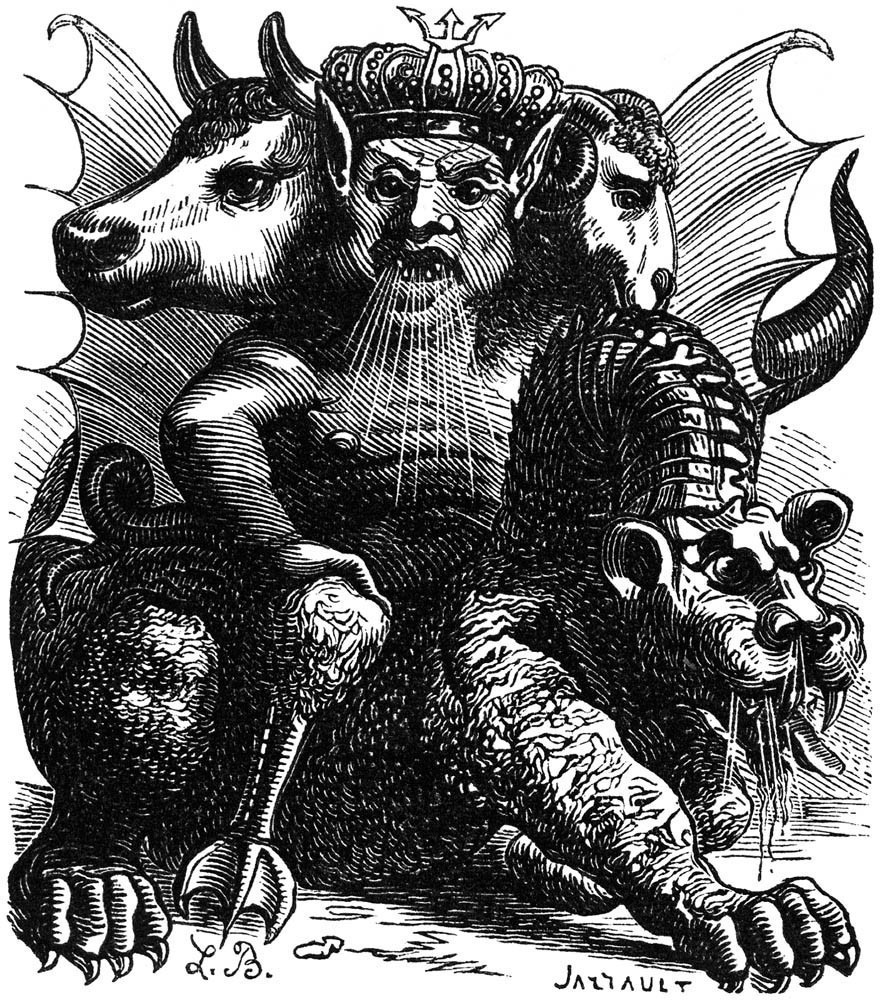
Says he spreads madness about women and plots against the newly wed.
What stops it
The angel Raphael, and the smoke of the liver and gall of a fish.
Countermeasures
What the texts say stops it
c. 900–100 BCE
David playing the harp; the spirit departs while the music lasts.
c. 50–110 CE
Cast out at a word into a herd of swine; the man is found sitting, clothed and in his right mind.
c. 100–400 CE
The angel Raphael, and the smoke of the liver and gall of a fish.
Which texts make these claims?
Oldest first. The distance between the earliest and the latest is the thing worth looking at: a claim made in an incantation four thousand years ago and one made in a paperback in 1973 are different kinds of evidence about the same symptom.
Hebrew Bible & Deuterocanon
Various · c. 900–100 BCE · Hebrew, Aramaic, Greek
Troubles Saul after the spirit departs from him — described as sent rather than as intruding.
Read Hebrew Bible & Deuterocanon in full ↗Cover: Public domain · see en:Aleppo Codex; scanned by · Wikimedia file page
New Testament
Various · c. 50–110 CE · Koine Greek
A man among the tombs who breaks chains, cries out night and day, and cuts himself with stones. The spirit names itself Legion, for they are many.
Read New Testament in full ↗Cover: Public domain · Wikimedia file page
The Testament of Solomon
Anonymous; tr. F. C. Conybeare · c. 100–400 CE · Greek
Says he spreads madness about women and plots against the newly wed.
Read The Testament of Solomon in full ↗Cover: CC0 · Simeon Solomon · Wikimedia file page