Tradition
Celtic
Irish and Welsh mythological cycles, recorded by Christian monks who euhemerised the gods into ancestral kings.
What is the Celtic tradition?
The Irish and Welsh material is preserved by monks, and the preservation strategy is visible on every page. Rather than record the gods as gods, the compilers euhemerised them: the Tuatha Dé Danann become an invading people, then ancestral kings, then finally the fairy folk of the mounds. The theology is filed as history.
That makes the tradition unusually hard to read straight. A figure who is plainly a goddess of sovereignty in the structure of a story is presented as a queen with a genealogy, and the divine function has to be reconstructed rather than read off the page.
What survives well is the shape: a war between two supernatural peoples, an otherworld reachable through specific places, and a strong association between rulership and a goddess of the land. What survives badly is anything a Christian compiler would have had a positive reason to remove.
Which texts does this tradition rest on?
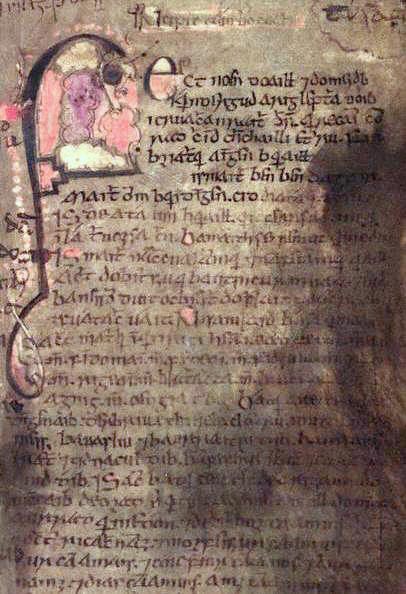
Lebor Gabála Érenn & the Mythological Cycle
Anonymous Irish monastics · 11th c., from older oral material
The Irish pseudo-history that turned the Tuatha Dé Danann from gods into an invading race of ancestors — euhemerisation as an explicit editorial policy, visible in the text.
7 entries contributed
Cath Maige Tuired (The Second Battle of Moytura)
Anonymous; Irish monastic compilation · c. 11th c., from older material
The battle between the Tuatha Dé Danann and the Fomoire, and the fullest narrative surviving of any Irish god doing anything. It is where the Dagda eats his porridge from a hole in the ground, where Lugh qualifies for entry to Tara by being the only man who is master of every art at once, and where Balor's eye is put out from behind by his own grandson. Written down by Christian monks who had no stake in defending it, which is the condition of almost everything known about Irish religion.
7 entries contributed
Táin Bó Cúailnge (The Cattle Raid of Cooley)
Anonymous; Recension I, Book of the Dun Cow and the Yellow Book of Lecan · c. 1100, from older material
The long Ulster epic, and the text in which the Morrígan behaves like a goddess rather than being listed as one: she propositions Cú Chulainn, is refused, and attacks him in the shape of an eel, a wolf and a heifer in turn. A figure the genealogies give a name and a parentage is here a personality with a grudge, which is the difference between a catalogue entry and evidence.
1 entries contributed
Which marks belong to it?
Oldest first. A mark used by several traditions appears on each of their pages — which is the point: the shapes crossed these boundaries far more easily than the names did.
The Triple Spiral
carved c. 3200 BCE
Three joined spirals cut into a kerbstone at Newgrange five thousand years ago — older than the pyramids, and completely unexplained.
Ogham
c. 350–600 CE
Notches cut across the edge of a standing stone — an alphabet designed to be written on a corner rather than a face.
The Triquetra
Christian manuscript use from c. 700 CE
Three interlaced arcs from Insular manuscript art — read as the Trinity by the people who drew it, and as pre-Christian by nearly everyone since.
Who is filed under Celtic?
Ordered by attestation score — how early and how independent the texts that name each figure are, rather than how famous the figure has since become.
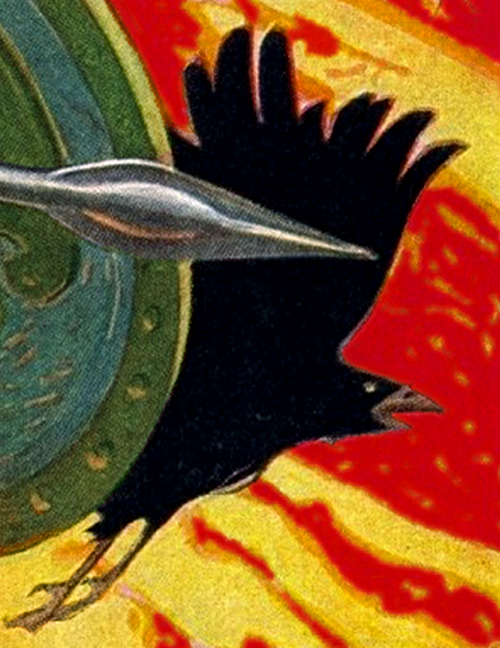
The Morrígan
Phantom Queen · Celtic
War-goddess who appears as a crow over battlefields and foretells the deaths below. Sovereignty and slaughter, held in one figure.
Balor
King of the Fomorians · Celtic
Fomorian king of Irish myth whose single eye destroys whatever it looks at. He was killed by his own grandson, exactly as the prophecy he tried to prevent had said.
Brigid
Goddess of Poets and Smiths · Celtic
The Irish goddess of poetry, smithing and healing who invents keening over her son's body at Mag Tuired — and whose name, feast and attributes are carried straight over to a Christian saint.
Lugh
The Many-Skilled · Celtic
The Irish god who gets into Tara by being master of every art at once, and who kills his own grandfather Balor with a sling — the Tuatha Dé Danann's answer to the Fomoire.
Nuada
King of the Tuatha Dé Danann · Celtic
The Irish king who loses his hand in battle and with it his kingship, because the Tuatha Dé Danann will not be ruled by a blemished man — and gets both back when a silver arm is made for him.
The Dagda
The Good God · Celtic
'The good god' — good at everything rather than morally good — with a club that kills at one end and restores at the other.
The Fomoire
The Adversary Host · Celtic
The enemies of every group that settles Ireland in the Lebor Gabála, and the clearest case in this corpus of a monastic redactor turning a defeated people into demons.