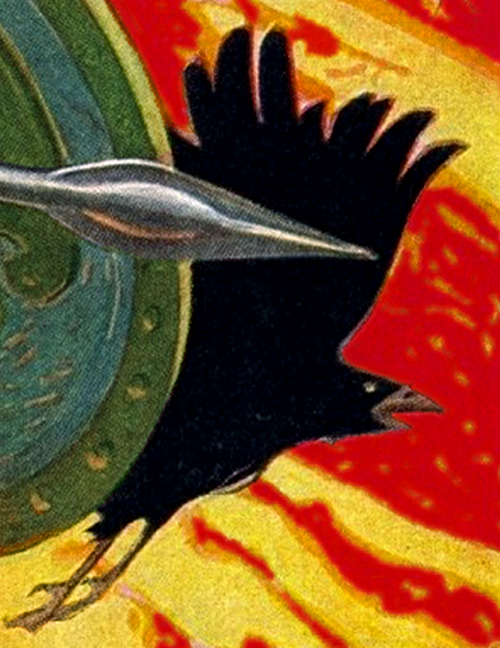
Celtic · Middle Irish · c. 11th c., from older material
Cath Maige Tuired (The Second Battle of Moytura)
Anonymous; Irish monastic compilation
The battle between the Tuatha Dé Danann and the Fomoire, and the fullest narrative surviving of any Irish god doing anything. It is where the Dagda eats his porridge from a hole in the ground, where Lugh qualifies for entry to Tara by being the only man who is master of every art at once, and where Balor's eye is put out from behind by his own grandson. Written down by Christian monks who had no stake in defending it, which is the condition of almost everything known about Irish religion.
Read Cath Maige Tuired (The Second Battle of Moytura) in full at the linked edition →What this text attests · 7
| Name here | Rank given | # | Powers described |
|---|---|---|---|
Balor of the Baleful Eye = Balor | — | — | The eye that has to be levered open by four men and kills whatever it looks at, put out by his own grandson with a sling from behind. This corpus keeps it because the pattern — a destroying gaze, a prophesied grandson, a lid that must be lifted — recurs across Europe with no plausible line of transmission, which is a fact about how such stories form rather than about who borrowed from whom. |
Brig = Brigid | Wife of Bres | — | Keens over the body of her son Ruadán, which the text says was the first keening ever heard in Ireland. |
Fomoire = The Fomoire | The host of Balor | — | Impose a tribute on the Tuatha Dé Danann and are broken at the second battle; intermarried with their enemies throughout, which the later demonising material quietly drops. |
Lug Samildánach = Lugh | Master of all arts | — | Admitted to Tara only after claiming every skill at once; takes command of the battle and destroys Balor's eye with a sling stone. |
| King | — | Resigns the kingship over the loss of his hand, is restored when it is replaced, and yields command to Lug before the battle in which he is killed. | |
| — | — | The good god in action rather than in a list: he makes a truce, is made to eat an enormous porridge from a hole in the ground as a humiliation, and does it. The Irish material is preserved almost entirely by monks, and the comedy at a god's expense is a large part of why it was preserved at all — a figure being laughed at is safe to write down. | |
| — | — | Meets the Dagda at the river before the battle, promises to withhold the enemy king's blood from him, and afterwards proclaims the victory and prophesies the end of the world. A goddess who decides a battle by prophecy and by a bargain rather than by fighting in it — which is the office, and the reason 'battle goddess' undersells her. |