Deity · Celtic · c. 1050 CE
The Dagda
Also called Eochaid Ollathair · also recorded as Dagda (per Wikidata)
'The good god' — good at everything rather than morally good — with a club that kills at one end and restores at the other.
Narrow source base
The good god, where good means good at things rather than morally good — he owns a club that kills with one end and revives with the other, a cauldron nobody leaves unsatisfied, and a harp that orders the seasons. What the surviving text actually does with him is comedy: at Mag Tuired the Fomoire fill a hole in the ground with porridge and require him to eat all of it, and he does. That the fullest scene of an Irish god is a humiliation is not incidental. This material survives because Christian monks wrote it down, and a god who can be laughed at is a god who is safe to preserve, which is why so much of what is known about Irish religion arrives already smiling.
Identity
Where does the name come from?
Where it was actually worshipped
No temples survive. The literature gives him Brú na Bóinne — Newgrange — which was already two thousand years old when the stories that place him there were written.
A figure with temples and a figure that only ever existed on a page are different kinds of thing, and the difference is easy to lose once both are entries in a list.
At a glance
Vitals
Vitals
Also known as
- Named there as
- An Dagda
- Rank
- The Good God
- Pantheon
- Celtic
- Order
- Celtic pantheon
- Base of operations
- No temples survive. The literature gives him Brú na Bóinne — Newgrange — which was already two thousand years old when the stories that place him there were written.
- Era
- c. 1050 CE
- Traditions
- Celtic
Traits
- Domain
- Abundance, druidry, life and death, the seasons
- Traditional form
- Bearing a club that kills and revives, and an inexhaustible cauldron
1 site
Where was it worshipped?
Attested cult sites, located against the Pleiades gazetteer of the ancient world where it reaches and against Wikidata everywhere else. An absence here is not evidence that no cult existed: a good number of figures never had one, and the entry above says so where that is the case.
Brú na Bóinne, which was already two thousand years old when the stories that put the Dagda there were written.
Given to him by the literature, long after the mound was built.
53.695, -6.476 · Wikidata Q339503
4 attributed
What is it said to do?
Where these powers cluster
The 4 offices attributed to The Dagda, grouped by kind. Segment width is the share of powers falling in each category.
A bar dominated by one colour means a specialist; an even spread means a figure the sources credit with almost anything.
- material2
- transformation1
- malefic1
2 texts
Which texts say so, and where do they disagree?
When these texts were written
Each dot is one of the 2 texts that names The Dagda, placed at that text's approximate date.
A wide spread means the figure was carried across many centuries and traditions; a tight cluster means a single period produced the whole record.
2 texts, all given the same approximate date
Where the texts differ
- Name: given as An Dagda, The Dagda
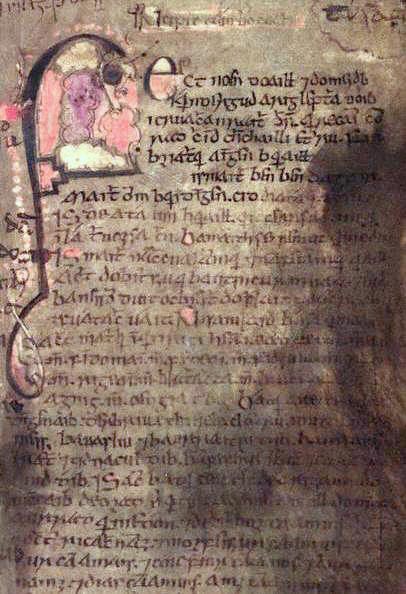
Owns the cauldron that never empties and the club that slays with one end and revives with the other.
The good god in action rather than in a list: he makes a truce, is made to eat an enormous porridge from a hole in the ground as a humiliation, and does it. The Irish material is preserved almost entirely by monks, and the comedy at a god's expense is a large part of why it was preserved at all — a figure being laughed at is safe to write down.
Connections
What is it connected to?
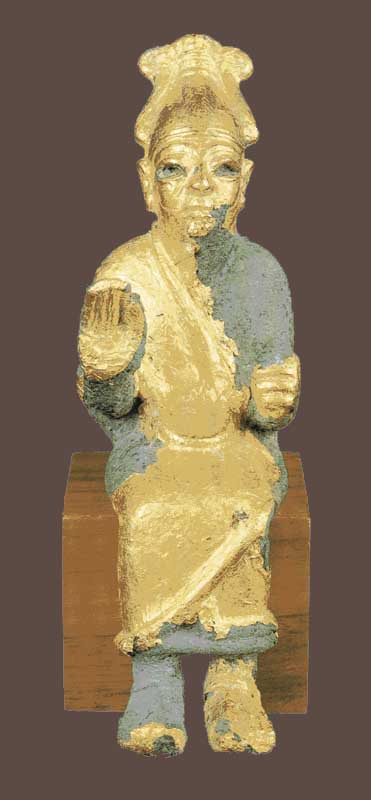
Answered from the sources
Common questions
Which texts mention The Dagda?
Is The Dagda the same as El?
What rank is The Dagda?
How else is The Dagda spelled?
What is The Dagda said to do?
How old is The Dagda?
Nearest in the corpus
If The Dagda is what you came for, these are next
Chosen by proximity rather than by popularity: the same pantheon first, then the same rank, then the same kind of figure.
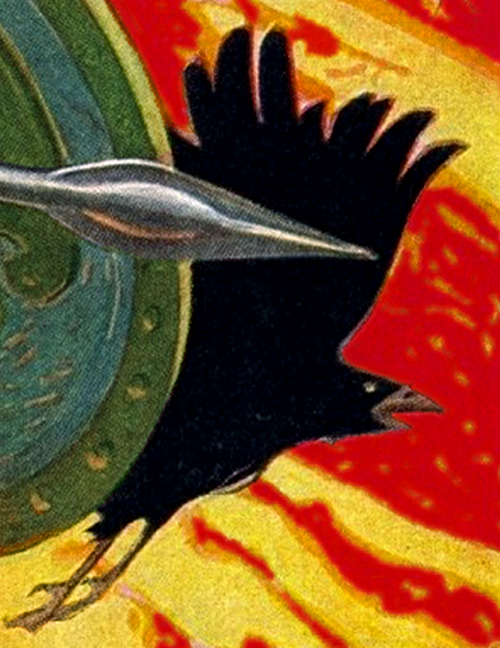
The Morrígan
Phantom Queen · Celtic
War-goddess who appears as a crow over battlefields and foretells the deaths below. Sovereignty and slaughter, held in one figure.
Balor
King of the Fomorians · Celtic
Fomorian king of Irish myth whose single eye destroys whatever it looks at. He was killed by his own grandson, exactly as the prophecy he tried to prevent had said.
Brigid
Goddess of Poets and Smiths · Celtic
The Irish goddess of poetry, smithing and healing who invents keening over her son's body at Mag Tuired — and whose name, feast and attributes are carried straight over to a Christian saint.
Lugh
The Many-Skilled · Celtic
The Irish god who gets into Tara by being master of every art at once, and who kills his own grandfather Balor with a sling — the Tuatha Dé Danann's answer to the Fomoire.
Nuada
King of the Tuatha Dé Danann · Celtic
The Irish king who loses his hand in battle and with it his kingship, because the Tuatha Dé Danann will not be ruled by a blemished man — and gets both back when a silver arm is made for him.
The Fomoire
The Adversary Host · Celtic
The enemies of every group that settles Ireland in the Lebor Gabála, and the clearest case in this corpus of a monastic redactor turning a defeated people into demons.
The books behind The Dagda
Every claim on this profile is attributed to one of these. They are public domain, listed oldest first, and each links to a full text where one is freely available.
Cath Maige Tuired (The Second Battle of Moytura)
Anonymous; Irish monastic compilation · c. 11th c., from older material · Middle Irish
Read Cath Maige Tuired (The Second Battle of Moytura) in full ↗Lebor Gabála Érenn & the Mythological Cycle
Anonymous Irish monastics · 11th c., from older oral material · Middle Irish
Read Lebor Gabála Érenn & the Mythological Cycle in full ↗Cover: Public domain · Áed Ua Crimthainn et al (12th century) · Wikimedia file page
Corpus last revised 29 August 2026. A reference site’s credibility rests on being maintained, so this is the date the sourced records last changed — not the date the page was rebuilt.