Roman · Latin · c. 8 CE
The Metamorphoses
Ovid; tr. Brookes More
Two hundred and fifty stories of shape-change strung from the creation to Ovid's own century, and the single most important channel by which Greek and Roman myth reached medieval and Renaissance Europe. It matters here for a specific reason: the gods appear throughout under their Latin names, so this is where the identification of Zeus with Jupiter and Hades with Pluto becomes automatic — and an automatic identification is exactly what later demonologies inherit and stop examining.
Read The Metamorphoses in full at the linked edition →What this text attests · 10
| Name here | Rank given | # | Powers described |
|---|---|---|---|
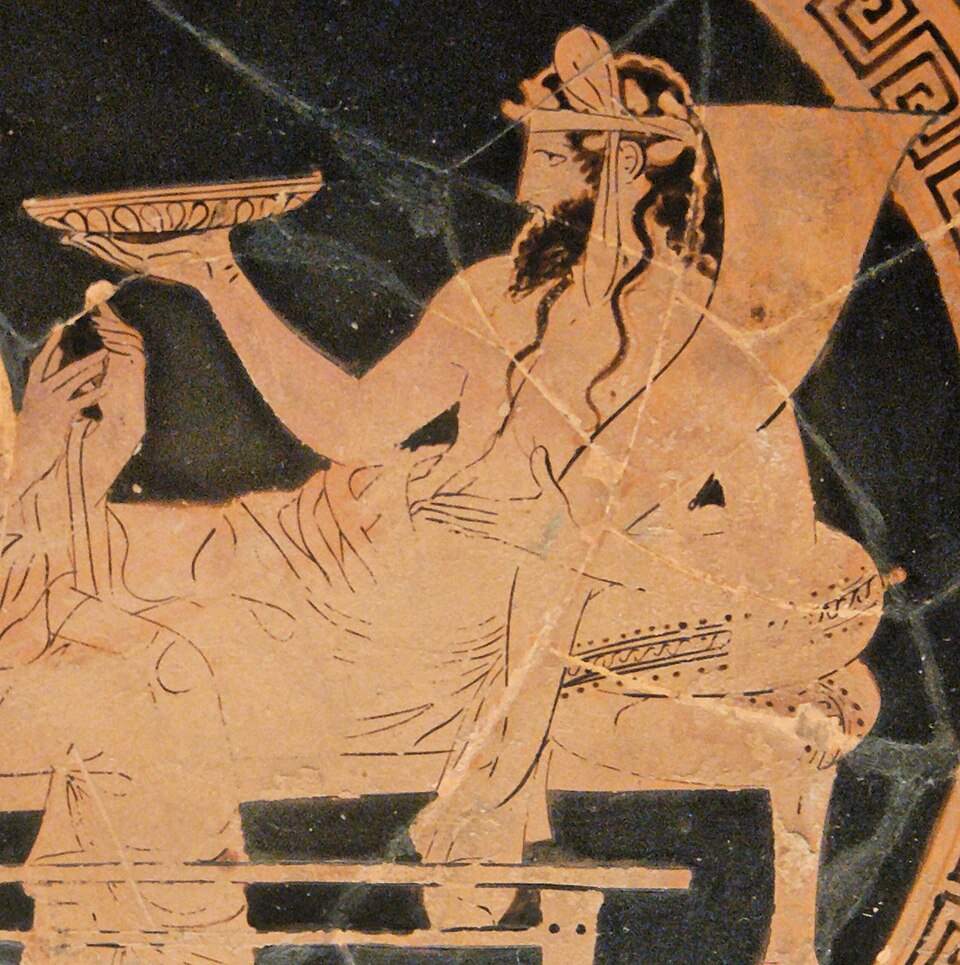 Dis = Hades | — | — | The abduction again, now in Latin and with the Roman name, told as a love story with Venus setting it up to extend her empire. This is the version Europe read for a thousand years, and the substitution of Dis for Hades is where the Greek magistrate begins turning into a proprietor of hell. |
| — | — | The goddess Medea calls on, and the point at which the corpus can watch the demotion happen: a figure honoured in the Homeric hymn as the one who hears is here the patron of a sorceress working at night with herbs. The later witch-queen of the demonologies is already fully formed in Latin poetry, eight centuries before any grimoire. | |
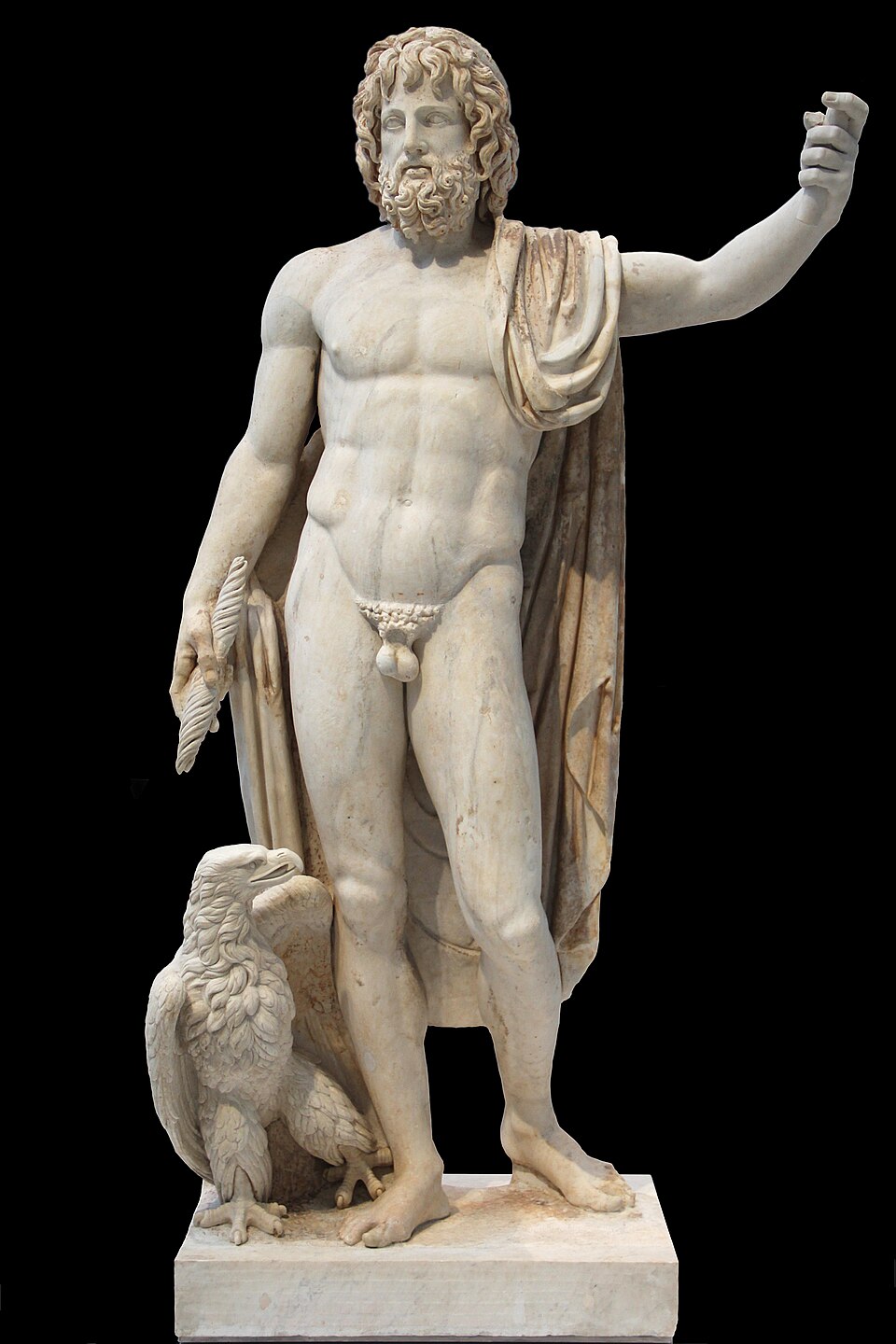 Jove = Jupiter | — | — | Convening the gods in council like a Roman senate and putting the destruction of mankind to them as a motion, then sending the flood. Ovid's Jupiter is a magistrate with a temper and an unlimited appetite, and the poem's habit of describing his affairs as legal problems is exactly what makes him usable to later Christian allegory as a figure of misused authority. |
| — | — | Caught in Vulcan's net with Venus and exhibited to the laughing gods — the Greek scandal retold in Latin. Rome's state god of war being humiliated as a comic adulterer in a poem written under Augustus is the corpus's sharpest illustration that literary treatment and civic cult were not the same religion. | |
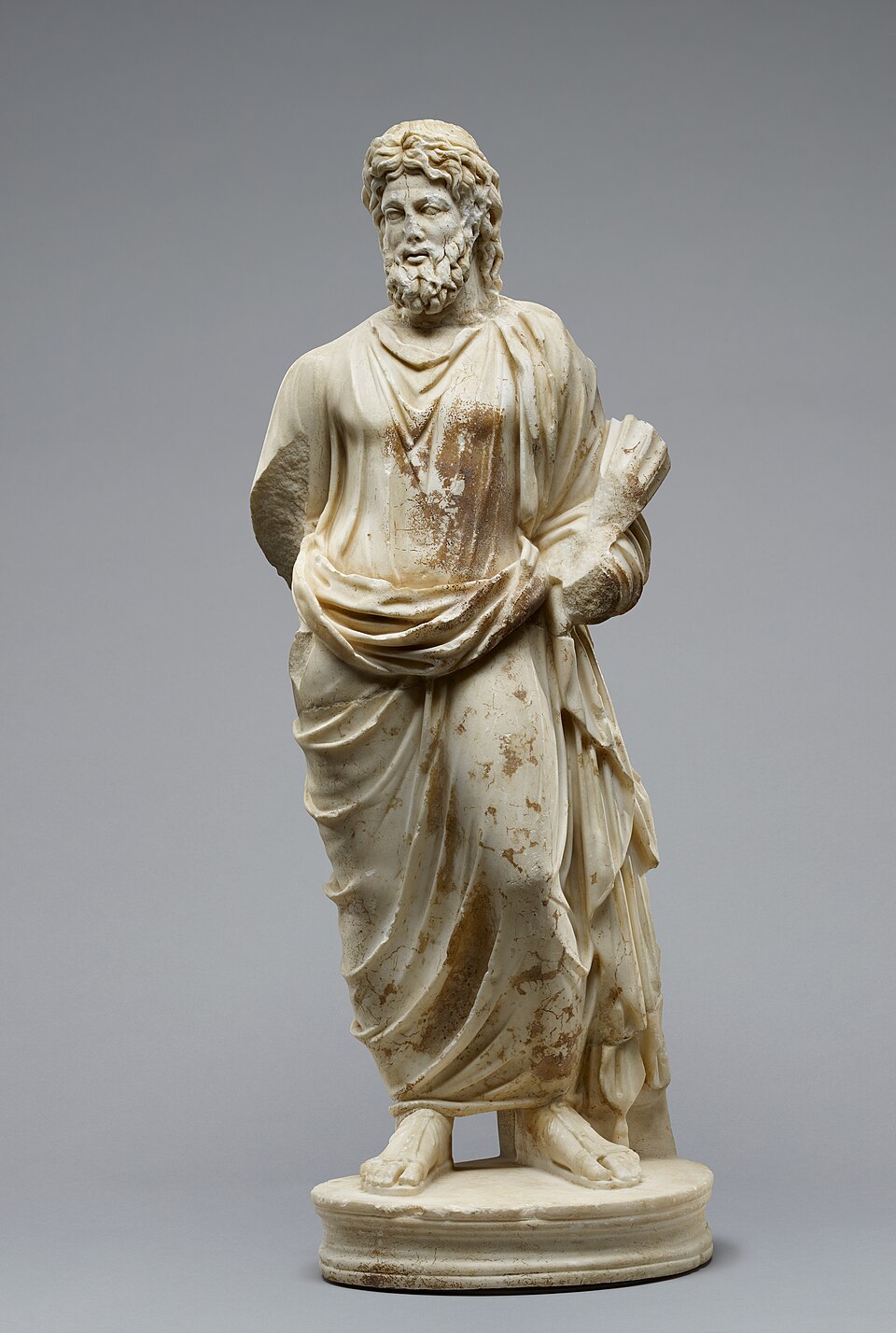 Pluto (Dis) = Pluto | — | — | The name that wins. Ovid uses the wealth-title for the lord of the dead throughout the Proserpina episode, and it is this Latin form, not the Greek one, that medieval writers inherit — which is how a god whose name means riches ends up as a synonym for the devil in texts that no longer remember why he was called that. |
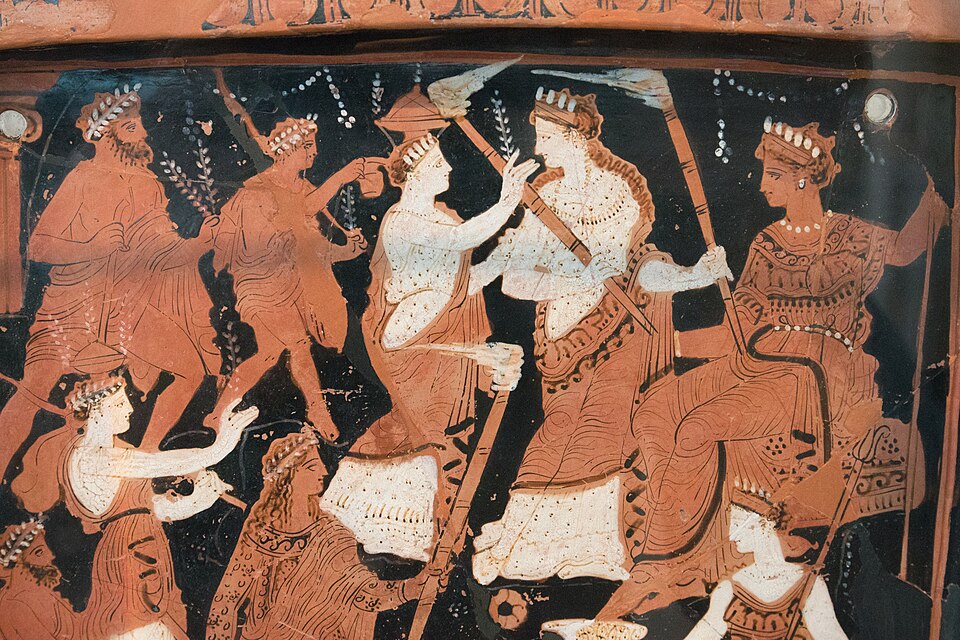 Proserpina = Persephone | — | — | The girl gathering flowers whose lap spills when she is seized, and the queen who afterwards turns a boy into a lizard for laughing at her mother. Ovid gives her the double character — victim and sovereign — that the medieval mythographers then allegorise, and the allegory is why she survives the conversion of Europe intact. |
| — | — | The deposed king whose reign is the golden age — the world before ploughing, war and property — and whose fall begins the decline through silver, bronze and iron. The corpus holds this against his Greek attestation deliberately: Kronos swallows his children, Saturn presides over the age everyone wants back, and they are the same god. | |
The Giants = The Gigantes | — | — | Piling mountains at the sky, struck down, and their blood soaking into the earth to produce a race of men contemptuous of the gods. The detail matters: Ovid makes the giants the ancestors of human impiety, which is the same move Genesis 6 makes with the Nephilim and the Watchers make in Enoch. |
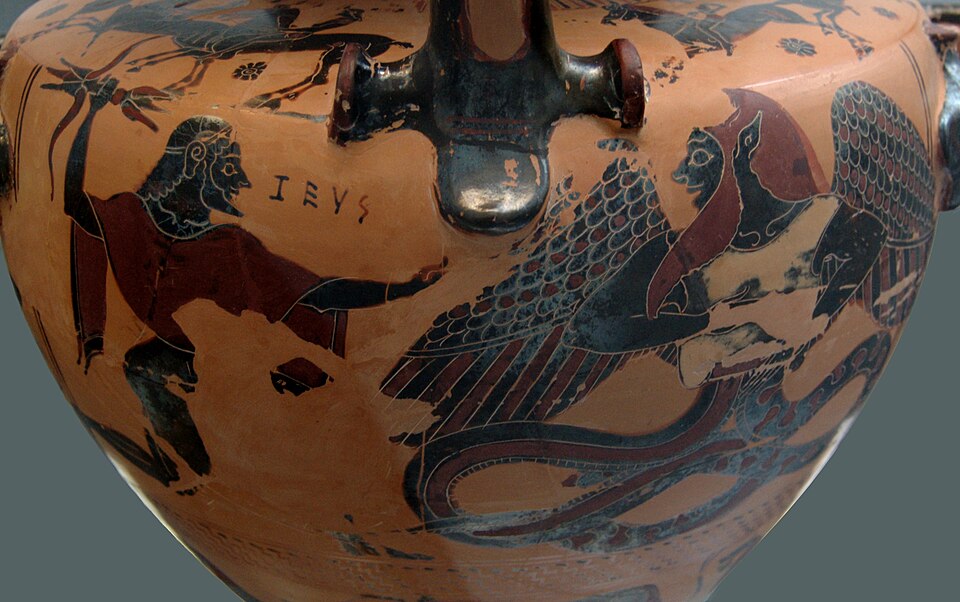 Typhoeus = Typhon | — | — | Buried under Sicily with Etna on his head, and the mountain's eruptions explained as his struggling. Ovid also has the gods flee to Egypt and hide in animal shapes to escape him, which is a Greek explanation of Egyptian animal worship and a neat inversion of the direction this corpus usually travels in. |
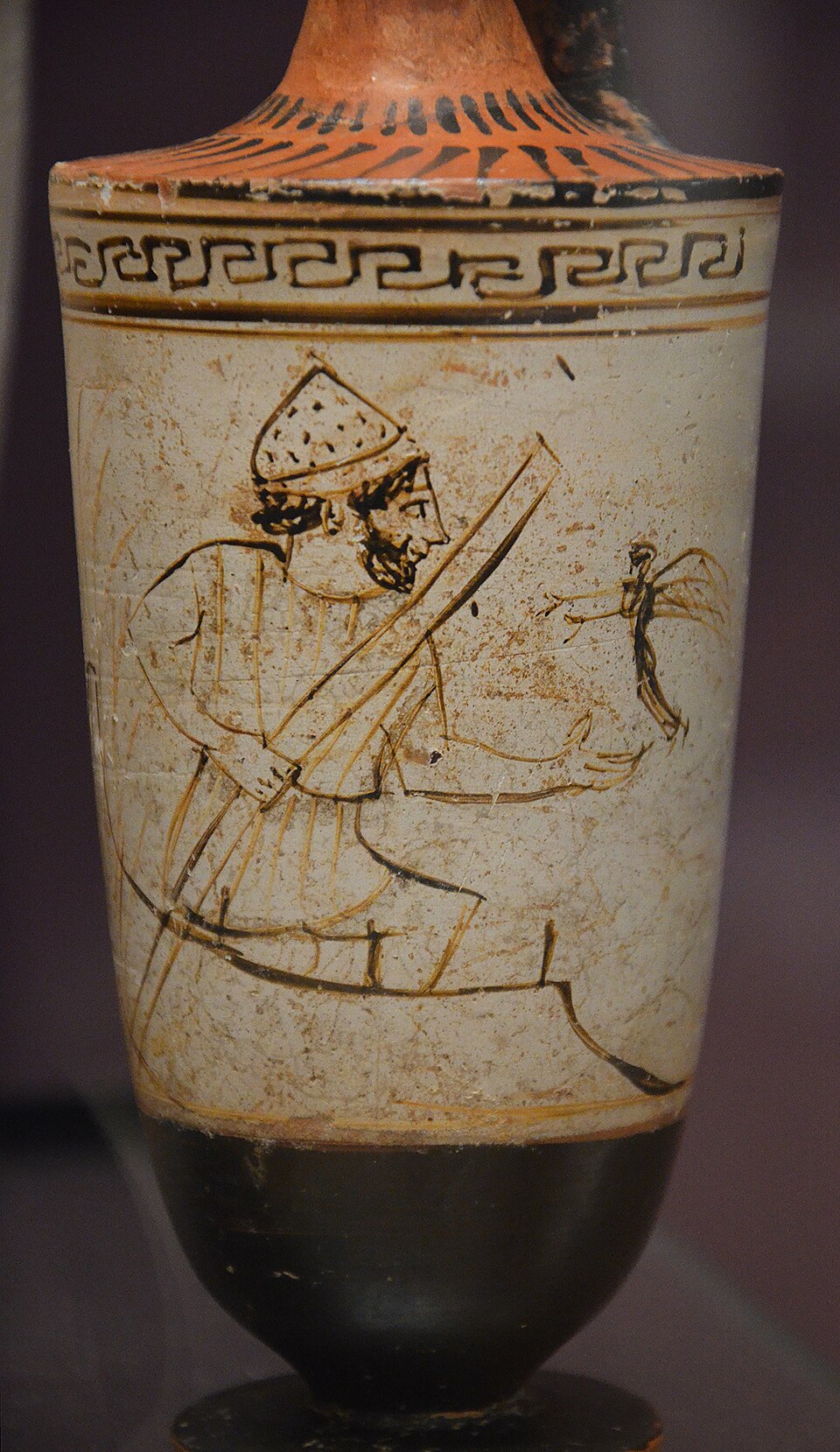 the ferryman = Charon | — | — | Crossed twice by Orpheus, going down and coming back, in the corpus's second Latin witness to the ferry. Between this and the Aeneid the figure is established in the Roman literary imagination well enough that Dante can hire him for a Christian hell without introducing him. |