Deity · Roman · c. 500 BCE
Janus
Also called Ianus, Ianuspater, Ianus Quadrifrons, Ianus Bifrons (per Wikidata)
God of thresholds with no Greek equivalent — the doors of his temple stood open in war and shut in peace, and they were almost never shut.
Well sourced
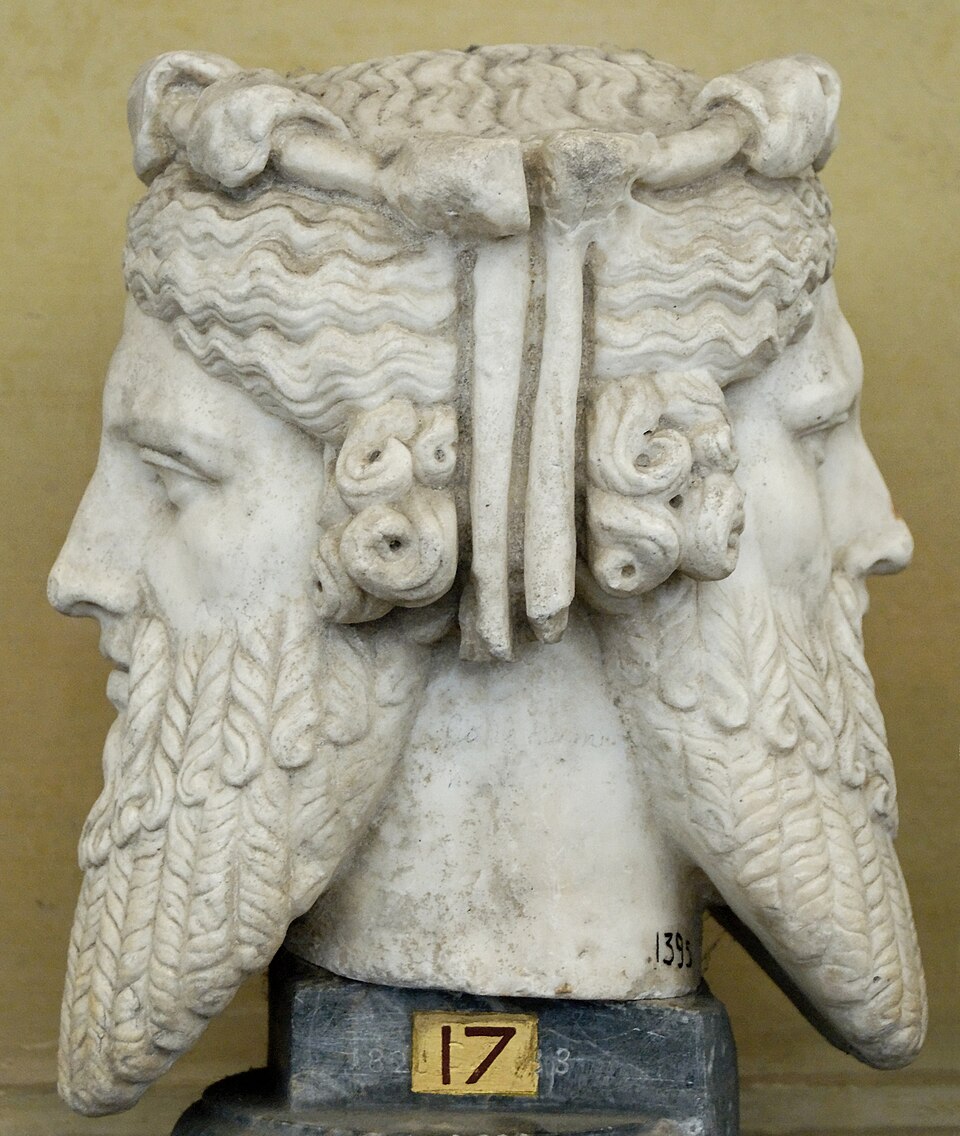
Rome's own, with no Greek counterpart to be equated with — which in this compendium makes him rare enough to be worth the entry on that ground alone. He is the god of the doorway understood as a thing with two sides, so he faces both ways, and he is named first in prayers because a beginning is his. The Aeneid supplies the public form: the twin gates of war, sacred to him, thrown open when the fighting starts and closed only in peace, so that a state's decision to go to war is expressed as the opening of one god's door. Ovid's Fasti has him explain the two faces himself. A god who is a piece of architecture is a specifically Roman idea, and it does not translate.
Identity
Where does the name come from?
Where it was actually worshipped
The Ianus Geminus in the Roman Forum, a gateway rather than a temple, whose doors stood open while Rome was at war and were therefore almost never shut.
A figure with temples and a figure that only ever existed on a page are different kinds of thing, and the difference is easy to lose once both are entries in a list.
At a glance
Vitals
Vitals
Also known as
- First attested
- The Aeneid · c. 19 BCE
- Rank
- God of Doorways
- Pantheon
- Roman
- Order
- Roman pantheon
- Base of operations
- The Ianus Geminus in the Roman Forum, a gateway rather than a temple, whose doors stood open while Rome was at war and were therefore almost never shut.
- Era
- c. 500 BCE
- Traditions
- Roman
Traits
- Domain
- Beginnings, gates, transitions, war and peace
- Traditional form
- Two-faced, looking both ways
Stats
Known connections
Identified with
1 site
Where was it worshipped?
Attested cult sites, located against the Pleiades gazetteer of the ancient world where it reaches and against Wikidata everywhere else. An absence here is not evidence that no cult existed: a good number of figures never had one, and the entry above says so where that is the case.
The temple of Saturn, which held the treasury, and the Ianus Geminus, whose doors marked war and peace.
The Ianus Geminus: a gateway rather than a temple, and almost never shut.
41.892, 12.487 · Pleiades 502866838
2 attributed
What is it said to do?
Where these powers cluster
The 2 offices attributed to Janus, grouped by kind. Segment width is the share of powers falling in each category.
A bar dominated by one colour means a specialist; an even spread means a figure the sources credit with almost anything.
- divination1
- martial1
divination
martial
2 texts
Which texts say so?
When these texts were written
Each dot is one of the 2 texts that names Janus, placed at that text's approximate date.
A wide spread means the figure was carried across many centuries and traditions; a tight cluster means a single period produced the whole record.
2 texts, all inside a single century
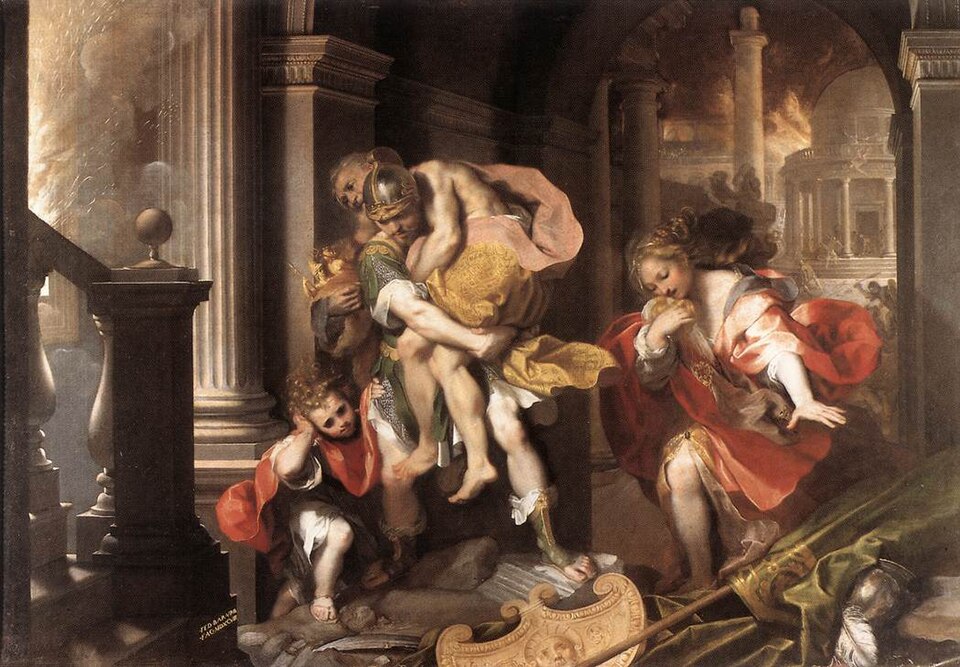
The twin gates of war, sacred to Janus and closed only in peace, thrown open to begin the fighting in Latium. The corpus's other Janus attestation explains his two faces; this one shows a whole state's decision to go to war expressed as the opening of one god's door.
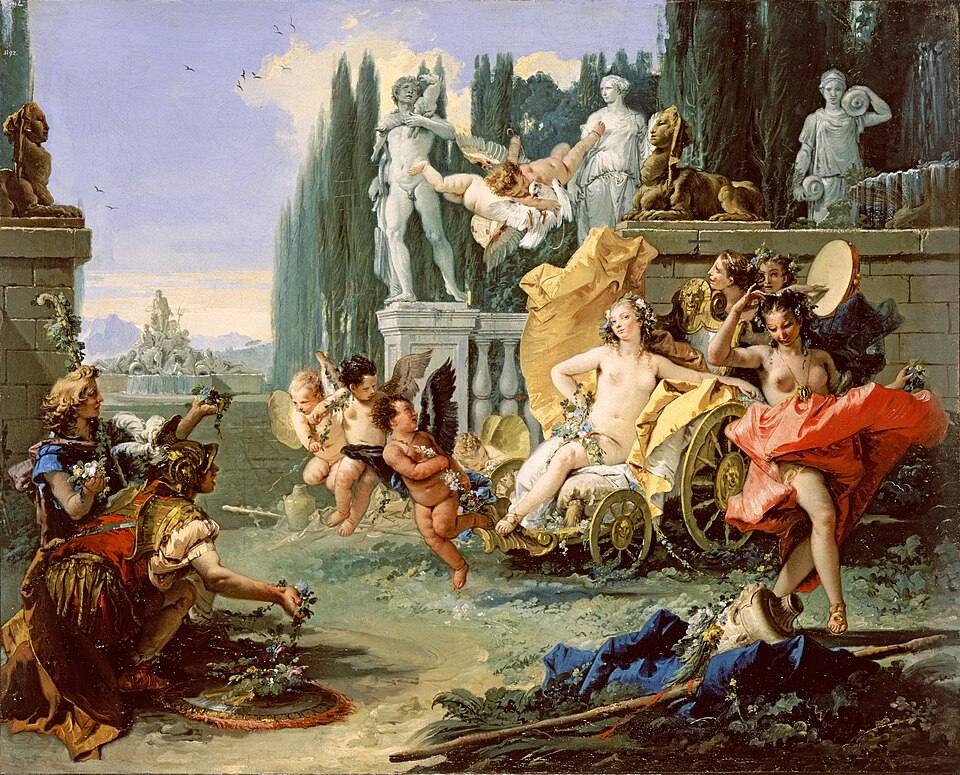
Ovid opens the Fasti by interviewing him directly. He is invoked first in any Roman prayer, before Jupiter, and has no Greek counterpart at all.
Connections
What is it connected to?
Answered from the sources
Common questions
Which texts mention Janus?
Is Janus the same as Aker?
What rank is Janus?
How else is Janus spelled?
What is Janus said to do?
How old is Janus?
Nearest in the corpus
If Janus is what you came for, these are next
Chosen by proximity rather than by popularity: the same pantheon first, then the same rank, then the same kind of figure.
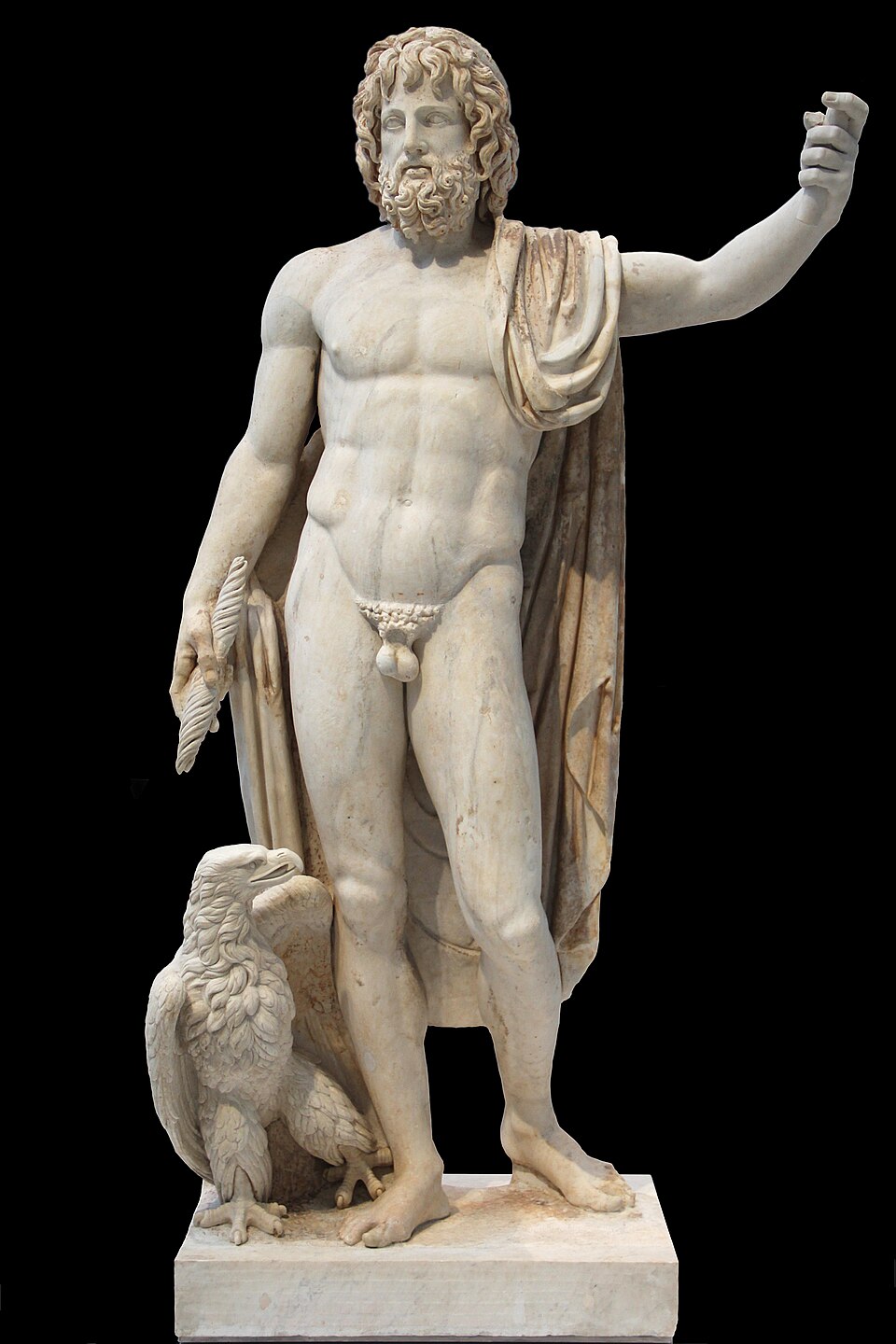
Jupiter
King of the Gods · Roman
Sky-father and state god of Rome, identified with Zeus by the *interpretatio romana* — the ancient world's official policy of treating foreign gods as one's own under different names.
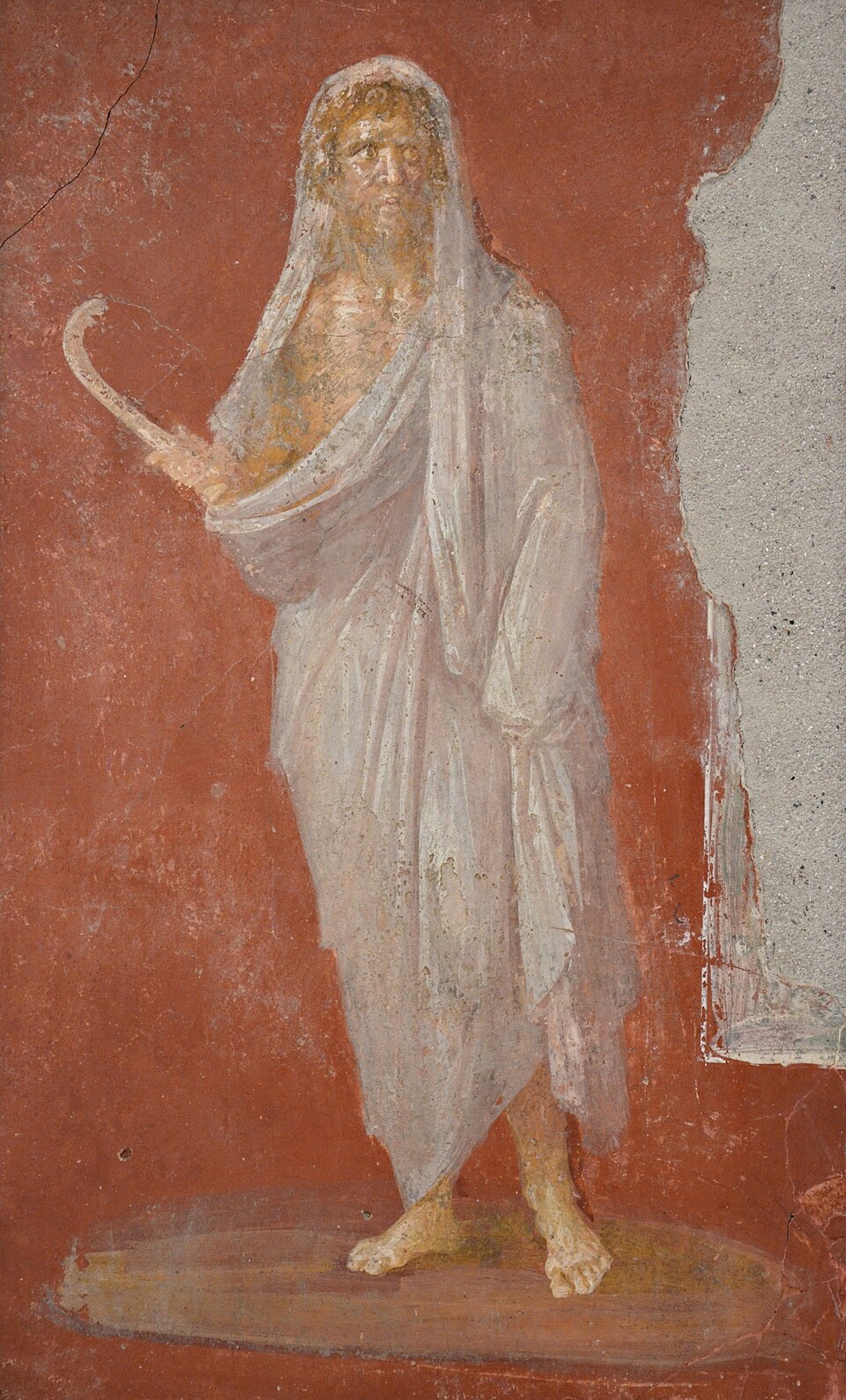
Saturn
God of the Golden Age · Roman
Deposed father of Jupiter. His December festival inverted the social order for a week, and his planet later became the astrological signature of melancholy and malice.
Mars
God of War and the Fields · Roman
Father of Romulus and second only to Jupiter in the state cult — an agricultural god as much as a martial one, and not simply the Greek Ares renamed.
Pluto
Lord of the Underworld · Roman
The Roman Hades, whose alternative name Orcus survives in 'ogre' — and whose realm supplied Christian writers much of their imagery for hell.
Artemis
Mistress of Animals · Greek
Huntress and protector of the young, whose Ephesian cult statue looks nothing like her and whose temple gave the ancient world one of its most durable protective formulas.
Hades
Lord of the Underworld · Greek
Ruler of the dead by lot rather than by punishment — a god of the underworld who is not evil, a distinction Christian cosmology cannot express.
The books behind Janus
Every claim on this profile is attributed to one of these. They are public domain, listed oldest first, and each links to a full text where one is freely available.
The Aeneid
Virgil; tr. John Dryden · c. 19 BCE · Latin
Read The Aeneid in full ↗Cover: Public domain · Federico Barocci · Wikimedia file page
Fasti
Ovid · c. 8 CE · Latin
Read Fasti in full ↗Cover: Public domain · Giovanni Battista Tiepolo · Wikimedia file page
Corpus last revised 29 August 2026. A reference site’s credibility rests on being maintained, so this is the date the sourced records last changed — not the date the page was rebuilt.