body · 3 claims
Plague
Epidemic disease as an armed god with a bow — the oldest and most consistent piece of imagery in the corpus.
Plague is not attributed to small spirits. It goes to gods, and the same picture recurs across unrelated languages: a divine archer whose arrows are the disease. Resheph shoots plague in the Ugaritic material and survives into the Hebrew Bible as a common noun for pestilence; Nergal rules both plague and the underworld; Apollo opens the Iliad shooting plague into the Greek camp for nine days.
The grammar is the point. A disease that takes a household is a spirit; a disease that takes a city is a god, and one who is being paid for something.
Oldest first
Who was blamed, and by which text?
Each card is one text making one attribution, in its own framing. Reading down the column is a transmission history rather than a set of independent witnesses — and where a claim carries a grading, that grading is about how well it is grounded in the passage it cites, nothing more.
Plague god of the Levant, armed with a bow; his name persists in the Hebrew Bible as a word for pestilence and burning fever.
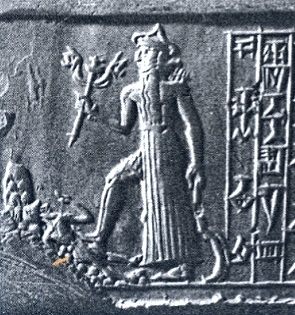
Lord of the underworld and of epidemic disease, whose arrival in a city is its outbreak.
The destroying angel
Hebrew Bible & Deuterocanon · c. 900–100 BCEA single agent, sent and then stopped by command, kills through the camp and the city — the same act attributed to an obedient messenger rather than to a hostile power.
Which texts make these claims?
Oldest first. The distance between the earliest and the latest is the thing worth looking at: a claim made in an incantation four thousand years ago and one made in a paperback in 1973 are different kinds of evidence about the same symptom.
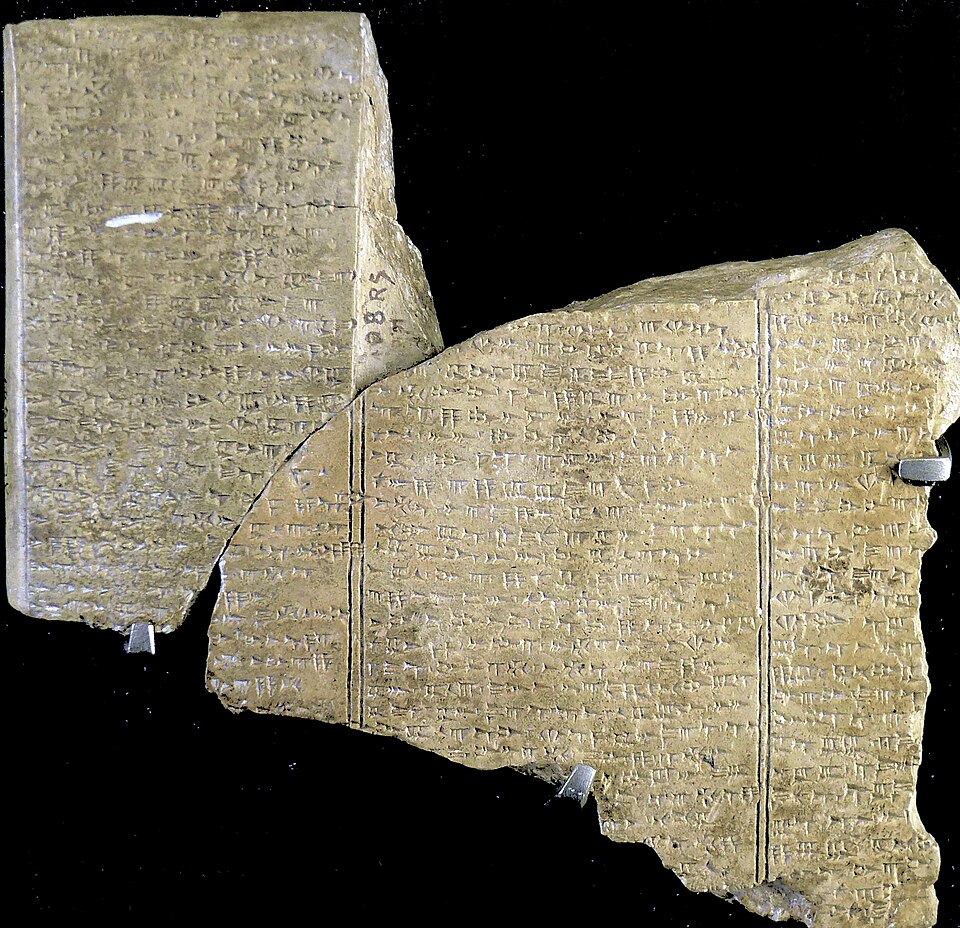
The Baal Cycle (Ugaritic Tablets)
Anonymous; recovered at Ras Shamra · c. 1400-1200 BCE · Ugaritic
Plague god of the Levant, armed with a bow; his name persists in the Hebrew Bible as a word for pestilence and burning fever.
Read The Baal Cycle (Ugaritic Tablets) in full ↗Cover: CC BY-SA 3.0 · Unknown artist · Wikimedia file page
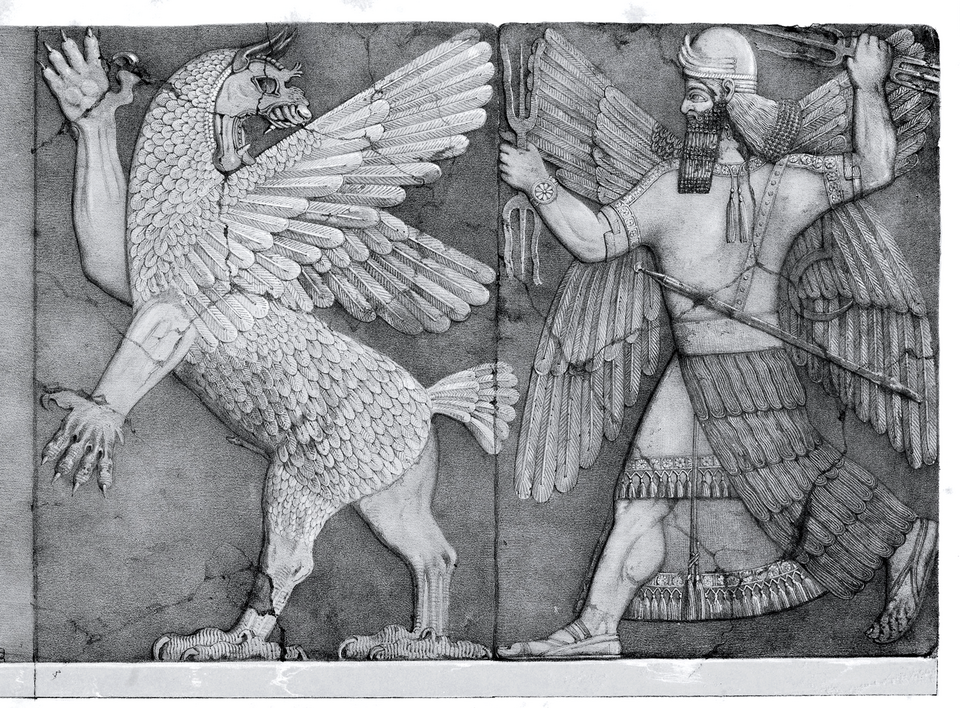
The Myth of Anzu
Anonymous Akkadian · c. 1500-1000 BCE · Akkadian
Lord of the underworld and of epidemic disease, whose arrival in a city is its outbreak.
Read The Myth of Anzu in full ↗Cover: Public domain · editor Austen Henry Layard , drawing by L. Gruner · Wikimedia file page
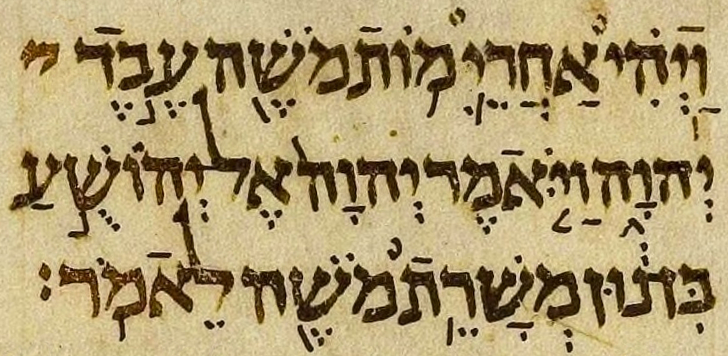
Hebrew Bible & Deuterocanon
Various · c. 900–100 BCE · Hebrew, Aramaic, Greek
A single agent, sent and then stopped by command, kills through the camp and the city — the same act attributed to an obedient messenger rather than to a hostile power.
Read Hebrew Bible & Deuterocanon in full ↗Cover: Public domain · see en:Aleppo Codex; scanned by · Wikimedia file page