Deity · Slavic · c. 980 CE
Stribog
Also called Stribog the Wind
The Slavic wind god of Vladimir's pantheon, whose grandsons in the Tale of Igor are the winds themselves, blowing arrows across the steppe at an army.
Narrow source base
He survives in exactly two places and the pair is instructive. The chronicle records the idol, standing on the hill with Perun and Dazhbog and pulled down with them. The poem, two centuries later, uses him as a kenning: the winds are Stribog's grandsons, and they carry the enemy's arrows. Everything else known about him is reconstruction. The corpus prefers to say that plainly — a god whose entire documented existence is one list and one metaphor is evidence of how little survived the conversion, and pretending otherwise would be inventing a Slavic religion rather than recording one.
Identity
Where does the name come from?
Where it was actually worshipped
The hill at Kiev, in the same list and destroyed in the same hour
A figure with temples and a figure that only ever existed on a page are different kinds of thing, and the difference is easy to lose once both are entries in a list.
At a glance
Vitals
Vitals
Also known as
- Rank
- Lord of the Winds
- Pantheon
- Slavic
- Order
- Slavic pantheon
- Base of operations
- The hill at Kiev, in the same list and destroyed in the same hour
- Era
- c. 980 CE
- Traditions
- Slavic
Traits
- Domain
- The winds, the weather carried over the steppe
- Traditional form
- Set up as an idol at Kiev; no description survives
Stats
Known connections
Chain of command
1 site
Where was it worshipped?
Attested cult sites, located against the Pleiades gazetteer of the ancient world where it reaches and against Wikidata everywhere else. An absence here is not evidence that no cult existed: a good number of figures never had one, and the entry above says so where that is the case.
Vladimir's idols stood here from 980 until he had them pulled down in 988 — Perun on the hill above the town, Veles down in the Podil by the river.
Named in the same list of idols, and known otherwise only as the grandfather of the winds in a poem two centuries later.
50.450, 30.524 · Wikidata Q1899
2 attributed
What is it said to do?
Where these powers cluster
The 2 offices attributed to Stribog, grouped by kind. Segment width is the share of powers falling in each category.
A bar dominated by one colour means a specialist; an even spread means a figure the sources credit with almost anything.
- malefic1
- material1
2 texts
Which texts say so, and where do they disagree?
When these texts were written
Each dot is one of the 2 texts that names Stribog, placed at that text's approximate date.
A wide spread means the figure was carried across many centuries and traditions; a tight cluster means a single period produced the whole record.
2 texts, all inside a single century
Where the texts differ
- Rank: given as Of Vladimir's idols; Grandfather of the winds
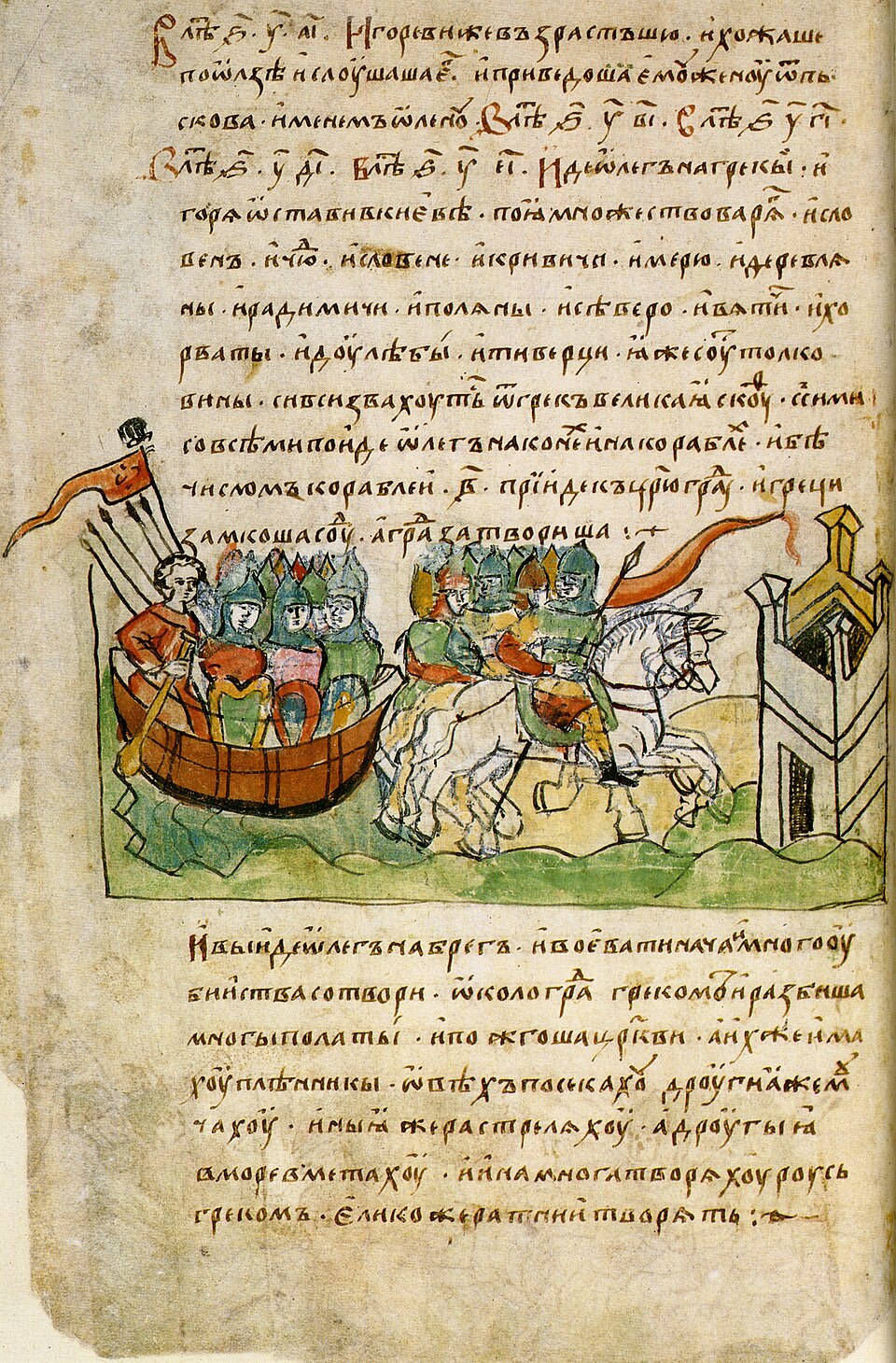
Named in the list of idols raised at Kiev and destroyed at the conversion.
The winds called his grandsons, blowing arrows from the sea against the prince's troops — the god surviving as a figure of speech in a war poem.
Connections
What is it connected to?
Answered from the sources
Common questions
Which texts mention Stribog?
What rank is Stribog?
How else is Stribog spelled?
What is Stribog said to do?
How old is Stribog?
Nearest in the corpus
If Stribog is what you came for, these are next
Chosen by proximity rather than by popularity: the same pantheon first, then the same rank, then the same kind of figure.
Dazhbog
The Giving God · Slavic
The Slavic sun god of Vladimir's pantheon at Kiev, whose people are still calling themselves his grandsons in a poem written two centuries after they were baptised.
Perun
Thunder God · Slavic
Chief god of Vladimir's pantheon at Kiev, whose idol was thrown into the Dnieper at the conversion in 988.

Veles
God of Cattle and the Underworld · Slavic
Perun's opponent, god of herds, wealth and the world below — and one of the clearest cases of a god converted directly into a devil.
Chernobog
The Black God · Slavic
The Slavic black god, known from one sentence in one hostile German chronicle — and the foundation of everything later written about Slavic dualism, which is more than one sentence can hold.
Artemis
Mistress of Animals · Greek
Huntress and protector of the young, whose Ephesian cult statue looks nothing like her and whose temple gave the ancient world one of its most durable protective formulas.
Hades
Lord of the Underworld · Greek
Ruler of the dead by lot rather than by punishment — a god of the underworld who is not evil, a distinction Christian cosmology cannot express.
The books behind Stribog
Every claim on this profile is attributed to one of these. They are public domain, listed oldest first, and each links to a full text where one is freely available.
The Primary Chronicle & Slavic Folk Record
Attributed to Nestor and later compilers · c. 1113, describing earlier practice · Old East Slavic
Read The Primary Chronicle & Slavic Folk Record in full ↗Cover: Public domain · from the Middle Ages, unknown · Wikimedia file page
The Tale of Igor's Campaign
Anonymous; tr. from the Old East Slavic · c. 1185 · Old East Slavic
Read The Tale of Igor's Campaign in full ↗
Corpus last revised 29 August 2026. A reference site’s credibility rests on being maintained, so this is the date the sourced records last changed — not the date the page was rebuilt.