Angelic · Second Sphere · c. 80 CE
Powers
Also called Authorities, Exousiai
The border guard: the choir charged with restraining demonic incursion and keeping the boundary between the spheres.
Deep source base
The border guard, and the choir with the most concrete job in the scheme. Dionysius gives them an ordered and unconfined authority; the tradition that follows makes them the rank that restrains demonic incursion and keeps the boundary between the spheres. That reading is helped by the New Testament, where the same Greek word appears repeatedly in lists of hostile powers, so the name does double duty for an angelic order and for what it is set against. The Goetia later claims that several of its spirits fell from this rank specifically, which the corpus records where a text supports it.
Identity
Where does the name come from?
Where it was actually worshipped
No site of its own. Angels are venerated in the liturgy — a feast day, a dedication, a name in a prayer — rather than housed at a place the way a god is.
A figure with temples and a figure that only ever existed on a page are different kinds of thing, and the difference is easy to lose once both are entries in a list.
At a glance
Vitals
Vitals
Also known as
- First attested
- New Testament · c. 50–110 CE
- Rank
- Sixth Choir
- Order
- Second Sphere
- Base of operations
- No site of its own. Angels are venerated in the liturgy — a feast day, a dedication, a name in a prayer — rather than housed at a place the way a god is.
- Era
- c. 80 CE
- Traditions
- Christian
- Placed in
- The Nine Choirs
Traits
- Domain
- Restraint of evil powers, order of the boundary
- Sphere
- Second
Stats
Known connections
Chain of command
2 attributed
What is it said to do?
Where these powers cluster
The 2 offices attributed to Powers, grouped by kind. Segment width is the share of powers falling in each category.
A bar dominated by one colour means a specialist; an even spread means a figure the sources credit with almost anything.
- martial2
4 texts
Which texts say so, and where do they disagree?
When these texts were written
Each dot is one of the 4 texts that names Powers, placed at that text's approximate date.
A wide spread means the figure was carried across many centuries and traditions; a tight cluster means a single period produced the whole record.
4 texts spanning roughly 1,190 years
Where the texts differ
- Rank: given as Created power; Third choir of the second sphere
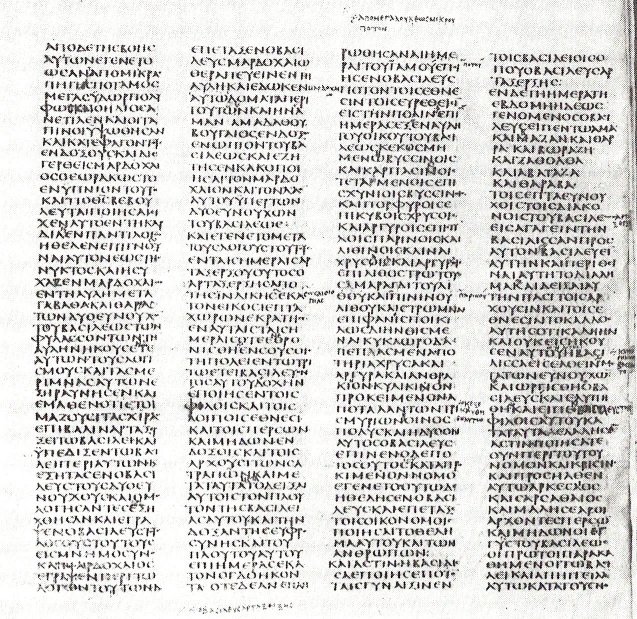
Named both as created good and, in Ephesians, as ranks the faithful wrestle against.
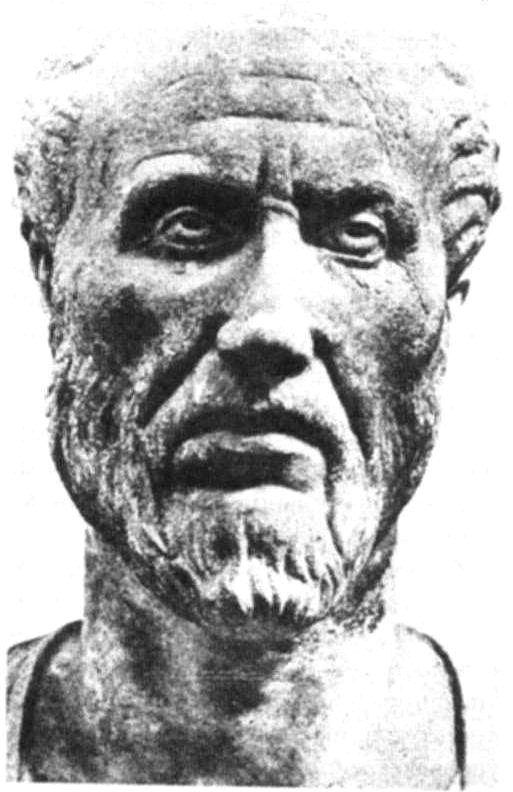
An ordered authority, not abusing its power but rising toward the source of power.
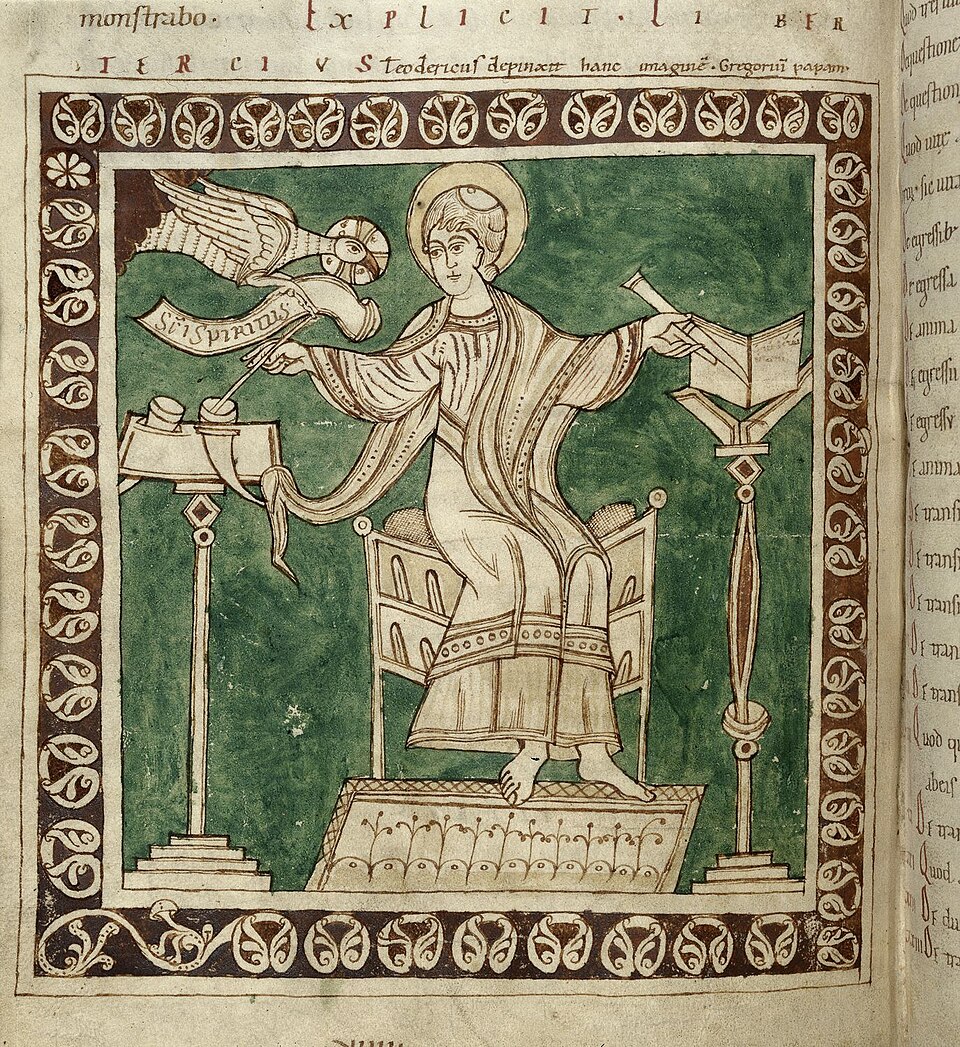
One of the nine orders as Gregory enumerates them, named for the office it performs rather than for its rank in contemplation.
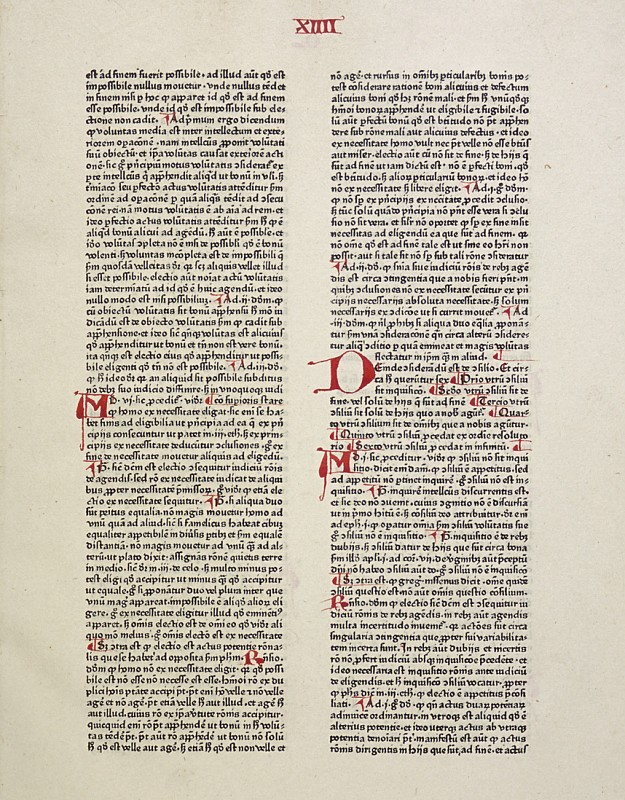
Placed among the nine orders and assigned a degree of illumination, in the question on the angelic hierarchies (I, q. 108).
Connections
What is it connected to?
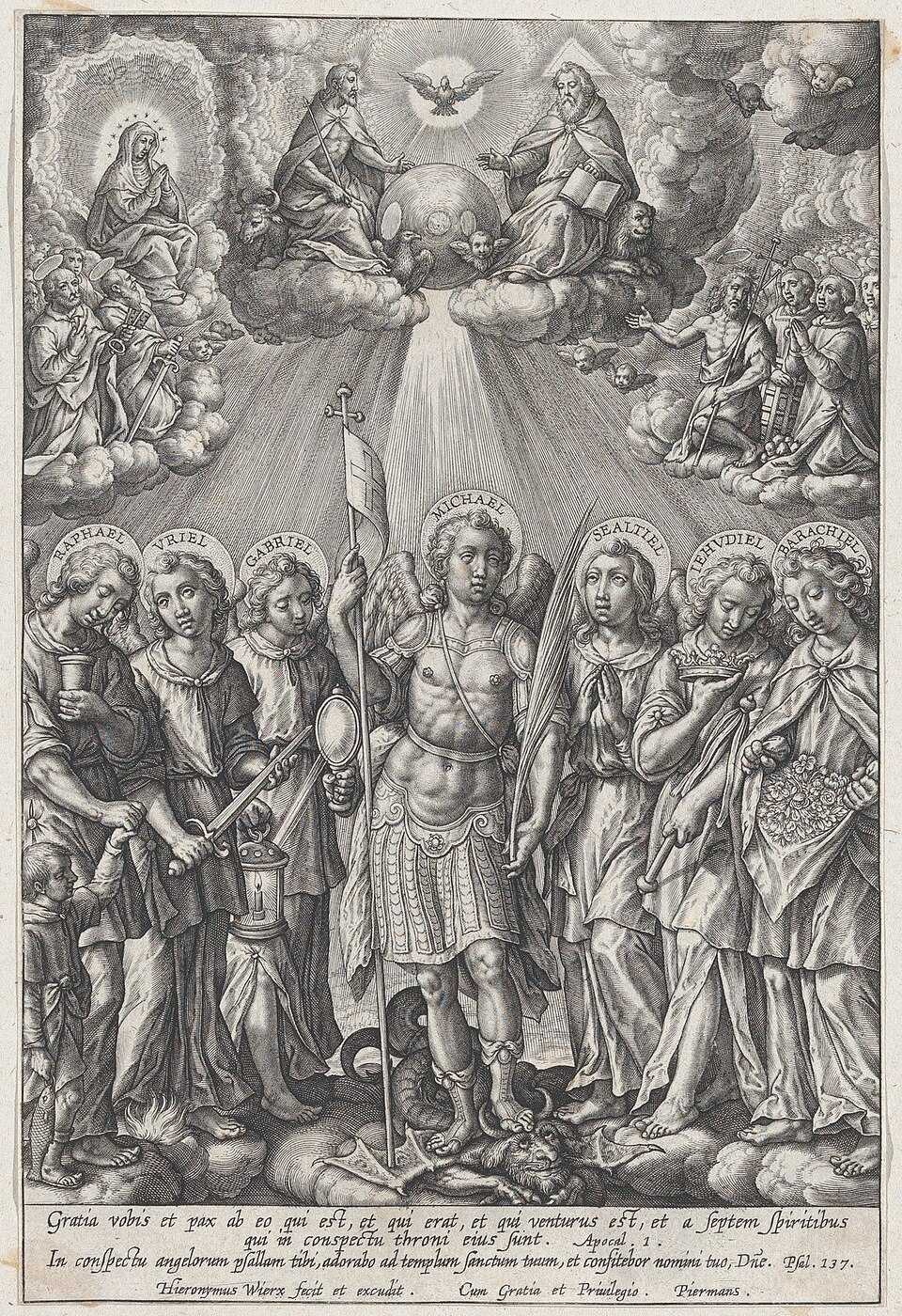
Commands Principalities
Pseudo-Dionysius places the Powers at the foot of the second triad and the Principalities at the head of the third, so illumination crosses from one triad to the next here. The claim is transmission of light and knowledge, not command in any military sense.
Commanded by Virtues
the Virtues stand immediately above the Powers within the second triad, and illuminate them. The claim is transmission of light and knowledge, not command in any military sense.
Placement
Where does it sit in the hierarchies?
Answered from the sources
Common questions
Which texts mention Powers?
What rank is Powers?
How else is Powers spelled?
What is Powers said to do?
How old is Powers?
Nearest in the corpus
If Powers is what you came for, these are next
Chosen by proximity rather than by popularity: the same pantheon first, then the same rank, then the same kind of figure.
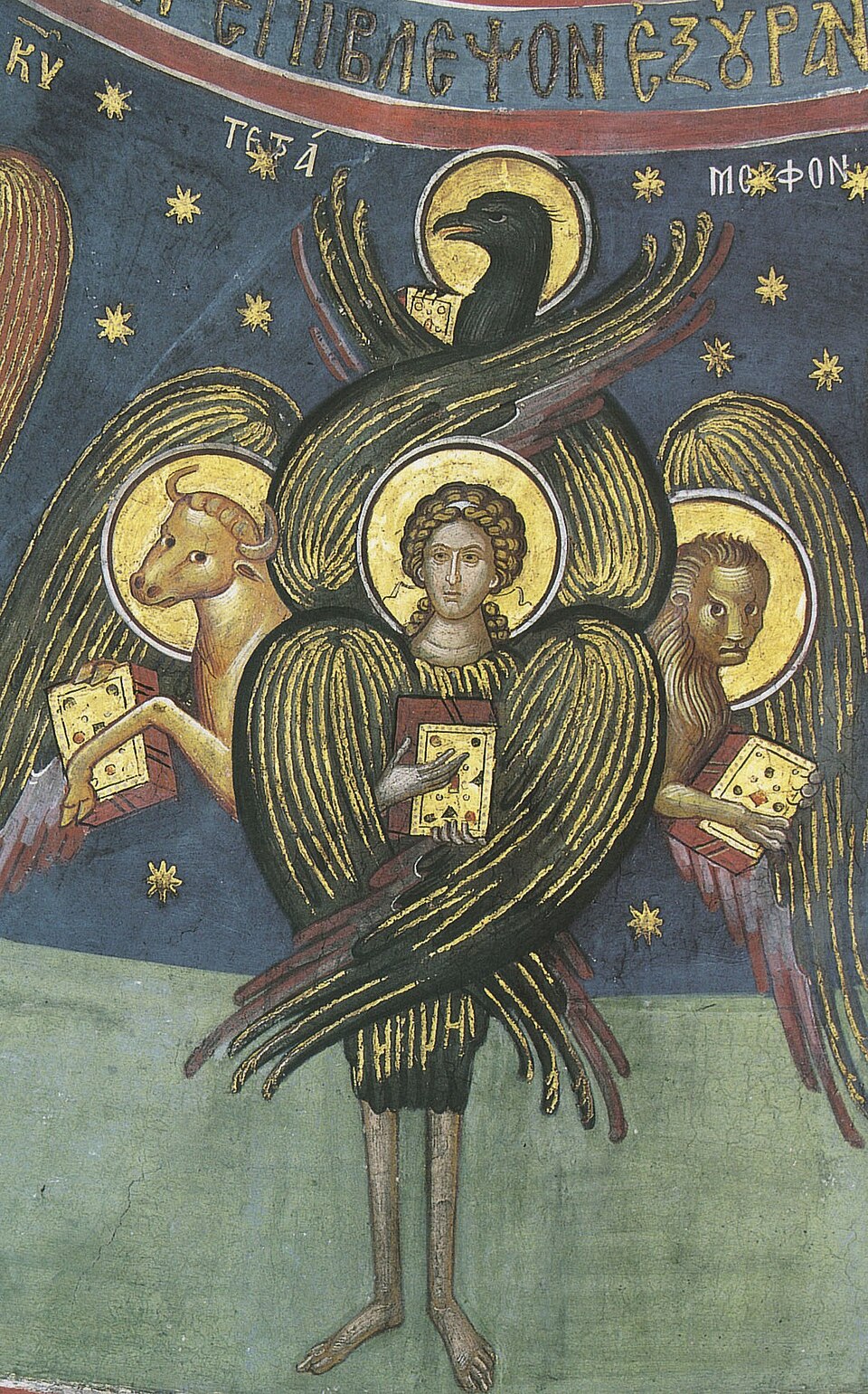
Cherubim
Second Choir · First Sphere
Guardians of thresholds and bearers of the throne — four-faced in Ezekiel, flanking the mercy seat in Exodus, and nothing at all like the winged infants of later art.
Dominions
Fourth Choir · Second Sphere
The administrative choir: they regulate the duties of lower angels and never act directly on the created world.
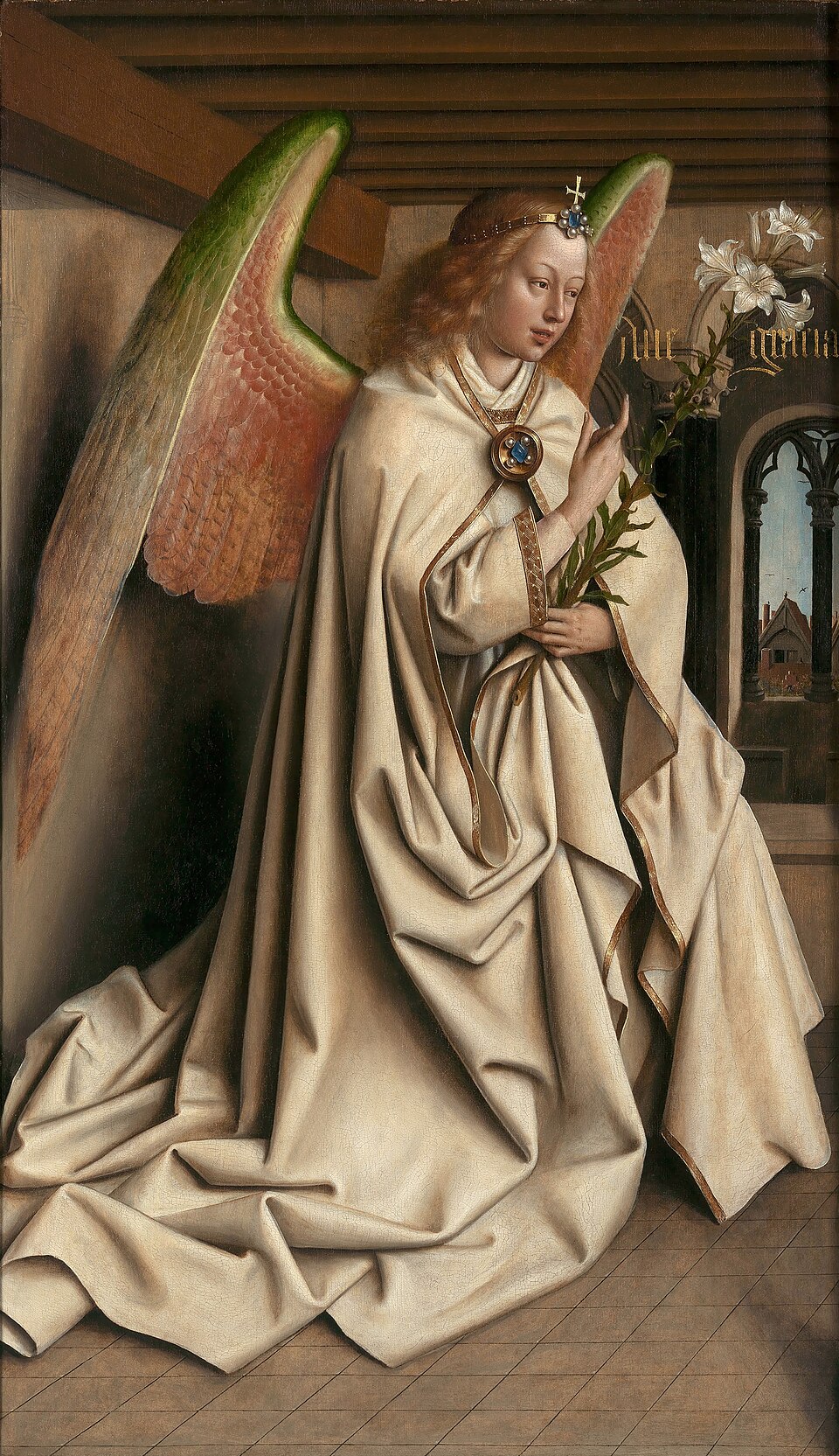
Gabriel
Archangel · Archangels / Chief Princes
The messenger. The angel who explains Daniel's visions, announces two births in Luke, and in Islam delivers the entire Qur'an.
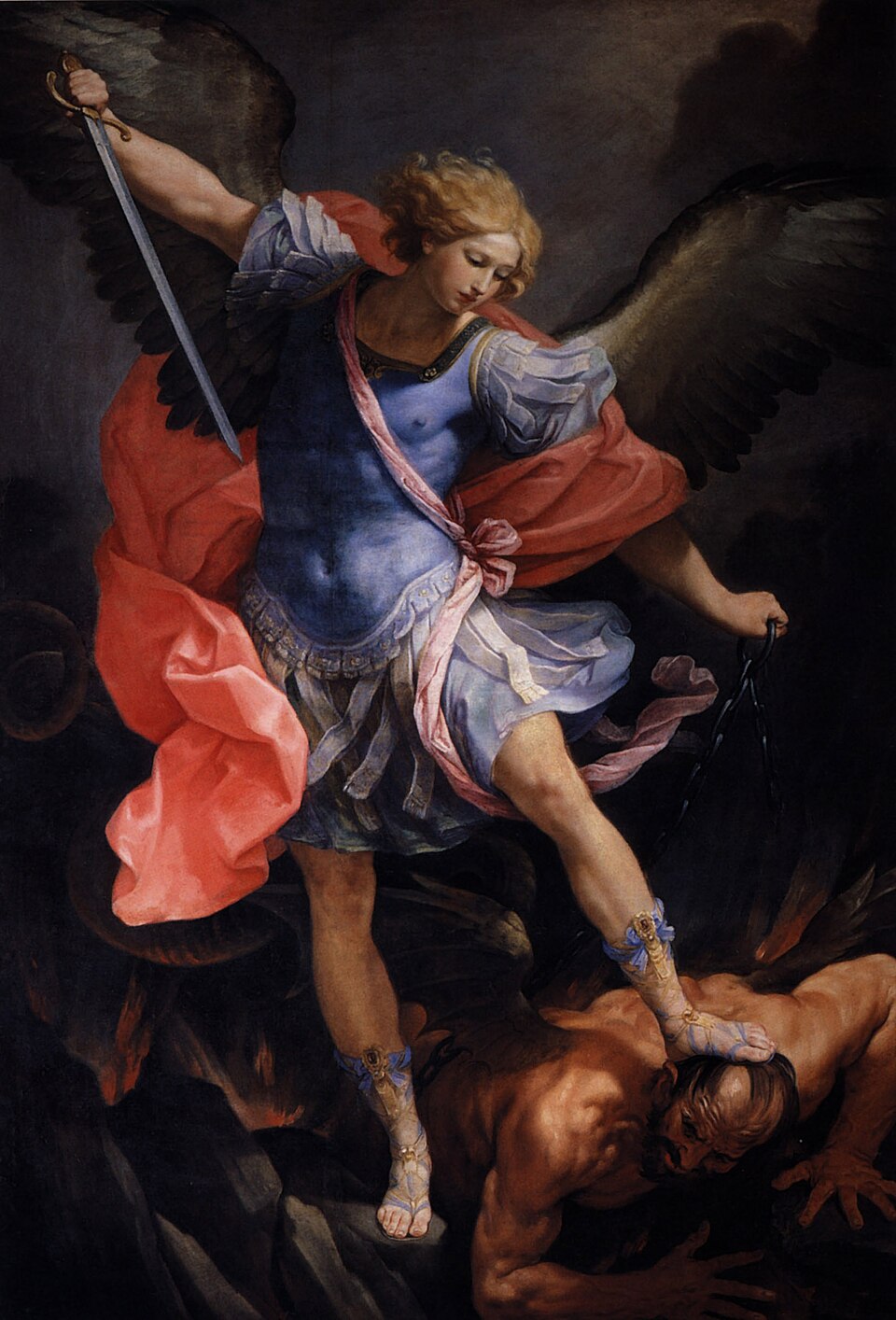
Michael
Archangel · Archangels / Chief Princes
The warring archangel: prince of Israel in Daniel, captain of the host in Revelation, and the only angel the New Testament calls an archangel outright.
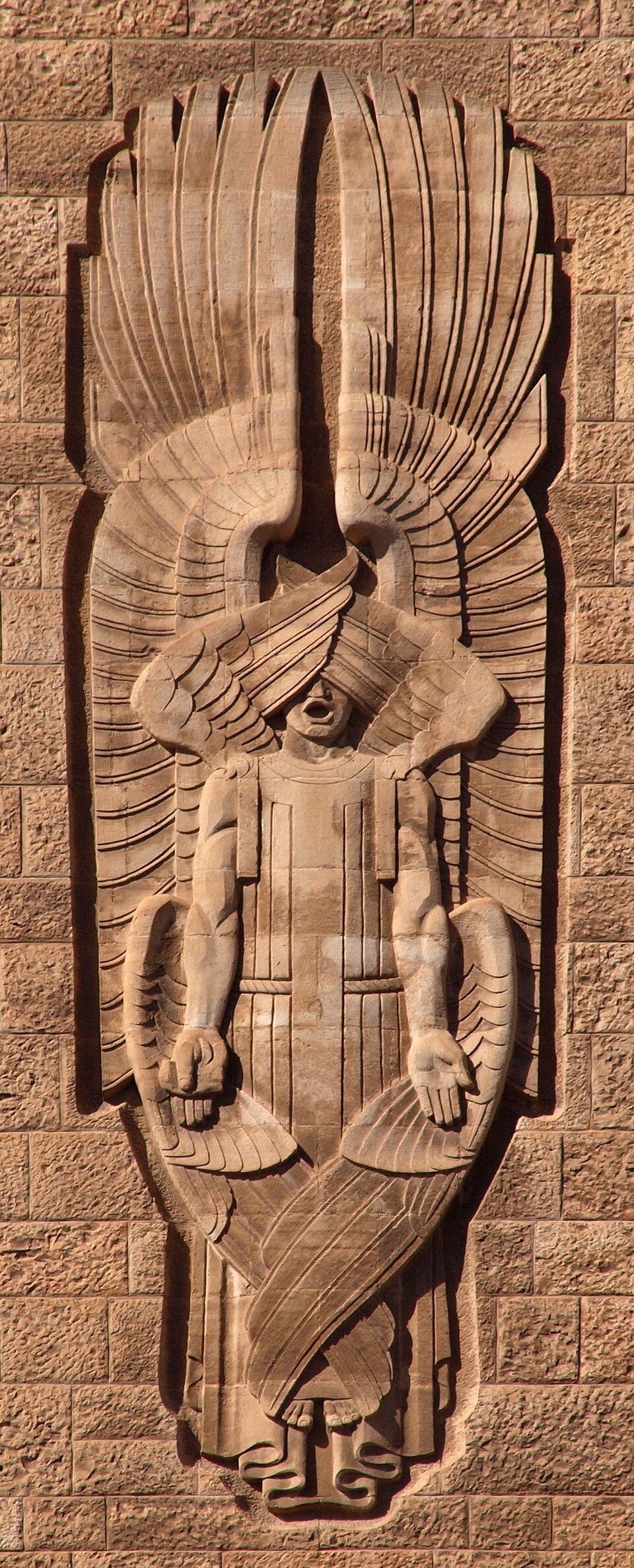
Seraphim
First Choir · First Sphere
Six-winged and burning, they attend the throne directly and sing the trisagion. Their name is the Hebrew verb 'to burn'.
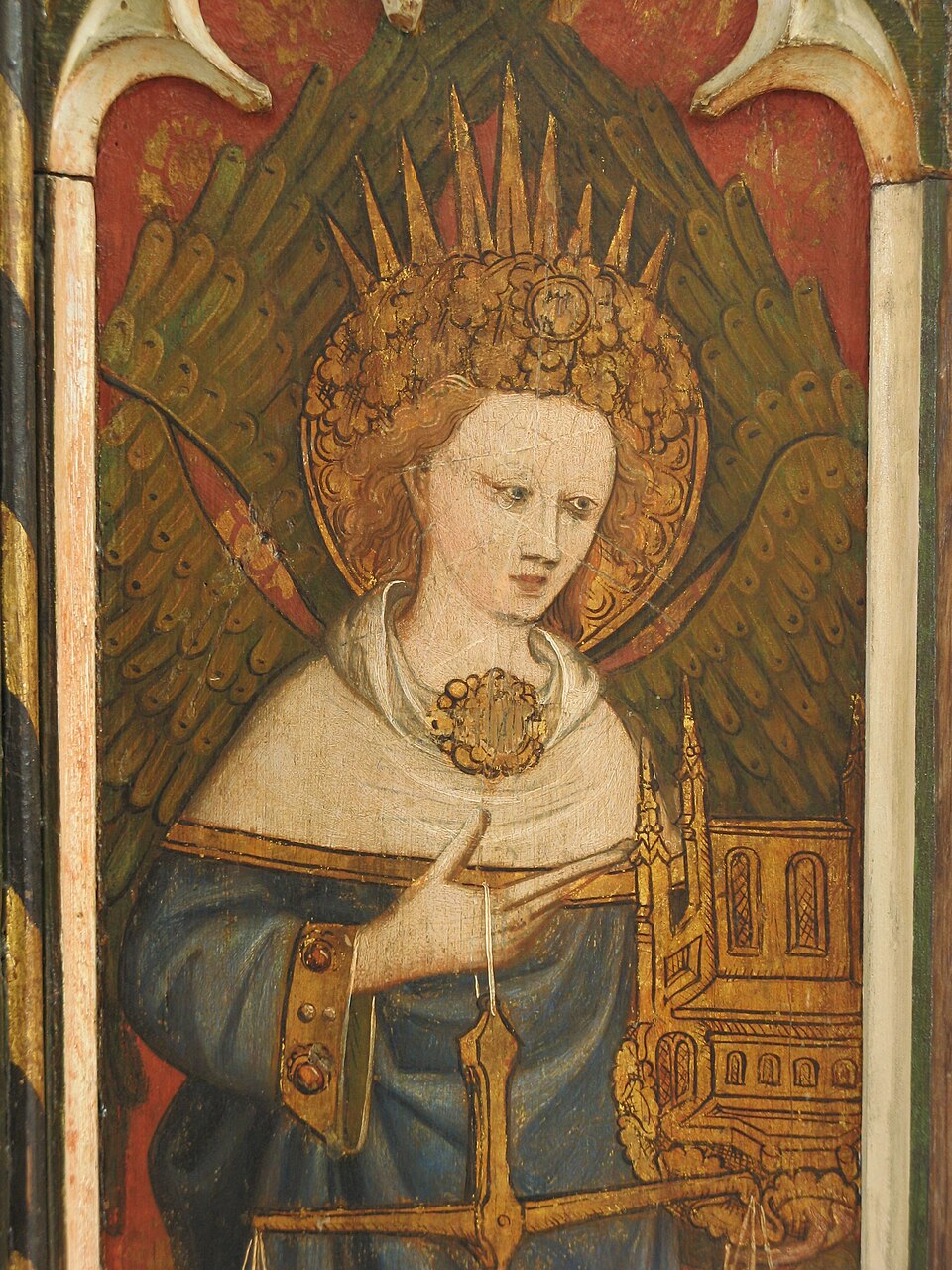
Thrones
Third Choir · First Sphere
The wheels of the chariot — rings of fire studded with eyes, on which divine justice is said to be seated.
The books behind Powers
Every claim on this profile is attributed to one of these. They are public domain, listed oldest first, and each links to a full text where one is freely available.
New Testament
Various · c. 50–110 CE · Koine Greek
Read New Testament in full ↗Cover: Public domain · Wikimedia file page
De Coelesti Hierarchia (The Celestial Hierarchy)
Pseudo-Dionysius the Areopagite · c. 500 CE · Greek
Read De Coelesti Hierarchia (The Celestial Hierarchy) in full ↗Cover: Public domain · Unknown author · Wikimedia file page
Homilies on the Gospels, Homily 34
Gregory the Great · c. 590 CE · Latin
Read Homilies on the Gospels, Homily 34 in full ↗Cover: CC0 · British Library · Wikimedia file page
Summa Theologiae, Treatise on the Angels
Thomas Aquinas; tr. Fathers of the English Dominican Province · c. 1265-1274 · Latin
Read Summa Theologiae, Treatise on the Angels in full ↗Cover: Public domain · Wikimedia file page
Corpus last revised 29 August 2026. A reference site’s credibility rests on being maintained, so this is the date the sourced records last changed — not the date the page was rebuilt.