Demonic · Goetic Spirit · c. 1577 CE
Andras
Also called András (given name), András (first name), András (per Wikidata)
Marked in the Goetia as dangerous to the operator himself, which almost nothing else in the book is: handle him carelessly, the text says, and he will kill the man who called him along with his assistants. He arrives raven-headed on a black wolf with a drawn sword.
Single lineage
Form. An angel with the head of a black night-raven, riding a strong black wolf and brandishing a sharp sword.
Offices. Sows discord. The Goetia warns that if the operator is not careful, Andras will slay him and his assistants.
Note. Explicitly flagged in the text as dangerous to the operator himself — one of very few so marked.
Identity
Where does the name come from?
Where it was actually worshipped
None. The Ars Goetia is a conjuring manual and not a liturgy: its spirits are constrained, put to work and dismissed, never housed or offered to. Not one of the seventy-two has a temple, a shrine, a festival or a place-name anywhere.
A figure with temples and a figure that only ever existed on a page are different kinds of thing, and the difference is easy to lose once both are entries in a list.
At a glance
Vitals
Vitals
Also known as
- First attested
- Pseudomonarchia Daemonum · 1577
- Rank
- Marquis
- Order
- Goetic Spirit
- Base of operations
- None. The Ars Goetia is a conjuring manual and not a liturgy: its spirits are constrained, put to work and dismissed, never housed or offered to. Not one of the seventy-two has a temple, a shrine, a festival or a place-name anywhere.
- Era
- c. 1577 CE
- Traditions
- Solomonic, Folk & Demonological
- Placed in
- Ranks of the Seventy-Two
Traits
- Traditional form
- An angel with the head of a black night-raven, riding a strong black wolf and brandishing a sharp sword.
- Goetic rank
- Marquis
Stats
3 attributed
What is it said to do?
Where these powers cluster
The 3 offices attributed to Andras, grouped by kind. Segment width is the share of powers falling in each category.
A bar dominated by one colour means a specialist; an even spread means a figure the sources credit with almost anything.
- social1
- martial1
- malefic1
1 mark
Which marks is it attached to?
A mark a figure carries and a mark used against a figure are opposite claims, so each link says which it is.
2 texts
Which texts say so, and where do they disagree?
When these texts were written
Each dot is one of the 2 texts that names Andras, placed at that text's approximate date.
A wide spread means the figure was carried across many centuries and traditions; a tight cluster means a single period produced the whole record.
2 texts spanning roughly 327 years
Where the texts differ
- Rank: given as Marquis; The Marquis
- Position in list: 54, 63 depending on the text
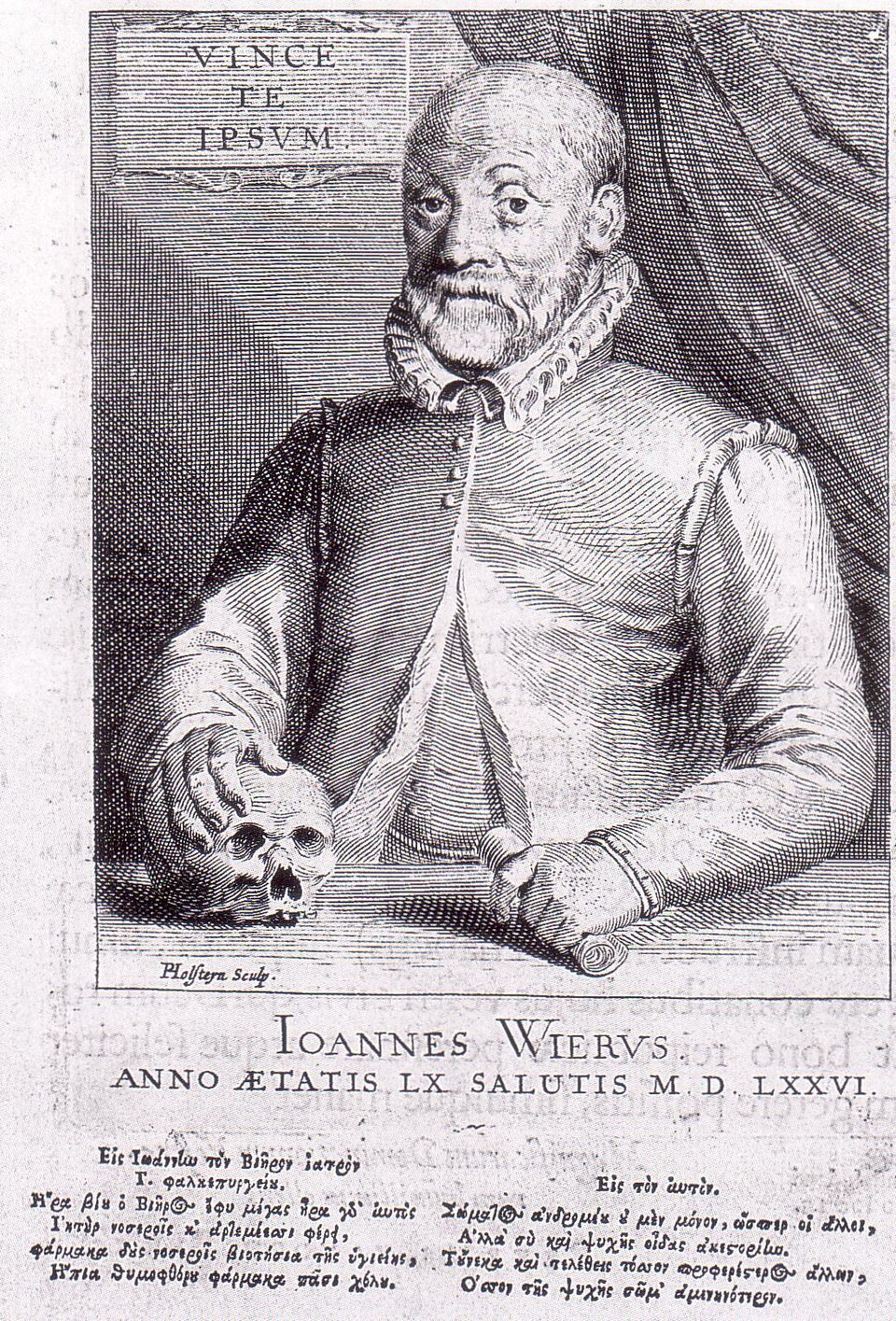
Weyer lists this spirit 54th of his sixty-nine, with substantially the same offices. His order is not the Goetia's — the two texts arrange the same spirits quite differently.

Sows discord. The Goetia warns that if the operator is not careful, Andras will slay him and his assistants.
“The Sixty-third Spirit is Andras. He is a Great Marquis, appearing in the Form of an Angel with a Head like a Black Night Raven, riding upon a strong Black Wolf, and having a Sharp and Bright Sword flourished aloft in his hand.”
Connections
What is it connected to?
Nothing, and that is what the source says. The Ars Goetia gives Andras a rank, a number of legions, a list of offices and a seal, and no relationship to any other spirit in the book — no lineage, no faction, no quarrel. Sixty-seven of the seventy-two are in the same position. A catalogue of self-contained entries is what that text is, and the emptiness here is the shape of it rather than work outstanding.
Placement
Where does it sit in the hierarchies?


Answered from the sources
Common questions
Which texts mention Andras?
What rank is Andras?
How else is Andras spelled?
What is Andras said to do?
How old is Andras?
Nearest in the corpus
If Andras is what you came for, these are next
Chosen by proximity rather than by popularity: the same pantheon first, then the same rank, then the same kind of figure.
Amon
Marquis · Goetic Spirit
This marquis of the Ars Goetia procures feuds between friends and then reconciles the quarrels he started, which is the whole of his office and runs in both directions at once. He comes as a flame-vomiting wolf with a serpent's tail, or else as a man with a raven's head.
Andrealphus
Marquis · Goetic Spirit
Teaches geometry and every kind of measurement exactly, makes men subtle in astronomy, and turns them into birds. He announces himself as a peacock making a great deal of noise, and is ranked marquis in the Ars Goetia.

Cimejes
Marquis · Goetic Spirit
Given a territory rather than a subject: the Goetia has him ruling every spirit in Africa. He also teaches grammar, logic and rhetoric, finds lost and hidden treasure, and makes men valiant in war.
Decarabia
Marquis · Goetic Spirit
Appears first as a star inside a pentacle. His office is birds — their virtues and those of precious stones, and the trick of making them fly before the operator and stay, singing and drinking exactly as real ones do.

Forneus
Marquis · Goetic Spirit
His gifts are entirely social: languages, rhetoric, a good reputation, and the affection of enemies as readily as friends. The Ars Goetia makes this marquis a great sea-monster, which fits none of it.
Leraje
Marquis · Goetic Spirit
An archer dressed in green with bow and quiver, ranked marquis among the demons of the Ars Goetia, who starts battles and contests. He is also given one precise and nasty speciality: making wounds from arrows go septic.
The books behind Andras
Every claim on this profile is attributed to one of these. They are public domain, listed oldest first, and each links to a full text where one is freely available.
Pseudomonarchia Daemonum
Johann Weyer · 1577 · Latin
Read Pseudomonarchia Daemonum in full ↗Cover: Public domain · Pieter Holsteyn II · Wikimedia file page
The Lesser Key of Solomon, Book I: Ars Goetia
Anonymous; ed. S. L. MacGregor Mathers & A. E. Waite · 17th c.; ed. 1904 · English (from Latin)
Read The Lesser Key of Solomon, Book I: Ars Goetia in full ↗Cover: Public domain · anonymous design, redrawn by User:Fuzzypeg · Wikimedia file page
Corpus last revised 29 August 2026. A reference site’s credibility rests on being maintained, so this is the date the sourced records last changed — not the date the page was rebuilt.