mind · 2 claims
Uncontrollable Rage
Zoroastrianism does not treat rage as a symptom of a demon. Rage is the demon, and he has a name and an appointed opponent.
Aeshma is wrath itself, one of the chief daevas, and the Avesta pairs him against Sraosha — obedience, or attentive hearing — as a matched opposition. This is the corpus's most systematic ethical demonology: each good power has a specific counterpart, and the fight between them is the world.
The name travelled. Aeshma-daeva is the most persuasive proposed origin for Asmodeus, who arrives in Tobit as a demon whose speciality is destroying marriages — which is what wrath does to a household.
Oldest first
Who was blamed, and by which text?
Each card is one text making one attribution, in its own framing. Reading down the column is a transmission history rather than a set of independent witnesses — and where a claim carries a grading, that grading is about how well it is grounded in the passage it cites, nothing more.

Wrath as a being: the daeva of fury and outrage, who drives men to violence and disorder.
What stops it
Sraosha, obedience, who is named as his direct opponent and smites him.
Ranked among the chief demonic powers in the systematised cosmology, opposed rank for rank by the good creation.
Countermeasures
What the texts say stops it
c. 1000-400 BCE
Sraosha, obedience, who is named as his direct opponent and smites him.
Which texts make these claims?
Oldest first. The distance between the earliest and the latest is the thing worth looking at: a claim made in an incantation four thousand years ago and one made in a paperback in 1973 are different kinds of evidence about the same symptom.
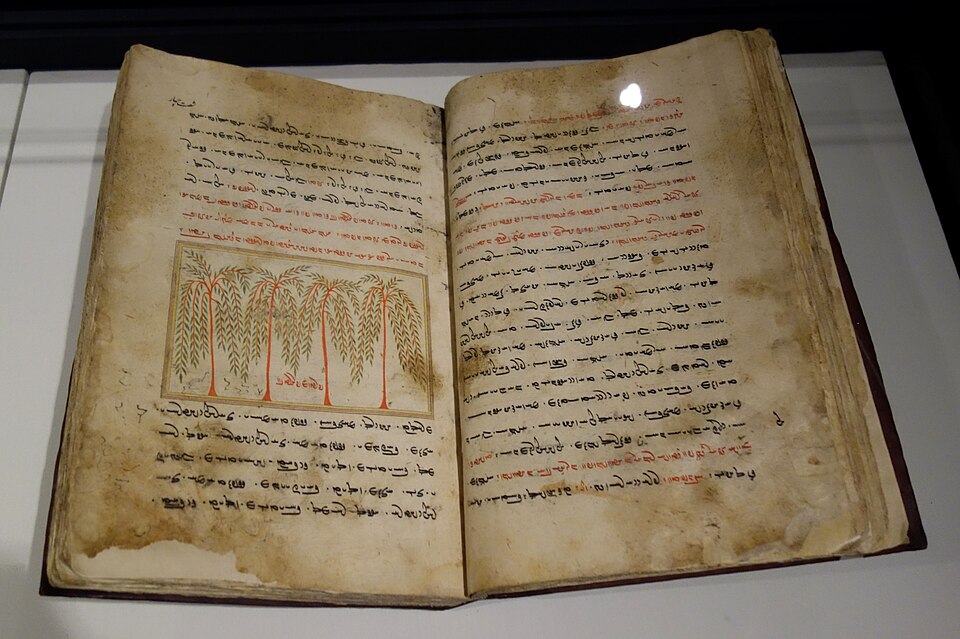
The Avesta
Attributed to Zarathustra and later priests · c. 1000-400 BCE · Avestan
Wrath as a being: the daeva of fury and outrage, who drives men to violence and disorder.
Read The Avesta in full ↗Cover: CC0 · Daderot · Wikimedia file page

Bundahishn
Anonymous Zoroastrian; tr. E. W. West · 9th c. CE, from older material · Middle Persian
Ranked among the chief demonic powers in the systematised cosmology, opposed rank for rank by the good creation.
Read Bundahishn in full ↗Cover: CC BY-SA 3.0 · The original uploader was Ploxhoi at English Wikipedia · Wikimedia file page