infancy · 2 claims
Death in Childbirth
The single most-warded-against harm in the ancient record, and the one that produced the most objects.
Before the twentieth century a large share of women died in childbirth and a larger share of infants died in their first year, and the ancient world's protective apparatus is concentrated there more heavily than anywhere else. Lamashtu is the fullest portrait: a being who slips into the house, touches the belly of the pregnant woman, takes the child from the nurse's arms, and drinks blood.
The countermeasures are equally concrete and they survive in numbers — bronze plaques, pierced amulet heads, inscribed bowls, parchment strips. The Jewish childbirth amulet works on a different principle from the Mesopotamian one: rather than repelling by force, it holds Lilith to an agreement she is said to have made not to enter where the three angels' names are written.
Oldest first
Who was blamed, and by which text?
Each card is one text making one attribution, in its own framing. Reading down the column is a transmission history rather than a set of independent witnesses — and where a claim carries a grading, that grading is about how well it is grounded in the passage it cites, nothing more.
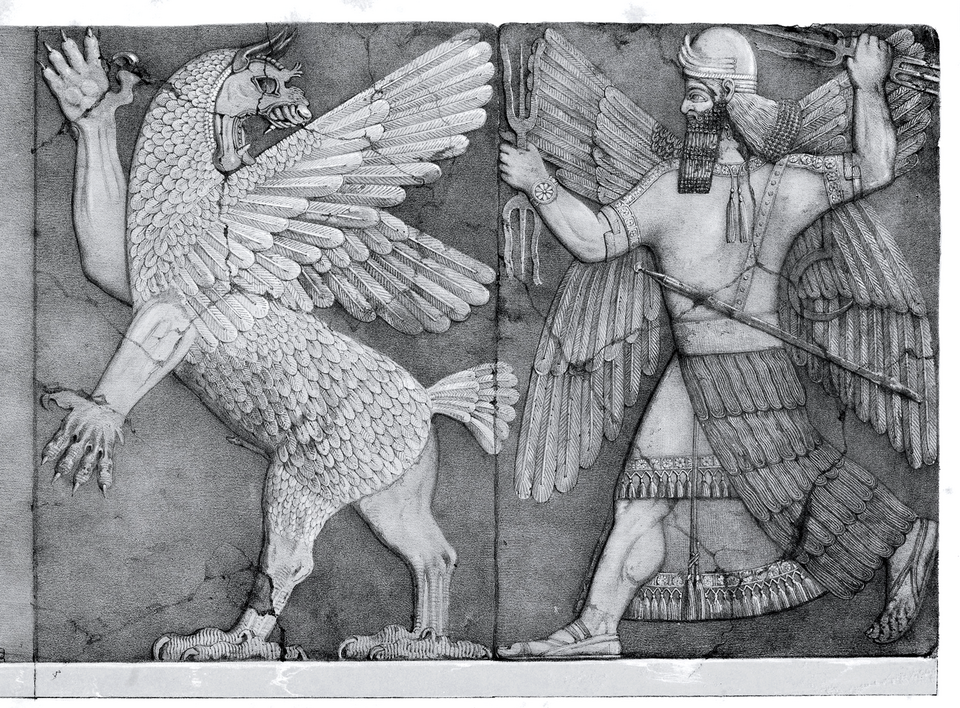
Enters the house to touch the pregnant woman's belly and seize the child from the nurse; brings fever, miscarriage and the death of infants.
What stops it
Bronze plaques showing her driven back to the underworld, and Pazuzu-head amulets hung at the door — a hostile spirit used against a worse one.

Named once, among the desert creatures inhabiting the ruins of Edom — the entire scriptural basis for a figure who becomes central to later childbirth amulet practice.
Countermeasures
What the texts say stops it
c. 1800-600 BCE
Bronze plaques showing her driven back to the underworld, and Pazuzu-head amulets hung at the door — a hostile spirit used against a worse one.
Which texts make these claims?
Oldest first. The distance between the earliest and the latest is the thing worth looking at: a claim made in an incantation four thousand years ago and one made in a paperback in 1973 are different kinds of evidence about the same symptom.

Akkadian Incantation Series & Amulet Inscriptions
Anonymous; recovered from Assyrian and Babylonian sites · c. 1800-600 BCE · Akkadian and Sumerian
Enters the house to touch the pregnant woman's belly and seize the child from the nurse; brings fever, miscarriage and the death of infants.
Read Akkadian Incantation Series & Amulet Inscriptions in full ↗Cover: Public domain · Robert William Rogers (1864–1930) · Wikimedia file page
Hebrew Bible & Deuterocanon
Various · c. 900–100 BCE · Hebrew, Aramaic, Greek
Named once, among the desert creatures inhabiting the ruins of Edom — the entire scriptural basis for a figure who becomes central to later childbirth amulet practice.
Read Hebrew Bible & Deuterocanon in full ↗Cover: Public domain · see en:Aleppo Codex; scanned by · Wikimedia file page